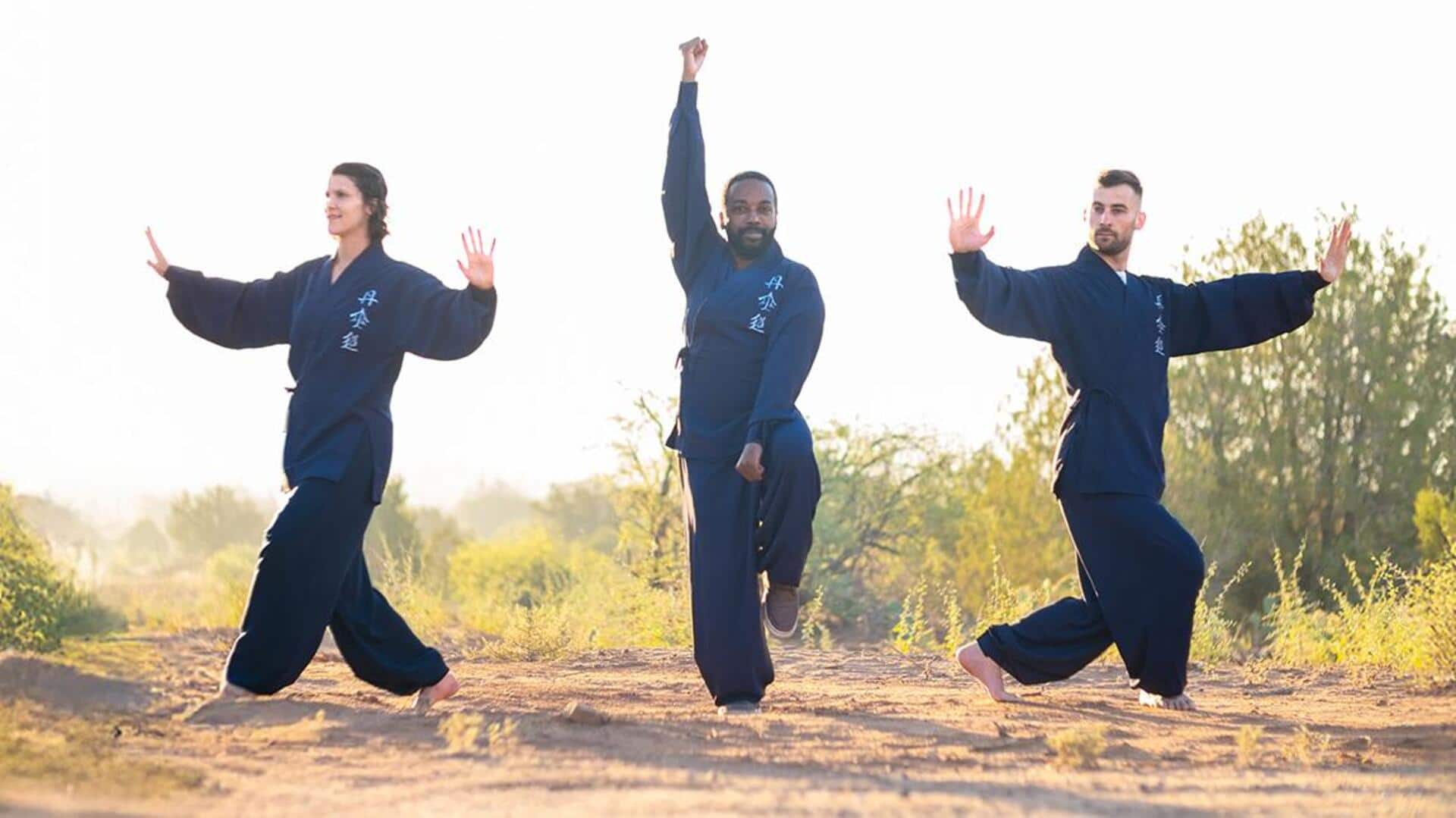
About qigong: This ancient Chinese practice can promote emotional balance
What's the story
Qigong, an ancient Chinese practice, combines meditation, controlled breathing, and movement to promote health and wellness. It is a great tool for beginners looking to boost their resilience. By practicing qigong, one can improve physical health, mental clarity, and emotional stability. Here are five simple ways to use qigong to build resilience. Each method focuses on different aspects of the practice that can be easily incorporated into daily routines.
Breathing
Focus on breathing techniques
Breathing techniques are at the core of qigong.
By concentrating on deep and rhythmic breathing, you can calm your mind and reduce stress levels.
Start by inhaling deeply through the nose, holding for a few seconds, and exhaling slowly through the mouth.
This practice increases oxygen flow to the brain, enhancing focus and reducing anxiety.
Movements
Incorporate gentle movements
Gentle movements in qigong help in releasing tension from the body.
These movements are usually slow and deliberate, which helps in improving flexibility and balance.
Beginners can start with simple exercises like arm swings or gentle twists that can be done easily without any special equipment or space.
Visualization
Practice visualization techniques
Visualization techniques in qigong involve mentally picturing positive outcomes or peaceful scenes while practicing.
This technique helps in fostering a positive mindset and reducing negative thoughts.
By visualizing success or tranquility during practice sessions, individuals can develop a stronger sense of control over their emotions.
Consistency
Engage in regular practice sessions
Regular practice sessions are key to reaping the benefits of qigong fully.
Consistency allows you to build on your skills over time, resulting in better physical health and mental resilience.
Even dedicating ten minutes every day to qigong can make a world of difference in your overall well-being.
Community
Join group classes for support
Joining group classes provides social support that enhances resilience-building efforts through shared experiences with others who share similar goals.
Group settings also offer guidance from experienced instructors who can ensure proper technique execution while fostering motivation among participants through collective encouragement.