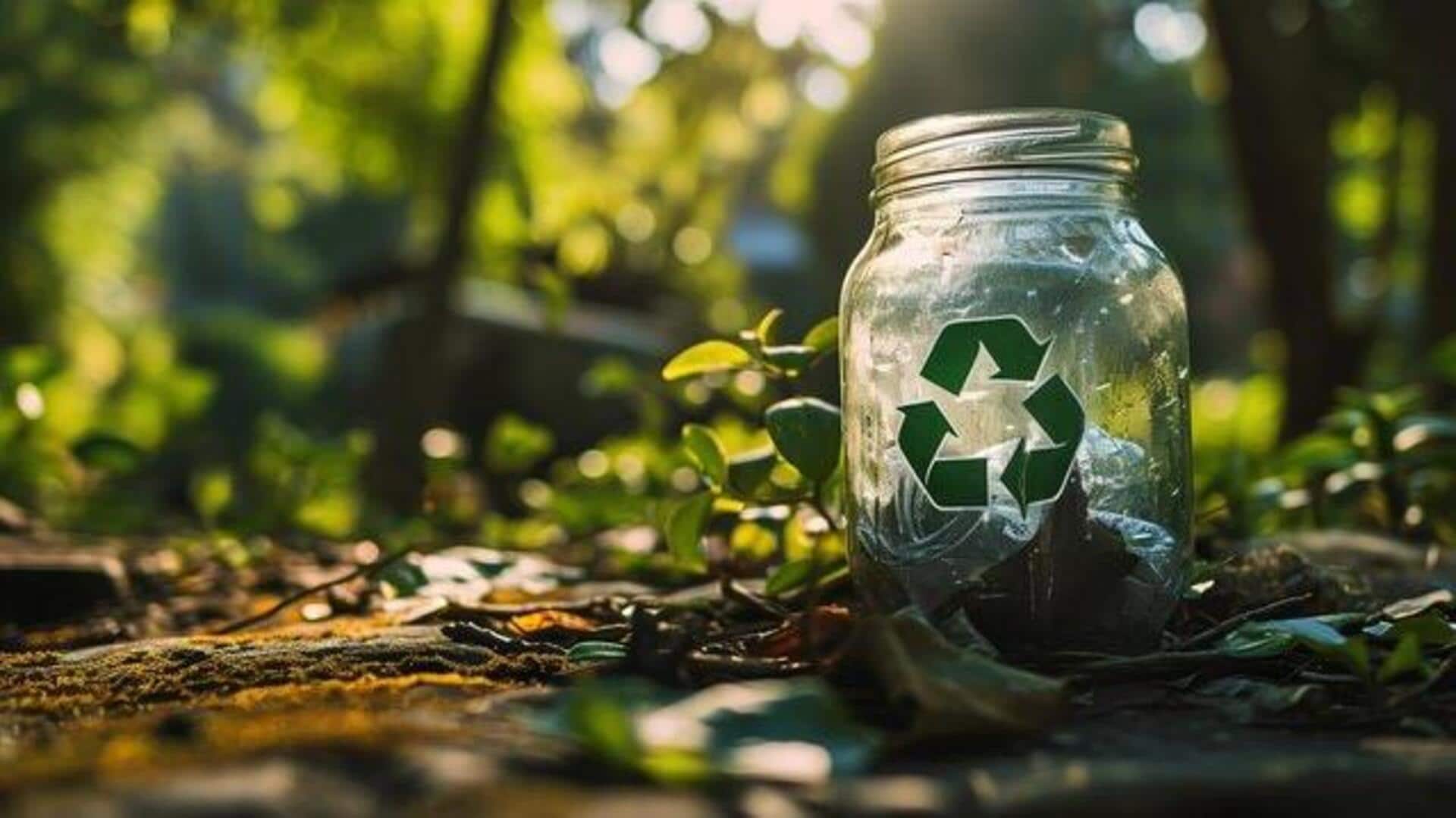
A beginner's guide to zero-waste living
What's the story
Earth Day is a reminder that small, everyday choices can have a big impact on the planet. One simple way to contribute is by embracing zero-waste living, which focuses on reducing what we throw away. It's not about perfection but making mindful changes that help protect the environment and create a more sustainable lifestyle.
#1
Rethink your shopping habits
A big part of reducing waste starts with how you shop. Choose products with minimal or no packaging, and opt for reusable storage options like glass jars, metal tins, or wooden containers instead of plastic. Carry cloth bags, pick loose fruits and vegetables, and buy in bulk when possible. You can also choose refillable products and avoid single-use items.
#2
Reuse before you recycle
Recycling is helpful, but reusing is even better. Try to find new uses for items before throwing them away. Glass jars can become storage containers, and old clothes can be repurposed into cleaning rags. This habit extends the life of products and reduces overall waste.
#3
Compost your food waste
Food scraps make up a large portion of household waste. Composting is a simple way to turn kitchen waste into nutrient-rich soil for plants. Even a small compost setup at home can significantly cut down on what goes into landfills while benefiting your garden.
#4
Learn to repair instead of replace
One of the most overlooked aspects of zero-waste living is repairing items instead of discarding them. From stitching torn clothes to fixing small household items, basic repair skills can extend the life of your belongings. This not only reduces waste but also saves money and builds a more mindful relationship with what you own.
#5
Choose sustainable fabrics
The fashion industry contributes heavily to carbon emissions and pollution, driven by fast fashion and synthetic materials. Choosing sustainable fabrics like organic cotton, hemp, linen, or recycled textiles helps reduce environmental impact. These materials use fewer resources, avoid harmful chemicals, and promote a more responsible and eco-friendly way of living.