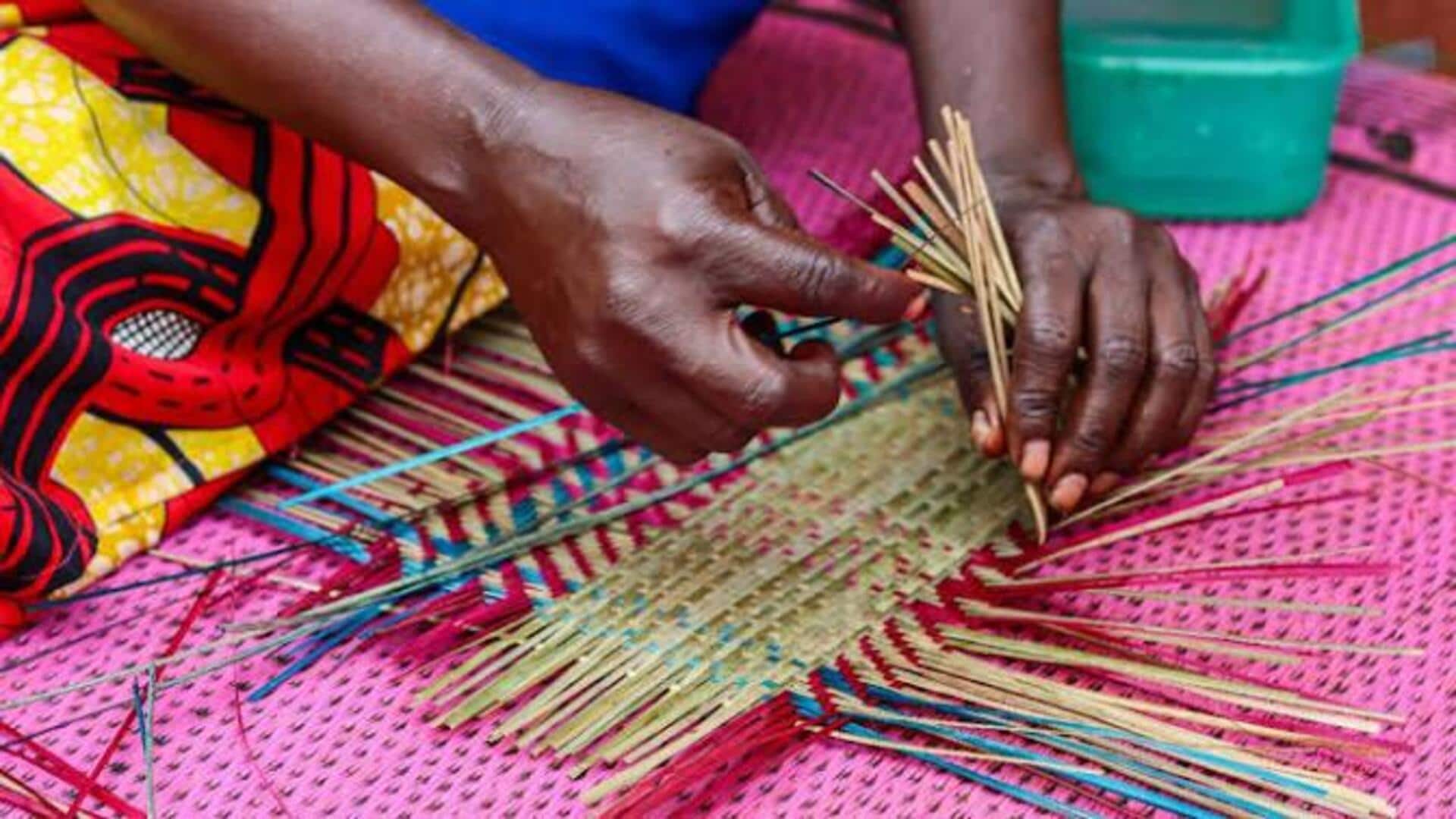
How artists are transforming African mat weaving
What's the story
African mat weaving is a time-honored craft that has been passed down generations. However, modern African artists are now infusing this traditional art form with contemporary elements, creating unique pieces that speak to both heritage and innovation. By adding new materials, techniques, and designs, these artists are redefining the boundaries of mat weaving. Here is how they are doing it.
#1
Blending traditional techniques with modern materials
Many contemporary African artists are experimenting with modern materials such as plastic and recycled fibers in their mat weaving.
These materials not only make the process more sustainable but also allow for a greater variety of textures and colors.
By combining traditional techniques with these new materials, artists create visually striking pieces that retain the essence of their cultural roots.
#2
Incorporating geometric patterns and bold colors
Geometric patterns and bold colors have become a hallmark of modern African mat weavings.
Artists draw inspiration from urban landscapes and contemporary design trends to create dynamic patterns that catch the eye.
The use of vibrant colors adds an extra layer of depth to each piece, making them appealing to a wider audience while still honoring traditional aesthetics.
#3
Collaborating across disciplines for innovative designs
Collaboration is key in the world of modern African mat weaving.
Artists often work with designers from other fields, such as fashion or interior design, to create innovative pieces that transcend traditional boundaries.
These collaborations result in unique designs that appeal to diverse markets, showcasing the versatility of this ancient craft in today's world.
#4
Educating communities about cultural significance
Many contemporary African artists are also focused on educating communities about the cultural significance of mat weaving.
Through workshops and exhibitions, they highlight how this craft is not only an artistic expression but also a vital part of cultural identity.
By engaging local communities, artists ensure that the legacy of mat weaving continues to be appreciated and preserved for future generations.