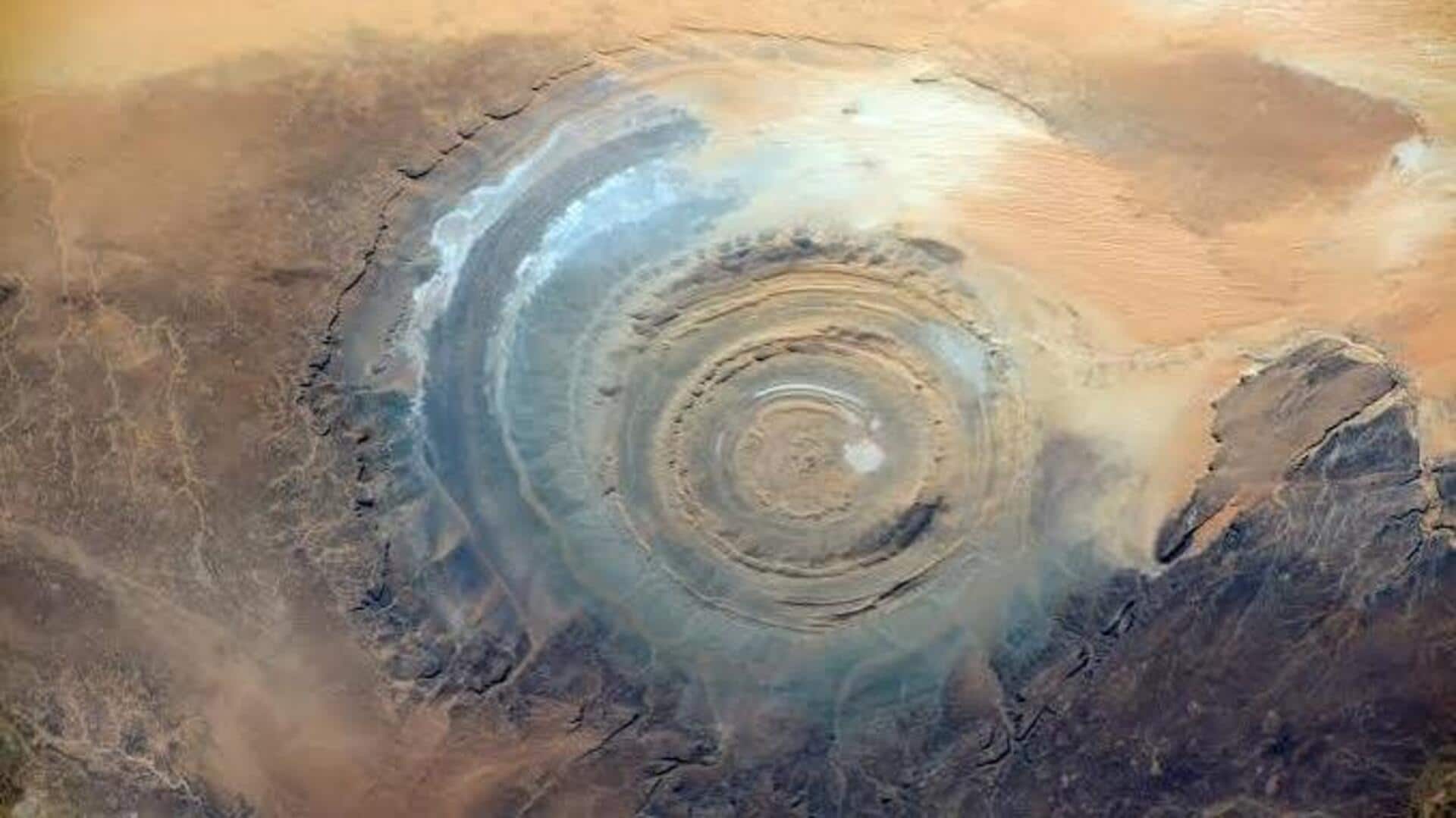
Eye of Africa: A remarkable geological wonder in the Sahara
What's the story
Guelb er Richat, popularly known as the Eye of Africa, is a stunning geological formation in Mauritania's Sahara Desert. The circular structure, which spans over 40 kilometers in diameter, is a sight to behold from space. Although it looks like a giant bull's-eye, Guelb er Richat is not a meteorite impact but a result of erosion and uplift. Here is all about this fascinating landmark.
#1
Geological significance of Guelb er Richat
Guelb er Richat's formation is a testament to the Earth's geological history.
The structure is composed of several concentric rings, made up of different rock layers.
These layers include igneous and sedimentary rocks, which have been exposed due to erosion over millions of years.
The formation provides valuable insights into the processes of erosion, uplift, and tectonic activity that have shaped the region.
#2
Unique biodiversity around Guelb er Richat
The area around Guelb er Richat is home to unique flora and fauna adapted to the harsh desert conditions.
Although the immediate vicinity may appear barren, there are pockets of vegetation that support various species.
Wildlife such as lizards and birds can be spotted here, showcasing the resilience of life in extreme environments.
#3
Accessibility and travel tips for visitors
Visiting Guelb er Richat requires some planning as it is located in a remote part of Mauritania.
The nearest major city is Ouadane, from where travelers can hire vehicles for an adventurous journey across desert terrain.
It is advisable to carry sufficient water and supplies due to limited resources in the region.
Also, understanding local customs, and ensuring safety measures are essential for a successful visit.
#4
Cultural significance of Guelb er Richat
While Guelb er Richat may be a natural wonder, it also has cultural importance for the local communities.
The formation has been a part of folklore and stories passed down generations, giving a glimpse into how people have connected with this unique landmark over centuries.
Understanding these cultural ties adds depth to any visit to this iconic site.