5 interesting facts about Balinese dance
What's the story
Balinese dance is an integral part of Indonesia's cultural heritage, famous for its intricate movements and expressive storytelling. The traditional art form is not just a performance but a spiritual experience, deeply rooted in the island's history and customs. Each dance has its own unique significance, often depicting stories from Hindu epics or local folklore. Here are five fascinating facts about Balinese dance that highlight its cultural importance and artistic complexity.
Storytelling
The role of storytelling
Balinese dance is all about storytelling. Each performance is a way to tell stories from Hindu epics such as the Ramayana or the Mahabharata.
Dancers use their bodies and facial expressions to convey emotions and plot developments.
This way, audiences get to connect with ancient tales in a visual and engaging manner.
Movements
Intricate movements and gestures
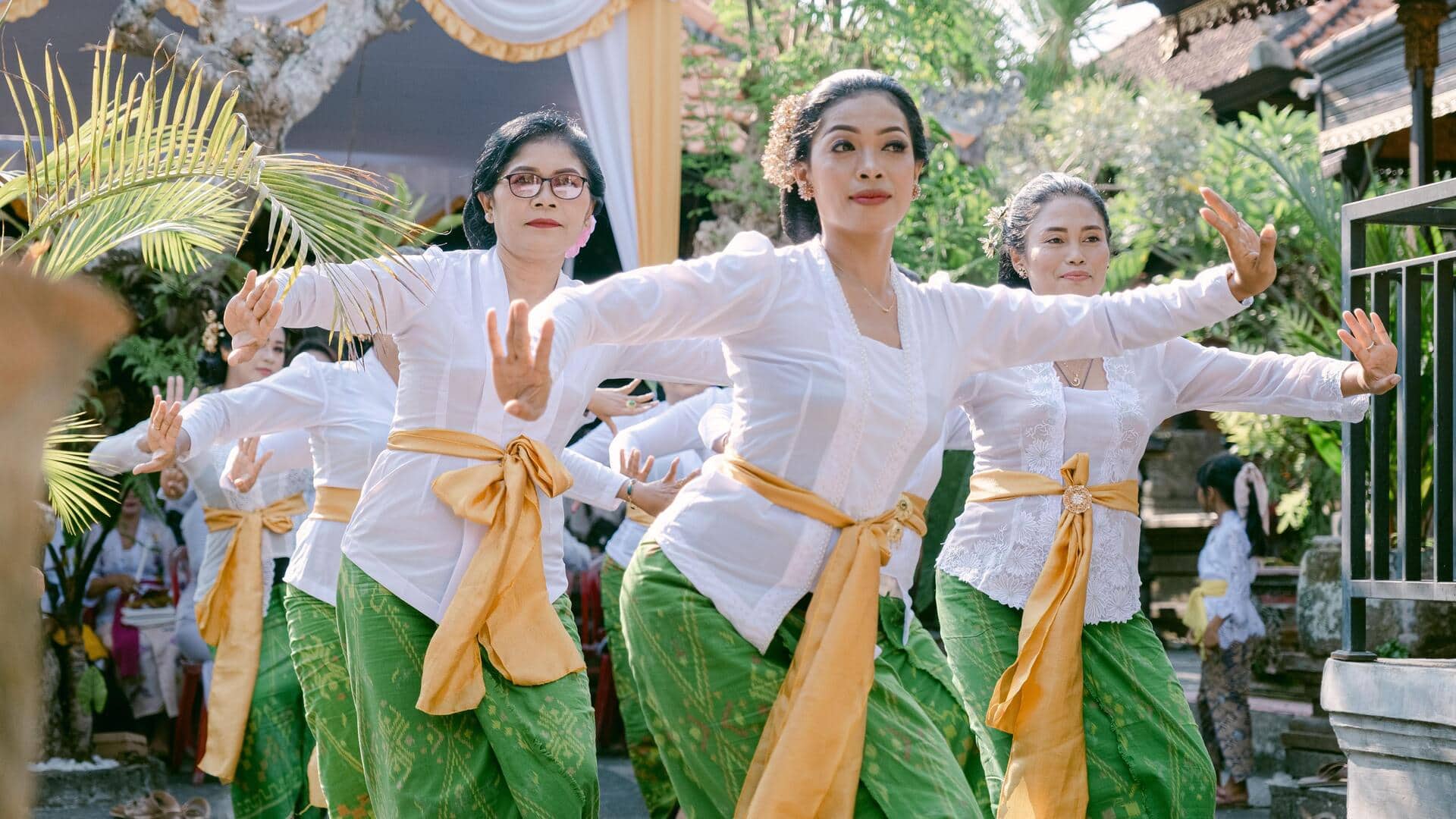
The movements in Balinese dance are extremely intricate. Every gesture has a meaning, from hand positions to facial expressions.
These movements are not just for show but are a way to communicate the emotions and intentions of the characters being portrayed in the dance.
Costumes
Costumes and makeup
Costumes and makeup in Balinese dance are as important as the performance itself.
The costumes are colorful, elaborate, and symbolic of the character being played.
Makeup is used to accentuate features, making them more expressive from a distance.
Together, they add to the visual appeal of the dance, making it a feast for the eyes, while also remaining true to tradition.
Spirituality
Spiritual significance
Balinese dance is not just an art form; it is also a spiritual practice.
Many dances are performed during ceremonies or rituals to invoke deities or to honor ancestors.
This spiritual dimension makes every performance sacred, beyond just entertainment.
Training
Training from a young age
Training for Balinese dancers starts at a young age, with children learning basic movements before mastering complex routines over the years of practice.
This rigorous training ensures that traditions are preserved while allowing new generations to contribute their interpretations within established frameworks.