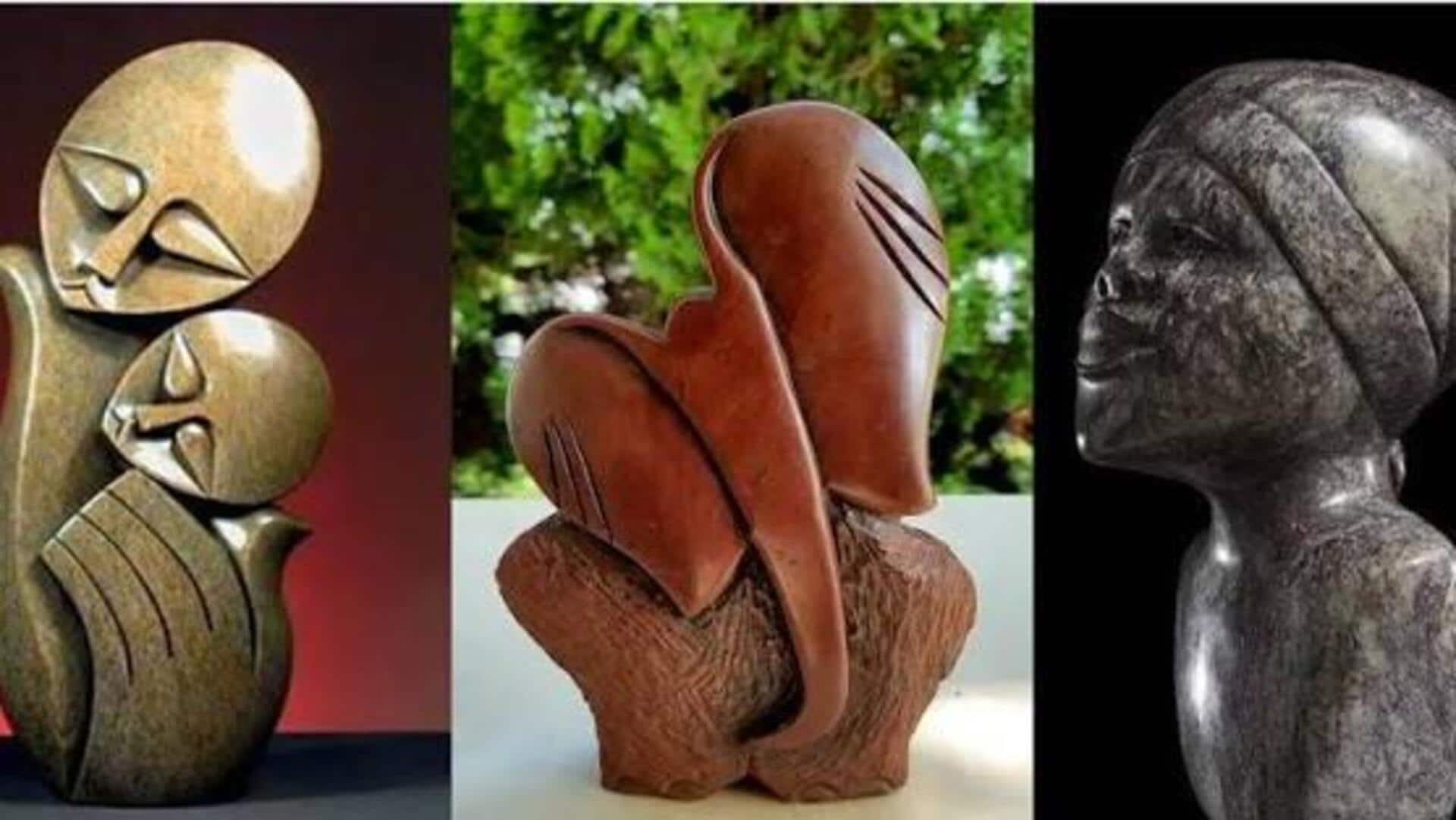
What makes African stone sculptures so unique?
What's the story
African abstract stone sculptures are taking the world by storm with their unique aesthetics and cultural significance. These sculptures, rooted in African traditions, are now being reinterpreted in modern contexts. Artists are blending traditional techniques with contemporary ideas, creating pieces that resonate with global audiences. The fusion of old and new not only preserves the cultural heritage but also introduces it to a wider audience.
#1
Traditional techniques meet modern design
African sculptors are also using traditional techniques to create abstract art.
These techniques include carving and polishing stones like soapstone and serpentine.
However, modern designs have also led to the use of geometric shapes and asymmetrical forms.
This blend of traditional craftsmanship and modern design principles results in sculptures that are both culturally rich and visually appealing.
#2
Cultural significance in contemporary art
The cultural significance of these sculptures is not lost in their modern reinterpretations.
Many artists incorporate symbols and motifs that reflect African heritage into their work.
These elements provide a link to the past, while appealing to contemporary sensibilities.
As a result, viewers can appreciate the cultural depth of the piece, while being drawn in by its modern aesthetic.
#3
Global influence of African abstract art
The influence of African abstract stone sculptures is not limited to the continent. These artworks are gaining recognition on global platforms, from galleries to art fairs.
The growing interest is a testament to the universal appeal and adaptability of this art form.
As more people engage with these pieces, they contribute to a broader understanding of African culture and artistry.
#4
Economic impact on local communities
The rise of African abstract stone sculptures in modern contexts has also had a positive economic impact on local communities where these artworks are created.
Increased demand has led to more opportunities for artisans, boosting livelihoods, and supporting local economies.
This economic benefit further emphasizes the importance of preserving traditional craftsmanship while embracing innovation in art-making practices.