Adire textiles: Techniques, significance, and more
What's the story
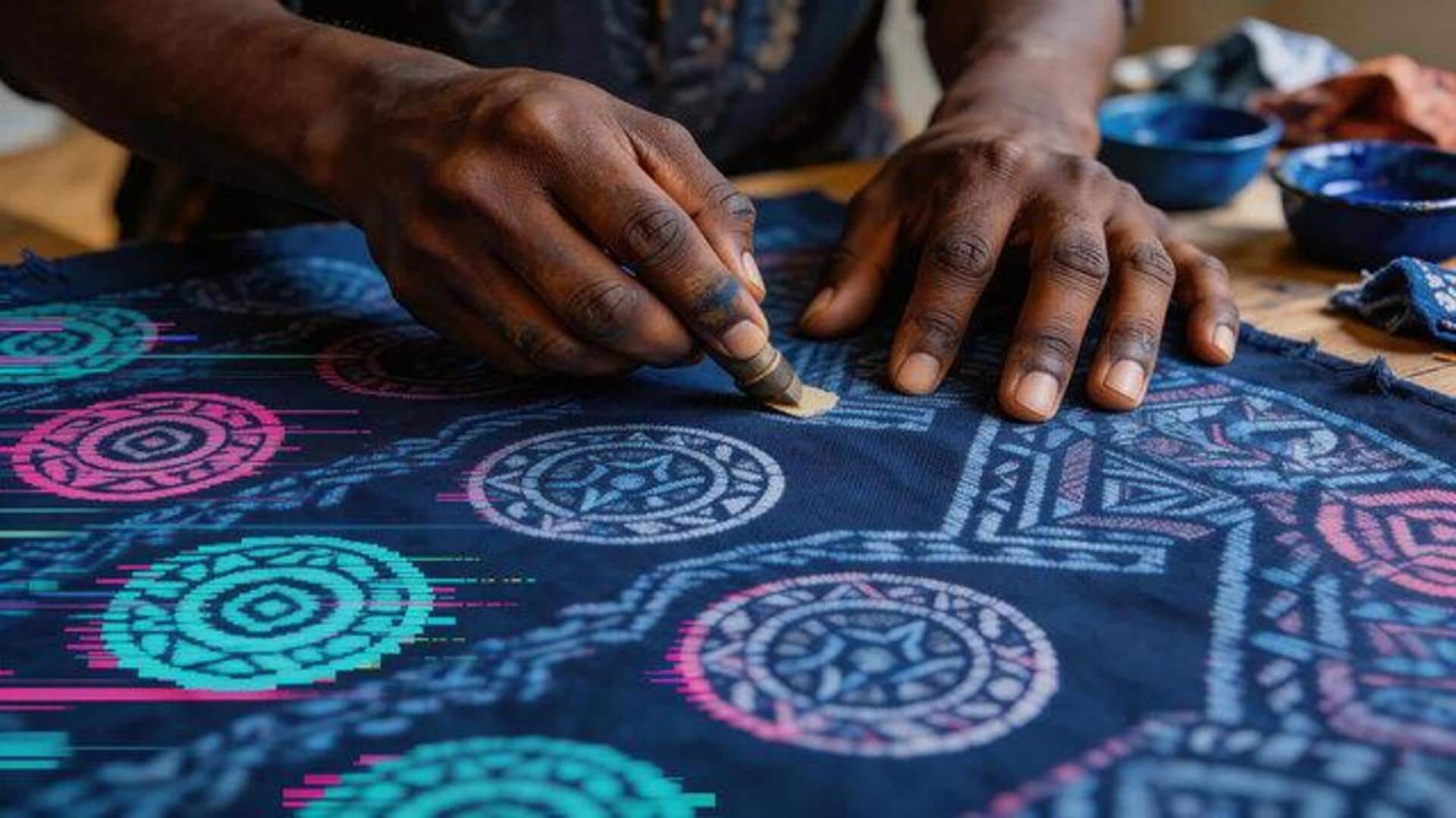
Adire textiles, the traditional Yoruba cloths, are witnessing a modern revival with a colorful twist. The resist-dyeing technique, which has been passed down generations, is now being reinterpreted by contemporary artists and designers. This fusion of old and new is not just preserving the cultural heritage, but also making it relevant in today's fashion and art scenes. Here's how adire is evolving with vibrant colors and innovative designs.
Technique
The art of resist dyeing
Resist dyeing is the core of creating adire textiles.
The technique involves tying, stitching, or folding the fabric to prevent dye from penetrating certain areas. This creates intricate patterns on the cloth.
Traditionally, indigo was the only dye used, but modern interpretations include a spectrum of colors.
This evolution allows for more creative expression while maintaining the essence of traditional craftsmanship.
Innovation
Modern influences on design
Today's adire designs are influenced by global fashion trends and contemporary art movements.
Designers experiment with geometric shapes, abstract patterns, and bold color combinations that appeal to younger audiences.
These innovations make adire appealing beyond its cultural roots, allowing it to be integrated into various styles and wardrobes.
Eco-friendly
Sustainable fashion practices
Adire textiles also promote sustainable fashion practices.
The traditional methods use natural dyes and materials, which have a lesser environmental impact than synthetic alternatives.
The revival of adire also encourages eco-conscious consumers who are looking for sustainable clothing options that also support cultural heritage.
Awareness
Educational initiatives for preservation
Educational initiatives are also key to preserving adire techniques for future generations.
Workshops, demonstrations, and online tutorials are being organized to teach the art of adire making.
These efforts raise awareness about its cultural significance and ensure that traditional skills are not lost in the face of modernization.