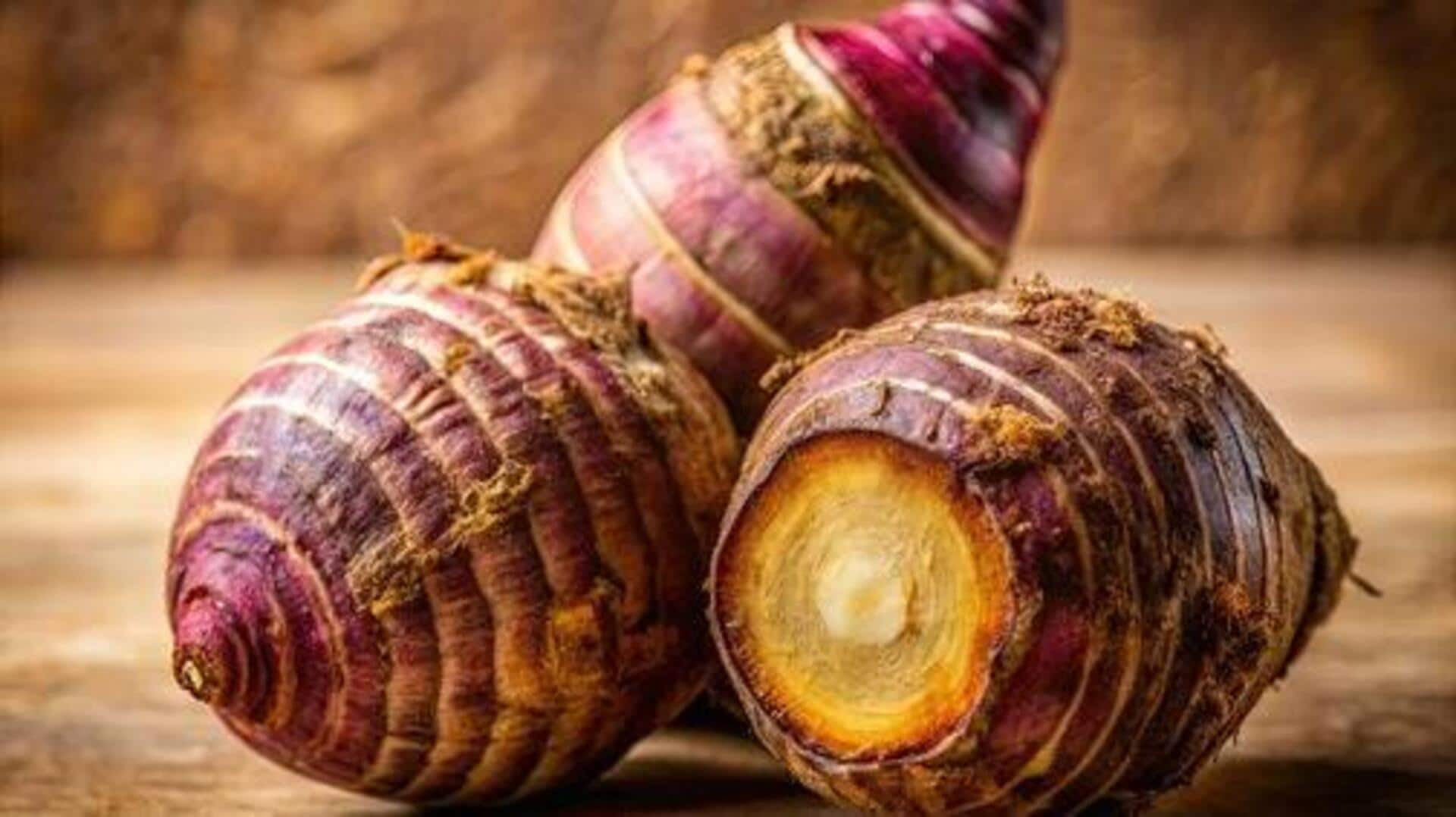
What is cocoyam? Why does it hold a cultural value?
What's the story
African cocoyam, a staple in many African cuisines, is much more than just a food item. It is deeply rooted in the cultural and social fabric of various communities across the continent. From being a source of sustenance to playing a role in traditional practices, cocoyam holds significant cultural meanings that have been passed down through generations. Here are five cultural meanings associated with African cocoyam.
Fertility
Symbol of fertility and prosperity
In many African cultures, cocoyam is associated with fertility and prosperity.
It is often planted during rituals or ceremonies to bless the land and ensure bountiful harvests.
The tuber's ability to thrive in different soil conditions makes it a symbol of resilience and abundance.
Families may offer cocoyams during important events as a gesture seeking blessings for growth and success.
Medicine
Integral part of traditional medicine
Cocoyam also has a place in traditional medicine practices across Africa.
Its leaves and roots are used for various medicinal purposes, including treating ailments such as digestive issues or skin conditions.
The plant's natural properties are believed to promote health and well-being, making it an integral part of holistic healing methods.
Festivals
Community bonding during harvest festivals
Harvest festivals are an essential part of African culture, where communities come together to celebrate the bounty of crops like cocoyam.
These festivals promote unity and social cohesion, as families share their harvests with one another.
The preparation and sharing of dishes made from cocoyam during these events strengthen community bonds and preserve cultural traditions.
Spirituality
Offering in spiritual rituals
Cocoyam also plays a role in spiritual rituals across Africa.
It is commonly offered as a sacrifice or used in ceremonies to honor ancestors or deities.
The act of offering cocoyams is seen as a way to communicate with the spiritual world, seeking protection or guidance for the community.
Education
Educational tool for children
In many African communities, cocoyam serves as an educational tool for children, teaching them about agriculture, nutrition, and cultural heritage.
Kids learn how to plant, harvest, and prepare this versatile crop, gaining practical skills that connect them to their roots.
This hands-on experience fosters a sense of pride in their cultural identity while ensuring that traditional knowledge is passed on to future generations.