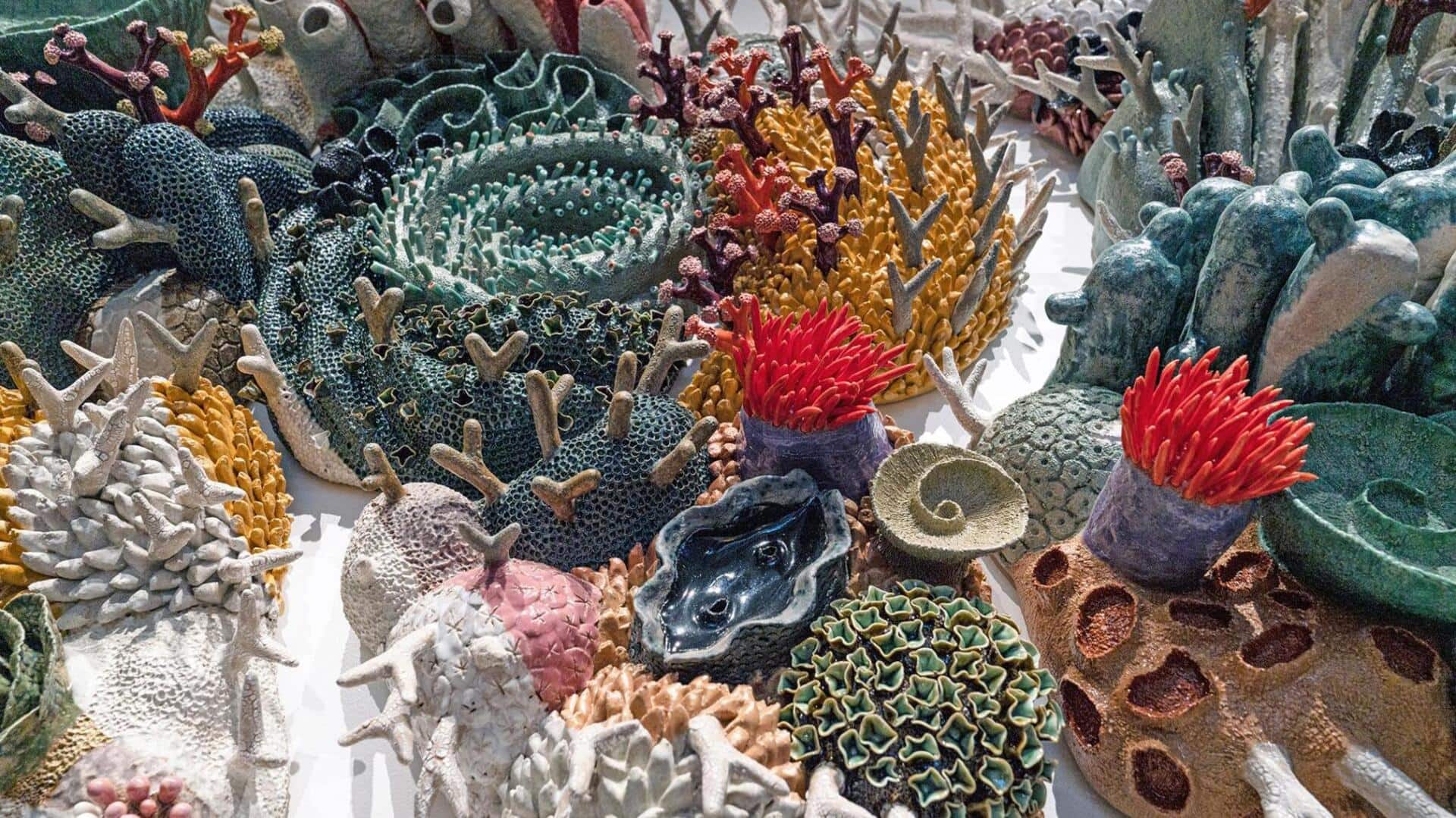
African coral art: What makes it truly unique
What's the story
African coral art has long been celebrated for its intricate designs and cultural significance. Today, artists are infusing modern elements into this traditional craft, creating unique pieces that resonate with contemporary audiences. By blending traditional techniques with modern aesthetics, these artists are redefining the boundaries of coral art. This article explores how African coral art is evolving, and the impact of modern influences on this timeless craft.
Technique blend
Fusion of traditional and modern techniques
Many African coral artists are now fusing traditional methods with modern techniques. This fusion allows them to create pieces that appeal to both purists and those seeking contemporary flair.
Artists often incorporate new materials and tools, while maintaining the essence of traditional craftsmanship.
The result is a dynamic art form that honors its roots while embracing innovation.
Global impact
Influence of global trends
Global trends have also influenced African coral art significantly. Artists are now exposed to international styles and techniques through online platforms and exhibitions.
This exposure encourages experimentation and adaptation, resulting in artworks that reflect a global perspective, yet retain an African identity.
The influence of global trends has expanded the reach of these artists beyond local markets.
Economic growth
Economic opportunities through innovation
The incorporation of modern elements into African coral art has opened up new economic opportunities for artists.
By appealing to a wider audience, they can command higher prices for their work.
Additionally, innovative approaches attract investment from galleries and collectors interested in unique pieces with cultural significance.
Cultural legacy
Preservation of cultural heritage
Despite the modern twists, many artists remain committed to preserving the cultural heritage associated with African coral art.
They often draw inspiration from historical motifs and stories passed down through generations.
This dedication ensures that, while the art evolves, it continues to honor its rich history and significance within African communities.