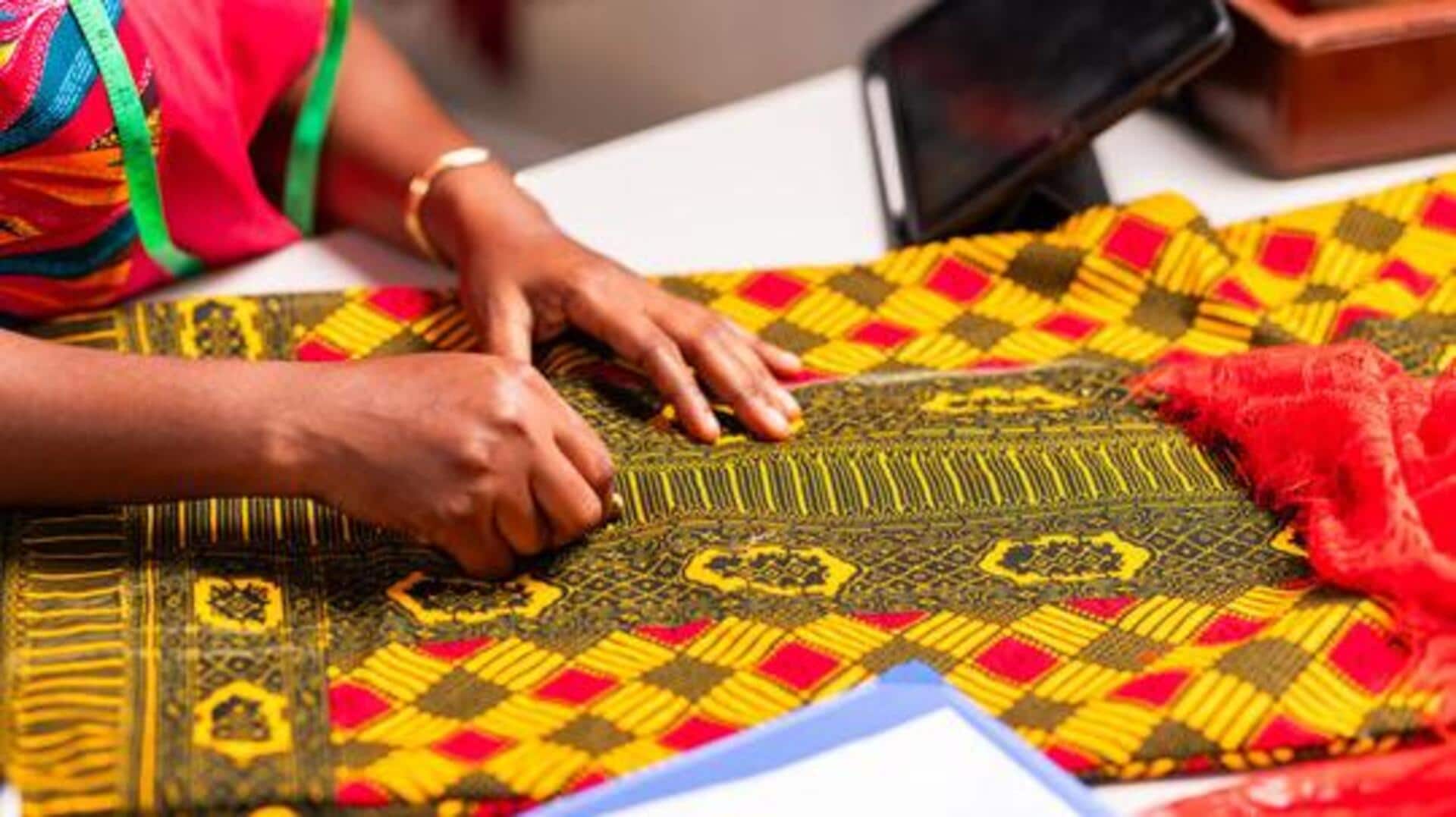
How eco-friendly fibers are shaping traditional embroidery
What's the story
African embroidery is a vibrant art form, but it is now being redefined with sustainable fibers. These eco-friendly materials are changing the game for artisans, offering them new avenues to explore their creativity while preserving the environment. The shift to sustainable practices not only supports the planet but also adds a unique touch to traditional designs. Here's how African embroidery is evolving with these innovative fibers.
Fiber 1
Embracing organic cotton
Organic cotton is becoming a popular choice among African embroiderers.
Grown without synthetic pesticides or fertilizers, organic cotton is less harmful to the environment.
It also offers a softer texture and better durability, making it ideal for intricate designs.
By opting for organic cotton, artisans can create beautiful pieces that appeal to eco-conscious consumers.
Fiber 2
Exploring bamboo fibers
Bamboo fibers are also making waves in the world of African embroidery. Bamboo grows quickly and requires less water than other crops, making it a sustainable option.
The fibers are naturally antibacterial and hypoallergenic, making them perfect for clothing and textiles worn close to the skin.
Artisans experimenting with bamboo can create unique pieces that stand out in the market.
Fiber 3
Utilizing hemp for durability
Hemp is also being used in African embroidery for its durability and strength.
Hemp plants need very little water and no chemical fertilizers, making them an environmentally friendly choice.
Hemp fabrics become softer with every wash, making them comfortable to wear over time.
Artisans using hemp can make long-lasting garments that withstand the test of time.
Fiber 4
Incorporating recycled materials
Recycled materials are also being used by African embroiderers to create innovative designs while minimizing waste.
By repurposing discarded textiles into new creations, artisans not only contribute to reducing environmental impact but also add a unique character to their work.
This practice encourages creativity, as it challenges traditional methods of production.