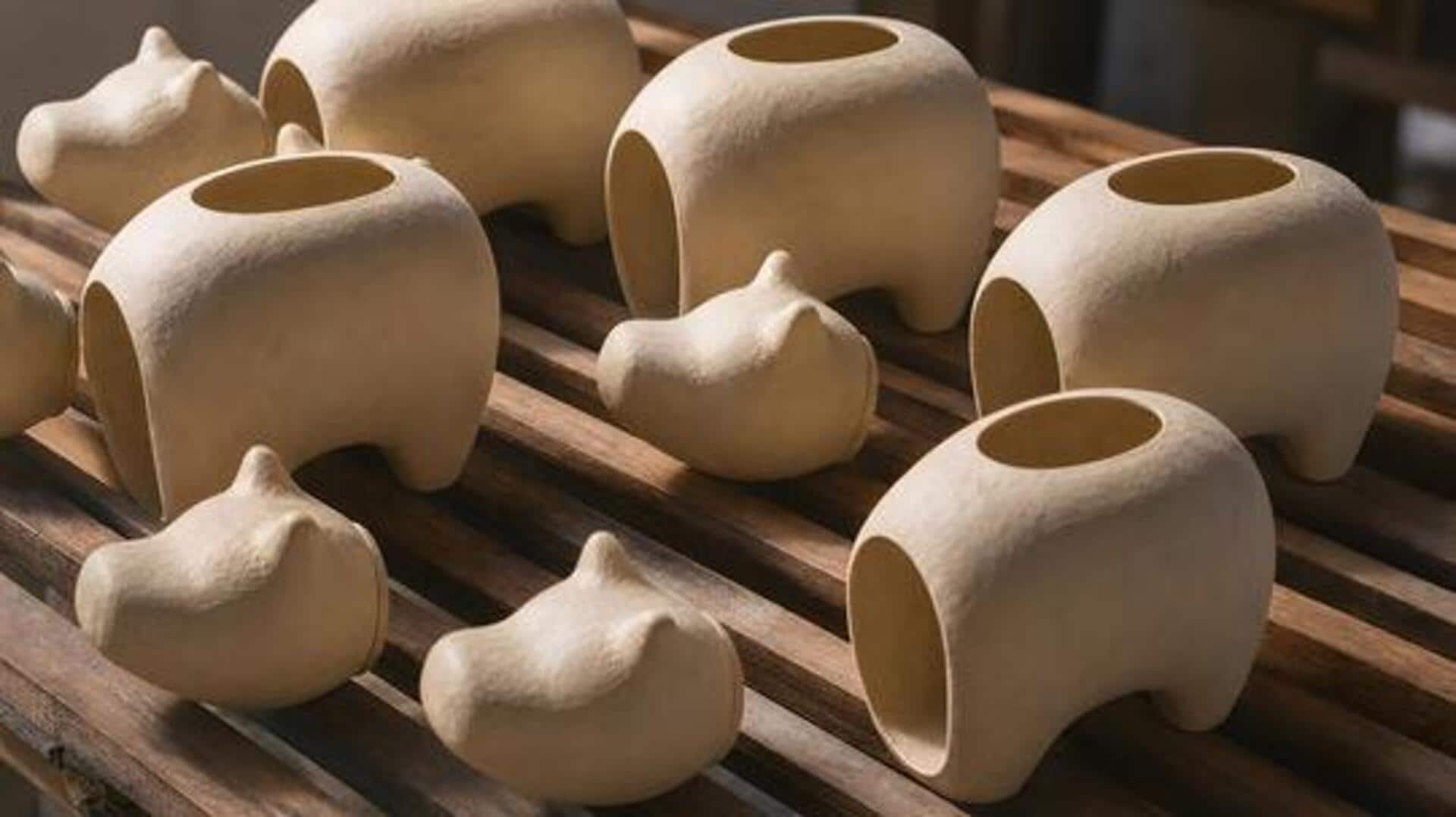
How papier-mache is finding its place in home decor
What's the story
African papier-mache is a traditional art form making a comeback in sustainable home decor. The technique, which involves recycling paper and mixing it with natural materials, creates unique and eco-friendly decor pieces. The revival of this craft not only promotes sustainability but also celebrates African culture and artistry. As more people look for environmentally conscious decor options, African papier-mache provides an innovative solution that blends tradition with modern design.
Tip 1
The art of recycling paper
Recycling paper is at the heart of African papier-mache. Artists collect used paper, shred it into small pieces, and soak it in water to create a pulp.
This pulp is then mixed with natural binders like flour or starch to make a malleable paste.
The paste can be molded into various shapes and left to dry, resulting in sturdy, yet lightweight, decor items.
Tip 2
Incorporating natural materials
Natural materials are also used in African *papier-mache* to enhance its sustainability.
Artists often use clay, sand, or plant fibers to add texture and durability to their creations.
These materials are readily available in many African communities, making the process more sustainable.
By using locally sourced resources, artisans reduce their environmental impact while supporting local economies.
Tip 3
Unique design possibilities
The versatility of African papier-mache opens up endless design possibilities for home decor enthusiasts.
From intricate masks and sculptures to decorative bowls and wall hangings, each piece is unique due to the handmade nature of the craft.
The vibrant colors and patterns often seen in these artworks reflect rich cultural traditions while appealing to contemporary tastes.
Tip 4
Supporting artisans for sustainability
Supporting artisans who practice African papier-mache is key to promoting sustainability in home decor.
By purchasing these items, consumers contribute directly to the livelihoods of skilled craftsmen who rely on this art form for income.
Additionally, supporting these artisans helps preserve traditional techniques that have been passed down through generations, ensuring cultural heritage is maintained alongside environmental responsibility.