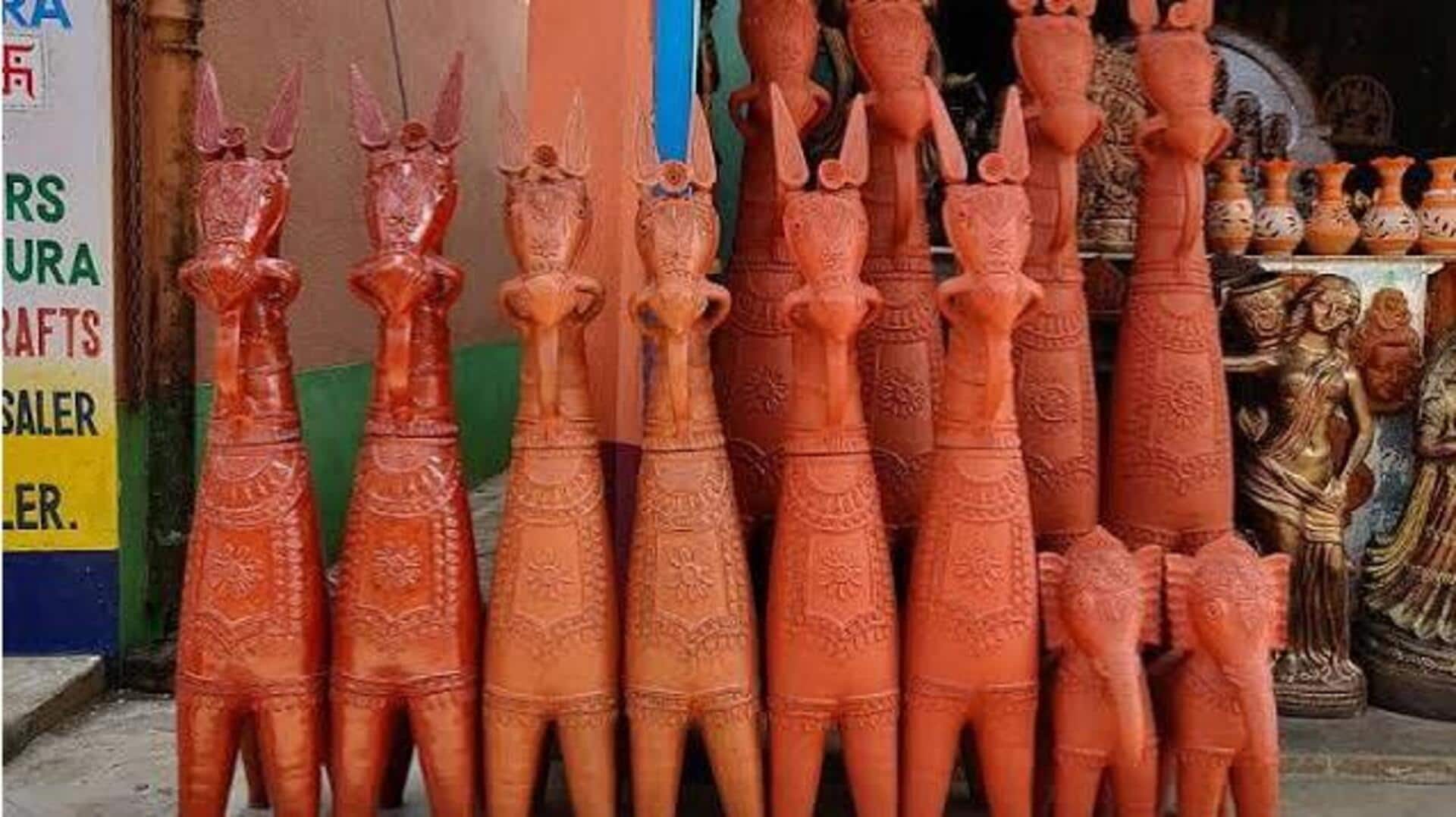
Why collectors love African terracotta crafts
What's the story
African terracotta sculptures have been a part of the continent's rich artistic heritage for centuries. These sculptures, made from clay, show the diversity and complexity of African cultures. They have been used for various purposes, from ceremonial to decorative. Today, these artworks are appreciated not just for their historical value, but also for their aesthetic appeal. They continue to inspire artists and collectors across the globe.
#1
Historical significance of terracotta sculptures
Terracotta sculptures have been a part of African history for centuries. They were commonly used in rituals and as grave goods, giving us a glimpse into the past.
The Nok culture of Nigeria is one of the earliest known to have made terracotta heads around 1000 BC.
These sculptures give us a glimpse into ancient African societies and their customs.
#2
Techniques used in creating terracotta art
The making of terracotta sculptures involves a number of techniques that have been passed down through generations.
Artists mold clay into desired shapes before firing them at high temperatures to harden them.
Some artists even use natural pigments to color their works, adding depth and character.
The techniques differ from region to region, reflecting local traditions and innovations.
#3
Cultural representations in terracotta works
Terracotta sculptures also serve as a medium of cultural expression, portraying the traditions, beliefs, and social structures of different African communities.
Many of these artworks depict human figures or animals that are of great importance in local folklore or religion.
By studying these pieces, one can learn a lot about how different cultures lived and interacted with their environment.
#4
Modern influence on terracotta sculpture
In recent years, modern artists have been inspired by traditional African terracotta techniques while adding contemporary elements to their work.
This fusion creates a dialogue between past and present artistic practices. It keeps the tradition alive while appealing to modern audiences.
Exhibitions around the world showcase this blend, highlighting the enduring legacy of African terracotta art.