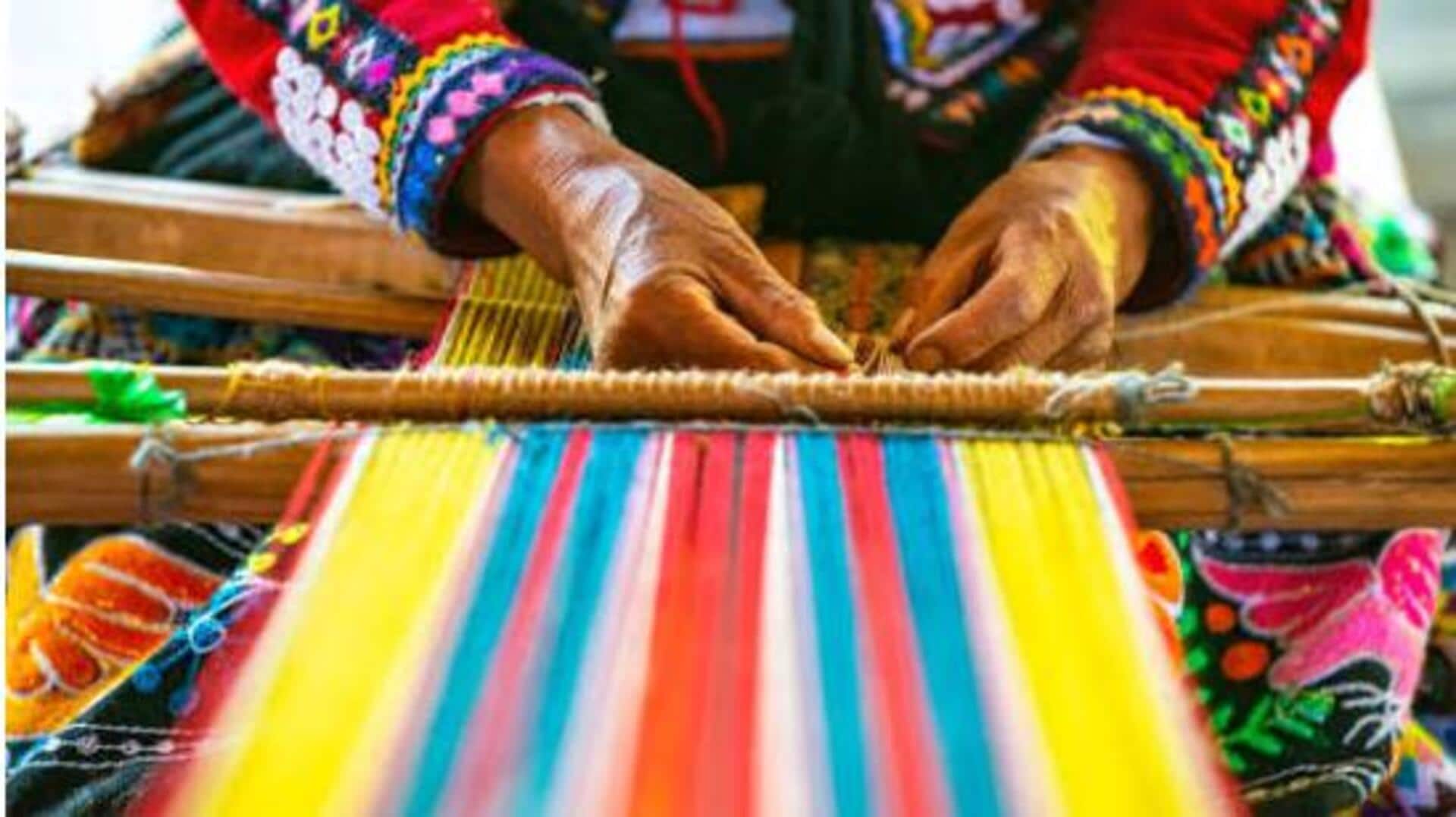
African wool weaving: 5 styles to know
What's the story
African wool weaving is a centuries-old craft, which is now being reinterpreted in the modern world. Artists across the continent are experimenting with traditional techniques to create contemporary pieces that reflect current trends and cultural dialogues. These modern interpretations not only preserve the heritage but also make it relevant to today's art scene. Here are five innovative styles redefining African wool weaving today.
Geometric designs
Bold geometric patterns
Modern African wool weavers are increasingly incorporating bold geometric patterns into their work.
These designs often draw inspiration from traditional motifs but are reimagined with a contemporary twist.
The use of sharp lines and vibrant colors creates visually striking pieces that appeal to a wide audience.
This style highlights the versatility of wool as a medium and its ability to convey complex ideas through simple shapes.
Texture innovation
Textured surfaces
Texture has become an essential element in modern African wool weaving.
Artists are experimenting with different techniques to create rich, tactile surfaces that invite interaction.
By varying the density and direction of the weave, they produce dynamic textures that enhance the visual and sensory experience of the viewer.
This approach adds depth and dimension to their work, making it more engaging and immersive.
Minimalism influence
Minimalist aesthetics
The minimalist aesthetic has also made its way into African wool weaving, with artists opting for simplicity over complexity.
This style focuses on clean lines, subtle color palettes, and understated forms. It emphasizes the beauty of the material itself rather than intricate embellishments or patterns.
Minimalism allows for a more focused appreciation of craftsmanship while appealing to those who prefer understated elegance.
Fusion styles
Cultural fusion techniques
Cultural fusion techniques are redefining African wool weaving by bringing together elements from various traditions across the globe.
Artists mix local practices with influences from other cultures, creating unique pieces that celebrate diversity and exchange.
This fusion not only broadens artistic horizons but also fosters cross-cultural understanding through shared creative expressions.
Eco-friendly methods
Sustainable practices
Sustainability has become a key focus in modern African wool weaving practices, as artists adopt eco-friendly methods in their work processes.
From sourcing materials responsibly to using natural dyes, these sustainable practices minimize environmental impact while supporting local communities economically.
By prioritizing sustainability, these artists contribute positively towards global conservation efforts without compromising artistic integrity or innovation.