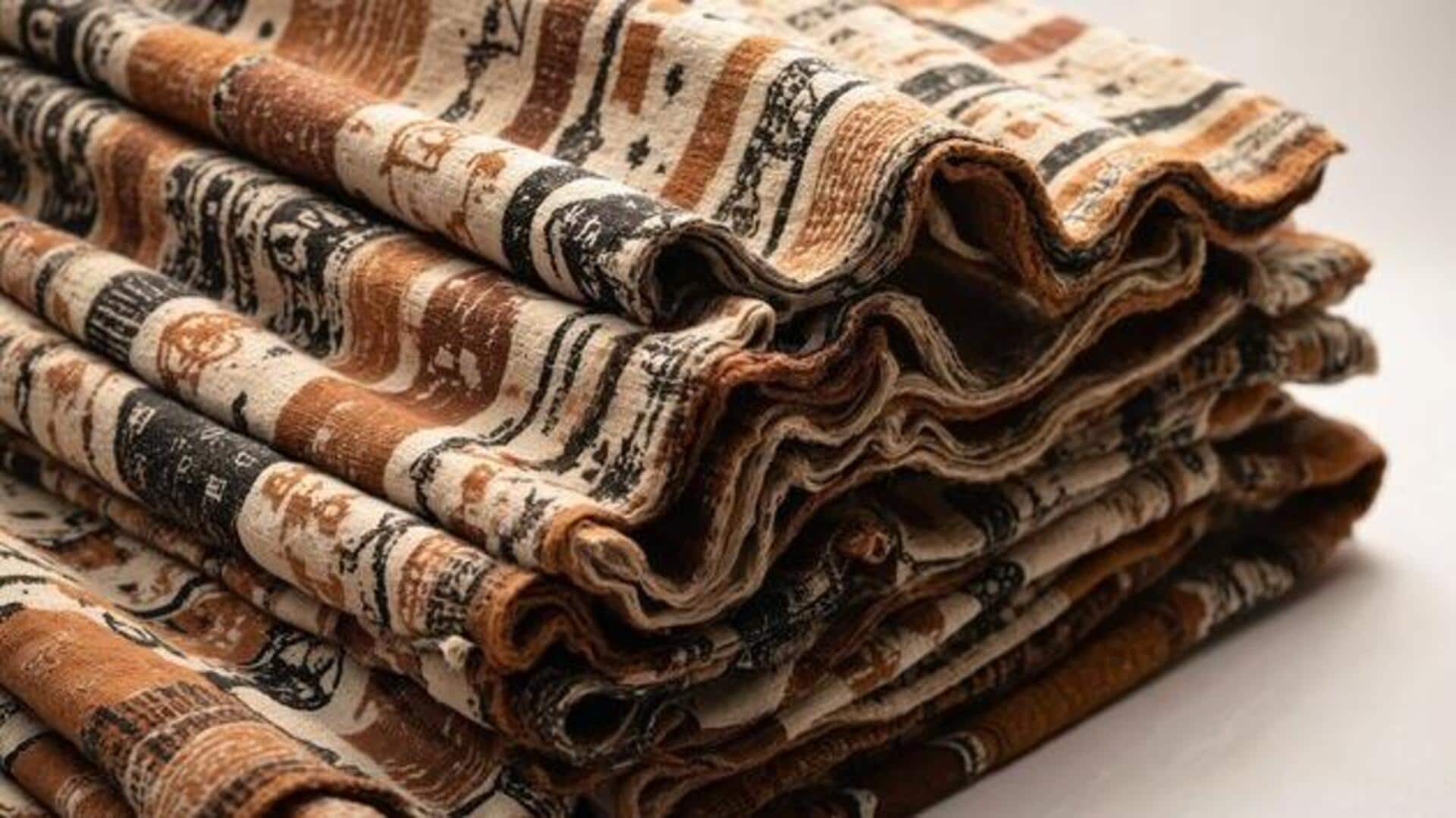
Akwete cloth: All about this iconic Nigerian textile
What's the story
Akwete cloth, a traditional textile from Nigeria, is making waves in the fashion world. Famous for its intricate patterns and vibrant colors, the cloth is now being reimagined by designers across the globe. The unique fabric, which is handwoven by skilled artisans, has a rich cultural heritage. As designers explore new ways to incorporate Akwete cloth into modern fashion, the possibilities seem endless.
#1
The cultural significance of Akwete cloth
Akwete cloth is not just a fabric but a symbol of identity and pride for many Nigerian communities.
Traditionally woven by women in the Akwete community of Abia State, it reflects the skills passed down through generations.
Each pattern tells a story or represents specific cultural beliefs, making it more than just an aesthetic choice in fashion.
#2
Modern interpretations in fashion
Designers are creatively reinterpreting Akwete cloth by blending it with contemporary styles.
From dresses to accessories, the fabric's versatility is being showcased on runways around the world.
By mixing traditional techniques with modern cuts and silhouettes, designers are making Akwete cloth appealing to a wider audience while keeping its essence intact.
#3
Sustainable fashion movement
The growing interest in sustainable fashion has also put Akwete cloth in the spotlight.
Handwoven from natural fibers, it is an eco-friendly alternative to mass-produced textiles.
As more consumers look for sustainable options, Akwete cloth provides an ethical choice that supports local artisans and preserves cultural heritage.
#4
Economic impact on local communities
The global demand for Akwete cloth has also had a positive economic impact on local communities where it is produced.
Increased sales have led to higher incomes for artisans and their families.
This economic boost helps sustain traditional weaving practices and supports community development initiatives.