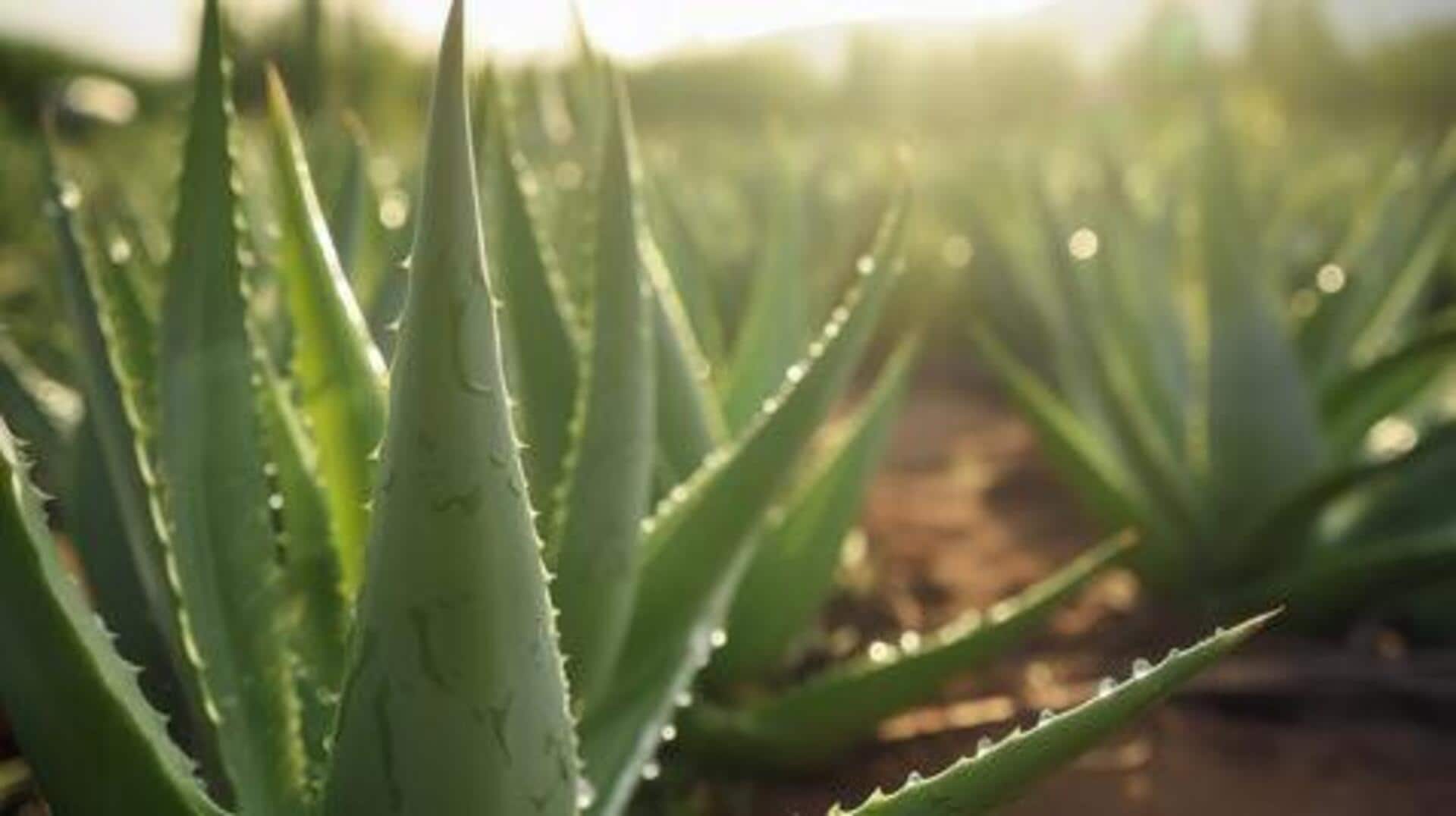
5 lighting tips to help aloe vera thrive
What's the story
Aloe vera is a hardy plant that thrives in the right lighting conditions. Knowing how to position your aloe vera can make all the difference in its growth and health. This article shares five lighting tips to ensure your aloe vera flourishes. From natural sunlight to artificial light sources, these tips will help you create an ideal environment for your plant.
Tip 1
Optimal sunlight exposure
Aloe vera loves bright, indirect sunlight. Ideally, place it near a window where it can soak up plenty of light but not directly under harsh rays that could scorch its leaves. If direct sunlight isn't possible, rotate the plant every few days to ensure even exposure.
Tip 2
Avoiding overexposure
While aloe vera needs plenty of light, overexposure can be harmful. Too much direct sunlight can lead to leaf burn and discoloration. It's important to monitor your plant's response to light and adjust accordingly. If you notice signs of stress, consider moving it a few feet away from direct sunlight or using sheer curtains to diffuse the intensity.
Tip 3
Using artificial lighting
For those lacking sufficient natural light indoors, artificial lighting can be a great alternative. LED grow lights are perfect for this purpose as they provide the right spectrum of light without heating up your plant too much. Keeping them about 12 inches above the plant and on for 12-14 hours a day can mimic natural conditions perfectly.
Tip 4
Seasonal adjustments
As seasons change, so does the availability of natural light. In winter months, when daylight hours are shorter or weaker, you might want to move your aloe closer to windows or supplement with artificial lights for longer periods each day.
Tip 5
Monitoring plant response
Regularly observe how your aloe vera responds to its lighting conditions over time. Healthy leaves should be plump and firm. Any signs of wilting or discoloration may indicate inadequate lighting or overexposure. These issues require adjustments in placement or duration of exposure accordingly.