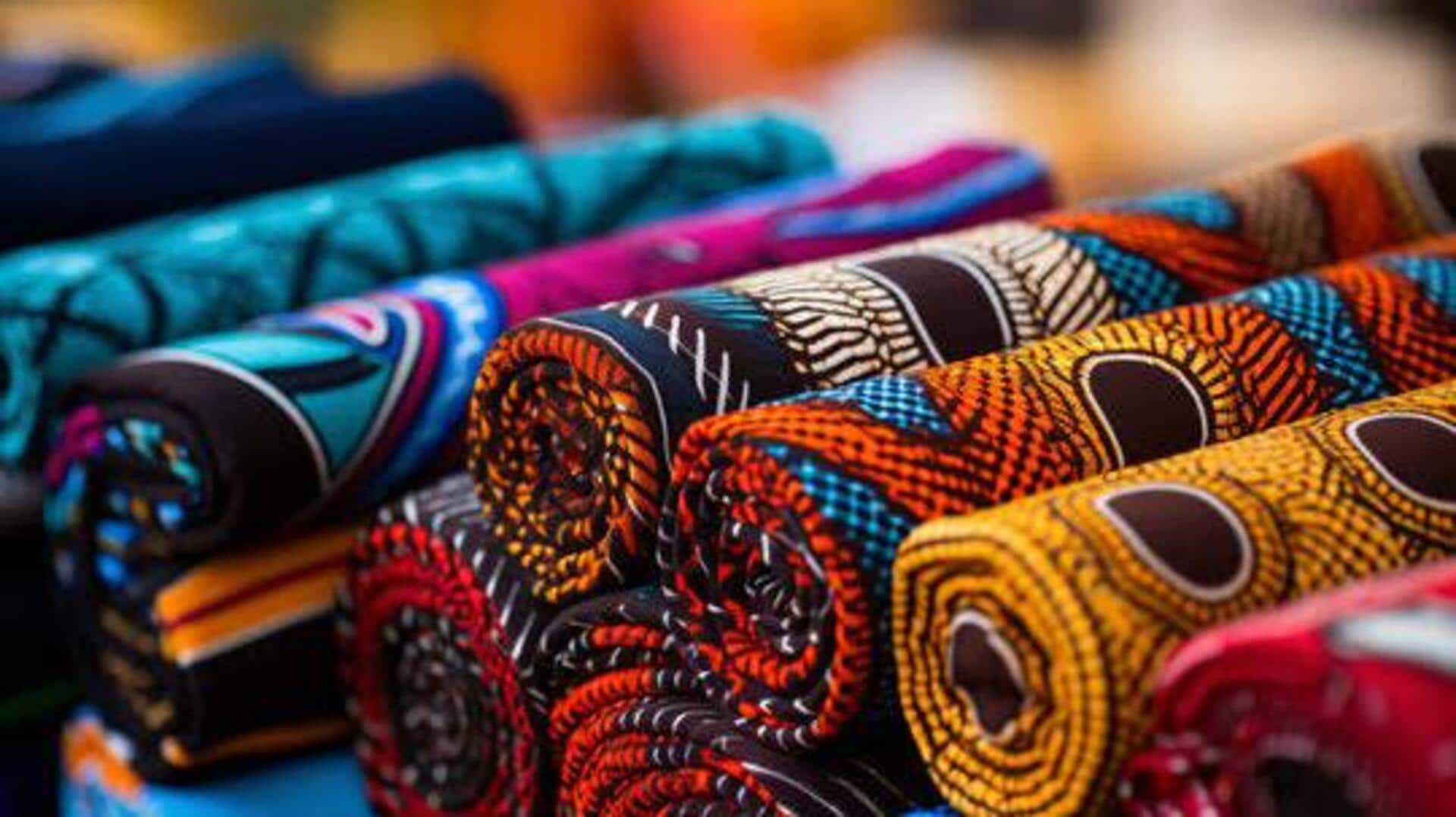
How Africa's ankara fabric is inspiring modern art
What's the story
Ankara fabric, with its vibrant patterns and rich cultural history, is making waves in contemporary art. Artists are using this traditional African textile to explore identity, heritage, and modernity. The bold colors and intricate designs of ankara offer a unique medium for expression. As artists experiment with this fabric, they are redefining boundaries between fashion and fine art. Here is how ankara is influencing the art scene.
#1
Exploring identity through ankara
Artists are increasingly using ankara fabric to delve into themes of identity and cultural heritage.
By incorporating these textiles into their work, they can make statements about personal and collective histories.
The patterns often hold significant cultural meanings, which artists reinterpret in contemporary contexts.
This exploration allows for a dialogue between past and present, inviting viewers to consider the complexities of identity in today's world.
#2
Redefining fashion and fine art
The line between fashion and fine art is blurring as artists use ankara fabric in their creations.
Traditionally associated with clothing, these textiles are now being used in paintings, sculptures, and installations.
This crossover challenges conventional notions of both fields, encouraging audiences to see fashion as a form of artistic expression.
The vibrant patterns of ankara add visual interest and depth to any artwork.
#3
Sustainable practices with ankara textiles
Ankara fabric also lends itself to sustainable art practices. Many artists are opting for recycled or repurposed materials while working with these textiles.
This not only promotes environmental consciousness but also highlights the durability and versatility of ankara fabrics.
By focusing on sustainability, artists contribute positively towards ecological preservation while celebrating the beauty of traditional textiles.
#4
Collaborations between artists and designers
Collaborations between visual artists and fashion designers are on the rise, thanks to the popularity of ankara fabrics.
These partnerships result in innovative works that combine elements from both disciplines.
The collaboration often leads to new ways of seeing how textiles can be used beyond their traditional purposes.
It also emphasizes the collaborative nature of creativity in today's interconnected world.