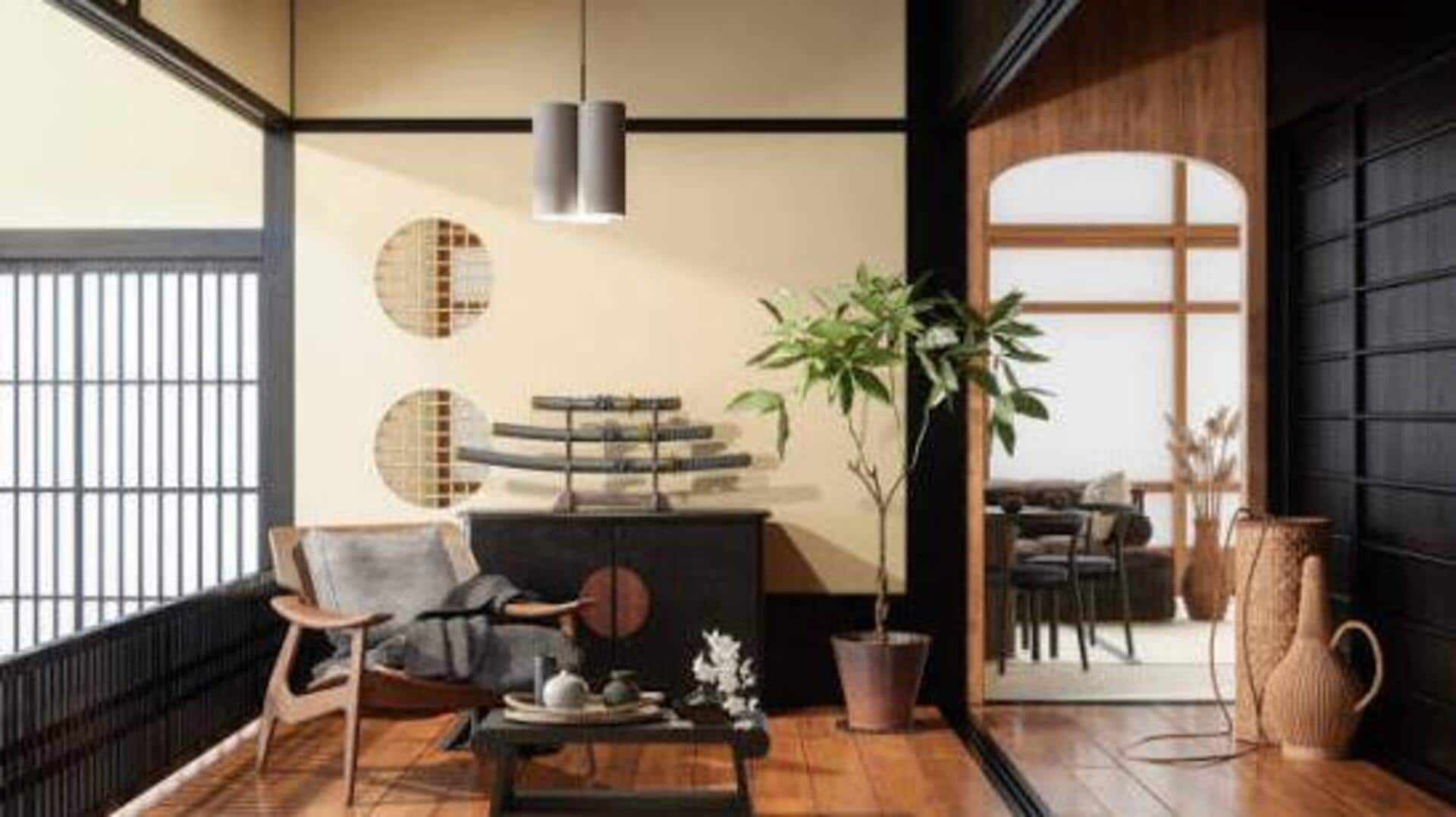
Asian decor: 5 ideas for a stylish home
What's the story
Asian home decor is famous for its unique blend of tradition and modernity. It has elements that are not just aesthetically pleasing but also rich in cultural significance. From the serene simplicity of Japanese design to the vibrant colors of Indian textiles, Asian decor offers a lot to explore. Here are five timeless elements that define this captivating style, each adding its own charm and character to any living space.
#1
Minimalism in Japanese design
Japanese design is synonymous with minimalism.
The emphasis is on simplicity and functionality, with clean lines and uncluttered spaces. This design philosophy promotes peace and mindfulness by eliminating distractions.
Tatami mats, shoji screens, and futons are common in Japanese homes, making them practical and aesthetically pleasing.
The use of natural materials like wood and bamboo further adds to the serene atmosphere.
#2
Intricate patterns in Indian textiles
Indian textiles are famous for their intricate patterns and vibrant colors.
These fabrics are often embellished with traditional motifs like paisleys or floral designs.
Used in everything from curtains to cushion covers, Indian textiles add warmth and personality to any room.
The craftsmanship behind these pieces is a testament to India's rich cultural heritage.
#3
Feng Shui principles in Chinese decor
Feng Shui is an important aspect of Chinese home decor, focusing on harmony between individuals and their environment.
It uses the arrangement of furniture, color schemes, and decorative items to promote positive energy flow within a space.
Key elements include mirrors for reflecting light positively around rooms, plants for bringing life indoors, and water features like fountains or aquariums for tranquility.
#4
Balinese influences with natural materials
Balinese decor focuses on natural materials such as rattan, teak wood, stone carvings, and clay pottery.
These elements are used to create a seamless connection between indoor spaces and the outdoors, which is a signature of Balinese architecture.
The use of these materials not only adds to the aesthetic appeal but also to the sustainability of the environment.
#5
Korean aesthetics with hanok style
The hanok style defines Korean aesthetics with its unique architectural features such as ondol (underfloor heating) systems, curved roofs with tiles called giwa, wooden beams painted with dancheong (colorful patterns), and paper windows called changhoji.
These elements not only make the houses functional, but also give them a unique identity that reflects Korea's history and culture.