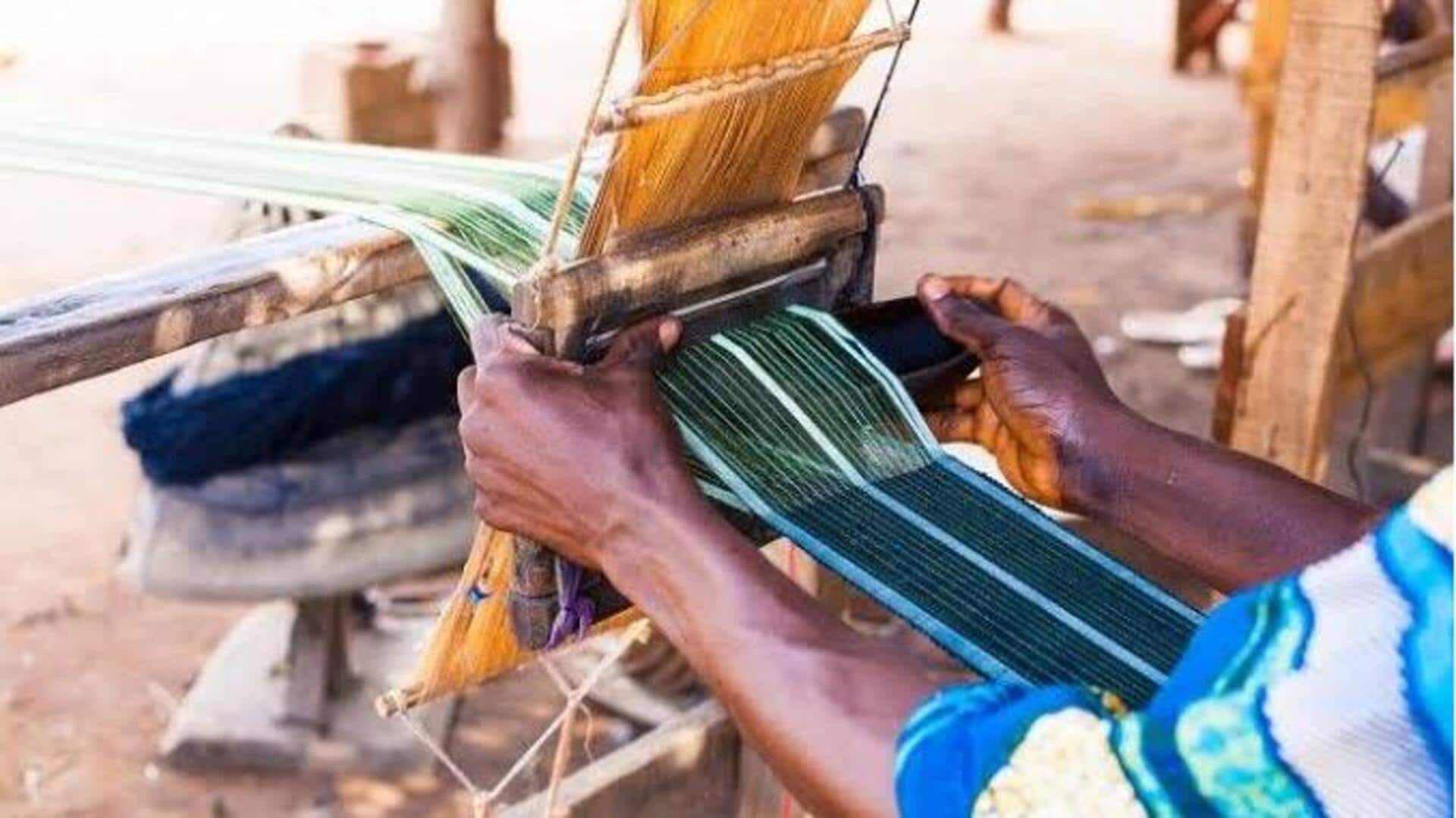
How artisans are reimagining traditional weaving techniques
What's the story
Aso-oke weaving, a traditional craft from Nigeria, is getting a modern makeover as artisans explore new patterns and techniques. This evolution is not only preserving the cultural heritage of the craft, but also making it relevant in today's fashion and design industries. By blending traditional methods with contemporary ideas, Aso-oke weavers are creating unique textiles that appeal to a wider audience.
#1
Fusion of traditional and modern designs
Artisans are now mixing age-old designs with modern aesthetics to create something unique.
By adding geometric patterns and vibrant colors, they are attracting a younger audience.
This fusion allows the weavers to maintain cultural significance while also catering to the tastes of modern consumers.
The result is a collection of textiles that are both timeless and trendy.
#2
Use of sustainable materials
Sustainability has become a key focus in Aso-oke weaving. Artisans are sourcing eco-friendly materials to reduce environmental impact.
The use of organic dyes and recycled fibers not only aligns with global sustainability goals but also adds a unique character to the textiles.
This shift towards sustainable practices is appealing to eco-conscious consumers who value both tradition and environmental responsibility.
#3
Incorporation of technology
Technology is also playing a role in the evolution of Aso-oke weaving. From digital tools for pattern design to online platforms for marketing, artisans are leveraging tech to enhance their craft.
These advancements allow weavers to reach global markets and showcase their work beyond local communities.
The integration of technology is making it easier for artisans to innovate while preserving traditional techniques.
#4
Collaboration with fashion designers
Collaborations between Aso-oke weavers and fashion designers have resulted in innovative collections that highlight the beauty of this traditional craft.
Designers incorporate Aso-oke textiles into contemporary clothing lines, bridging the gap between cultural heritage and modern fashion trends.
These partnerships not only provide new opportunities for artisans but also introduce consumers to the rich history behind these unique fabrics.