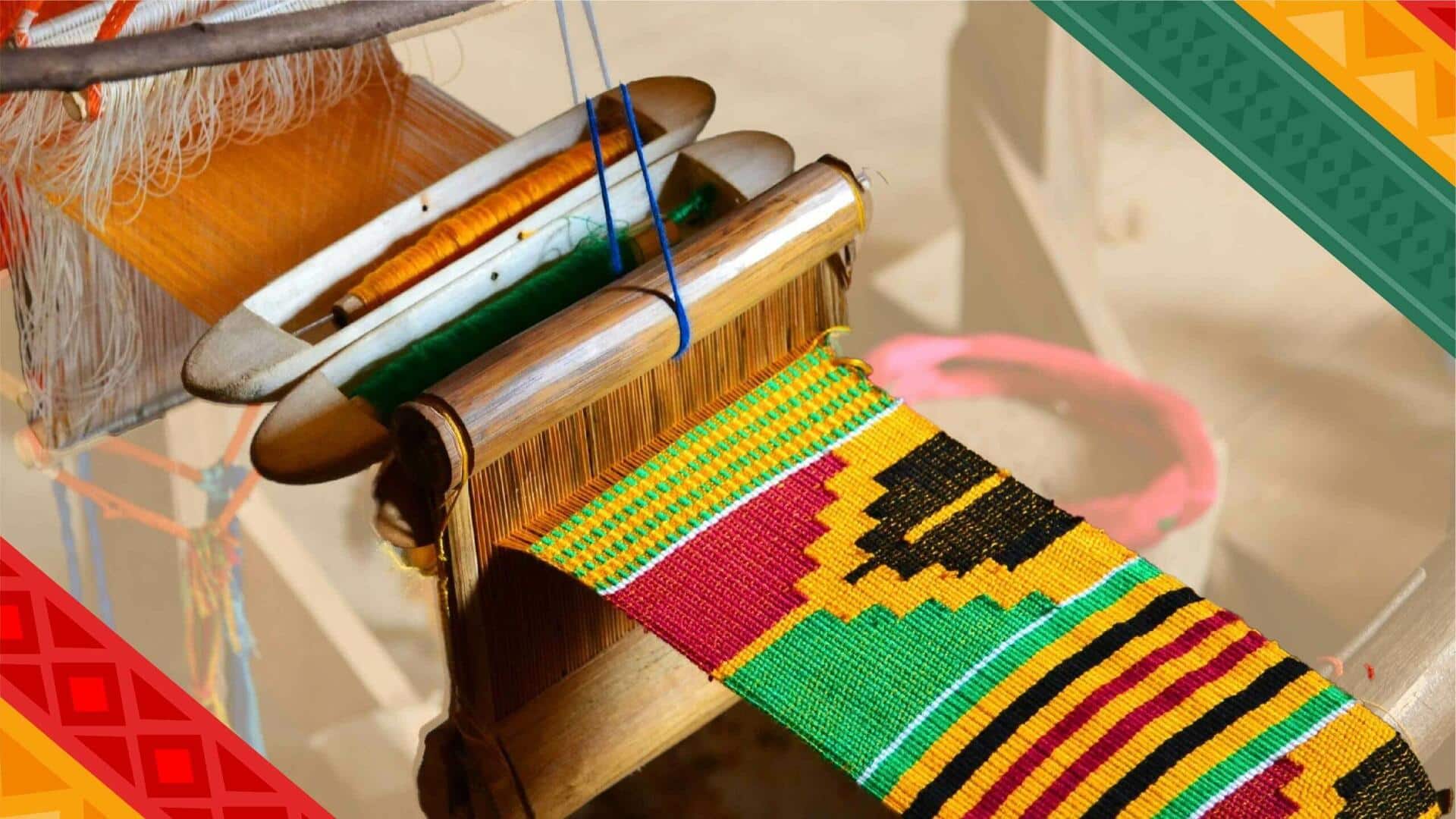
Aso Oke weaving: Evolving styles and methods
What's the story
Aso Oke weaving is a traditional craft of the Yoruba people of Nigeria. It is famous for its vibrant colors and intricate patterns. The art is not just a cultural heritage, but also a source of livelihood for many artisans. Over the years, the craft has evolved, with new styles and techniques emerging. This article explores the latest trends in Aso Oke weaving, highlighting innovations that are preserving this unique art form, while adapting to modern demands.
#1
Modern patterns in Aso Oke
Modern patterns in Aso Oke weaving are a beautiful blend of tradition and innovation.
Artisans are now experimenting with geometric designs and abstract motifs, which appeal to a wider audience.
These patterns are often inspired by contemporary art movements, while still paying homage to traditional Yoruba symbols.
The result is a fresh take on an age-old craft that resonates with both local and international markets.
#2
Use of technology in weaving
Technology has also made its way into Aso Oke weaving, making the process more efficient and precise.
Looms with advanced features allow artisans to create intricate designs with ease.
Digital tools also help in planning patterns before actual weaving begins, reducing material waste and enhancing accuracy.
This integration of technology ensures that the quality of Aso Oke remains high while meeting the demands of modern consumers.
#3
Sustainable materials in production
The use of sustainable materials has become a key focus in Aso Oke production. Artisans are now using organic cotton and natural dyes to create their fabrics.
These materials not only reduce environmental impact but also enhance the quality of the final product.
By adopting sustainable practices, weavers can appeal to eco-conscious buyers who value environmental responsibility as much as cultural authenticity.
#4
Training programs for artisans
Training programs for artisans are crucial in keeping Aso Oke weaving alive.
These initiatives teach new generations the traditional techniques, while also encouraging creativity and innovation.
Workshops often include lessons on business management and marketing strategies, which help artisans reach wider markets.
By investing in education, communities can ensure that this cultural heritage continues to thrive in the years to come.