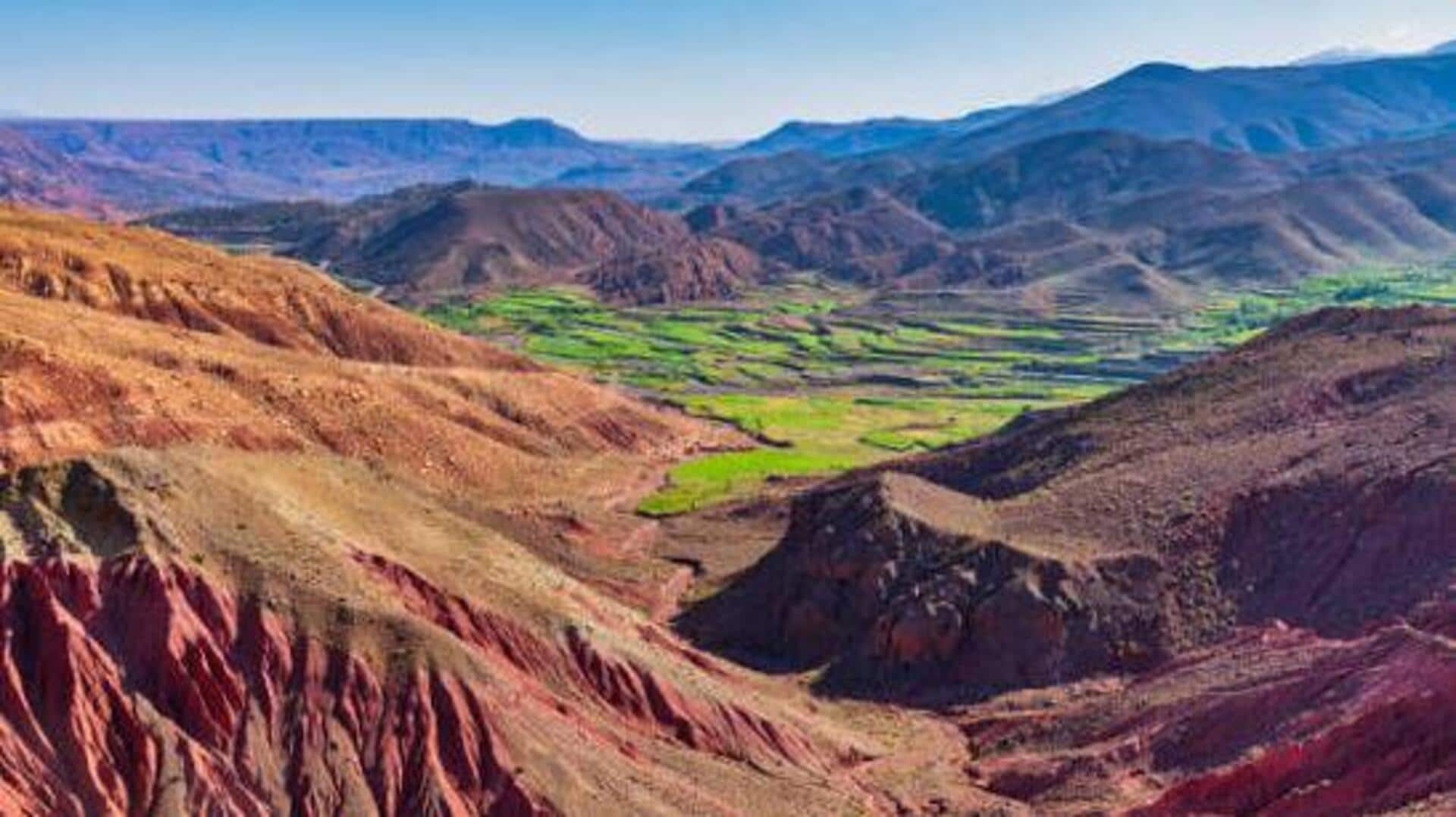
Atlas Mountains: A fascinating site for fossil exploration
What's the story
The Atlas Mountains of Morocco are famous for their rich fossil deposits, making them a perfect spot for amateur paleontologists. These ancient ranges provide a rare chance to discover fossils that date back millions of years. The region's geological history has left it with an abundance of marine fossils, giving an insight into Earth's past. For those interested in paleontology, the Atlas Mountains offer an exciting adventure.
#1
Understanding the geological significance
The Atlas Mountains are formed of different rock formations, some of which are millions of years old.
These formations are home to marine fossils from when the area was covered by ancient seas.
Understanding this geological significance is key to successful fossil hunting.
Knowing where certain types of rocks and formations are located can increase the chances of finding fossils.
#2
Best locations for fossil hunting
Some areas in the Atlas Mountains are particularly famous for fossil hunting.
The region around Erfoud is famous for its abundance of trilobite fossils, while the area near Demnate is known for ammonites.
These locations provide ideal conditions for finding well-preserved specimens.
Local guides can prove invaluable in leading you to these prime spots.
#3
Tips for successful fossil hunting
To make the most of your fossil hunting trip, it is important to be well-prepared.
Carry essential tools like a hammer, chisel, and brush to clean your finds.
Wear comfortable clothing suitable for hiking, and bring plenty of water to stay hydrated in the dry climate.
Early morning or late afternoon are ideal times to search when temperatures are cooler.
Tip 1
Respecting local regulations and communities
While exploring the Atlas Mountains, it is important to respect local regulations and communities.
Some areas may have restrictions on collecting fossils or require permits.
Always seek permission if entering private land or protected areas.
Engaging respectfully with local communities can enhance your experience and contribute positively to conservation efforts in the region.