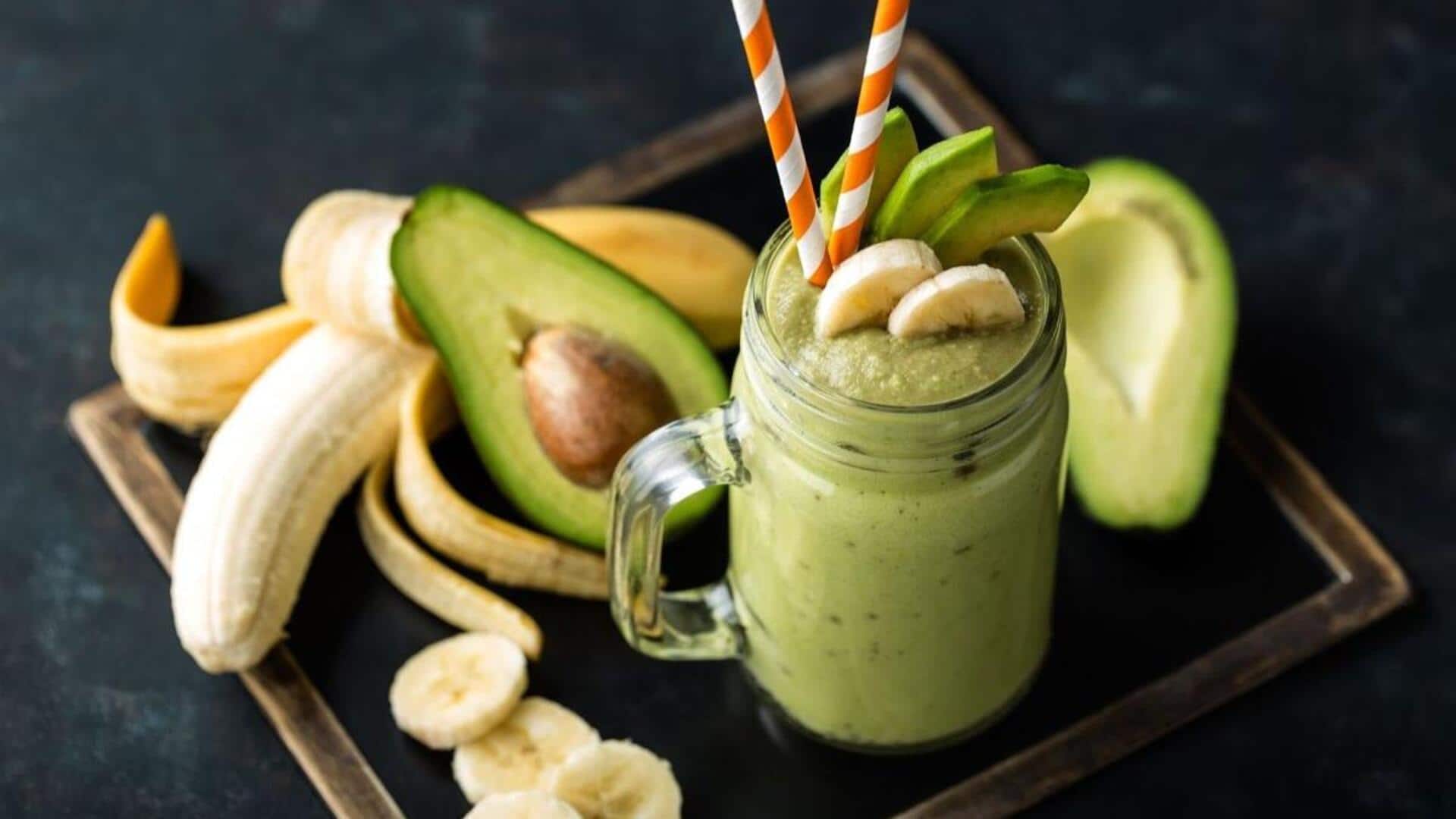
Avocado or banana: Which fruit has more fiber?
What's the story
Avocados and bananas are two of the most popular fruits, both of which come with their own set of health benefits. While bananas are famous for their high potassium content, avocados are known for their healthy fats. Both fruits can be a part of a healthy diet, but knowing their nutritional profiles can help you make better dietary choices. Here is how avocados and bananas compare in terms of nutrition.
#1
Comparing potassium content
Bananas are usually known for their potassium content, delivering around 358 milligrams per medium-sized banana.
Potassium is important for heart health and helps regulate blood pressure.
Avocados also provide a good amount of potassium, with one avocado containing around 975 milligrams.
This makes avocados an excellent source of this important mineral, even more than bananas.
#2
Understanding fat content
One of the biggest differences between avocados and bananas is their fat content.
Avocados are loaded with healthy monounsaturated fats, which are good for heart health, as they lower bad cholesterol levels.
A single avocado has about 15 grams of fat, most of which is monounsaturated.
Bananas, on the other hand, have negligible fat content (less than 1 gram per banana), making them a low-fat option.
#3
Fiber content analysis
Both avocados and bananas are high in dietary fiber, which is essential for digestive health.
A medium banana has about three grams of fiber, while one avocado has around 10 grams.
The higher fiber content in avocados can help keep you full longer and promote regular bowel movements more than bananas.
Tip 1
Vitamin C levels compared
Bananas provide some vitamin C, but not as much as other fruits, such as oranges or kiwis.
A medium banana has about 10% of the recommended daily intake of vitamin C.
Avocados have less vitamin C than bananas, with one avocado providing around 8% of the daily requirement.