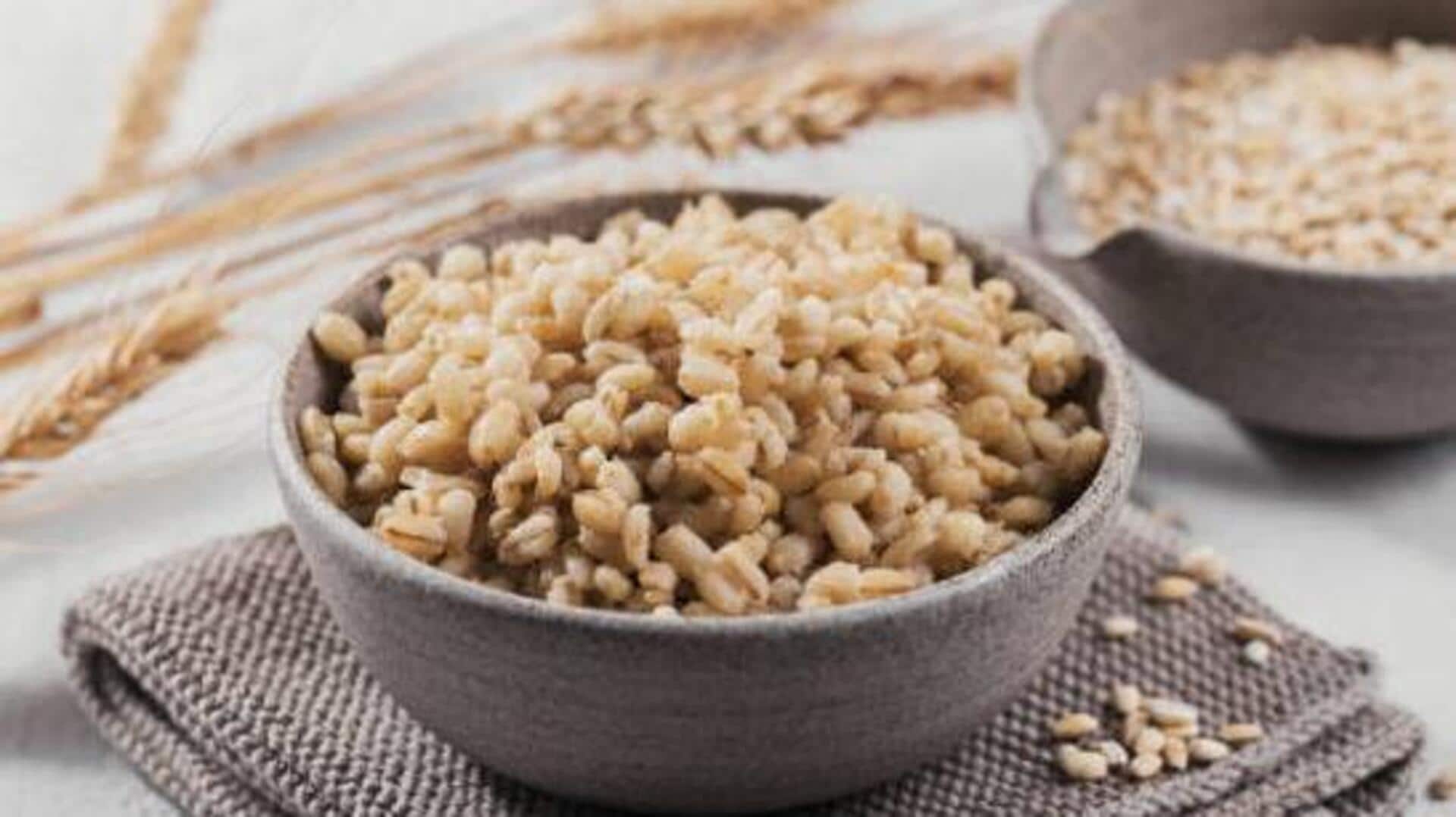
Barley v/s sorghum: Which one should you choose?
What's the story
Barley and sorghum are two ancient grains that have been a part of human diets for centuries. Both grains offer a range of nutritional benefits, making them ideal for anyone looking to add healthy options to their diet. While barley is often praised for its high fiber content, sorghum is known for its versatility and resilience in different climates. Let's take a look at the nutritional profiles of these grains, and how they can benefit your health.
#1
Fiber content comparison
Barley is famous for its high fiber content, especially beta-glucan, which helps in lowering cholesterol levels and improving heart health.
A cup of cooked barley has about six grams of fiber, which is more than most other grains.
Sorghum also packs a punch with fiber, but in slightly lesser amounts than barley. However, sorghum's fiber content still helps with digestion and maintaining gut health.
#2
Protein levels in grains
Both barley and sorghum provide decent amounts of protein, which is essential for muscle repair and growth.
Barley has about three grams of protein per cup when cooked, while sorghum offers about four grams per cup.
Although neither grain is as protein-rich as legumes or nuts, they still contribute significantly to daily protein intake when consumed as part of a balanced diet.
#3
Micronutrient benefits
Barley is rich in essential vitamins, such as B vitamins (niacin and thiamine), and minerals, such as magnesium and phosphorus. These nutrients are important for energy production and bone health.
Sorghum is also rich in iron and potassium, making it an excellent choice for those looking to boost their mineral intake without consuming animal products.
Tip 1
Gluten-free options with sorghum
For people with gluten sensitivities or celiac disease, sorghum makes an excellent gluten-free alternative to wheat-based products, such as bread or pasta.
Its versatility makes it easy to incorporate into different recipes without compromising on taste or texture.
Barley, on the other hand, contains gluten, so it is not suitable for those avoiding this protein entirely.