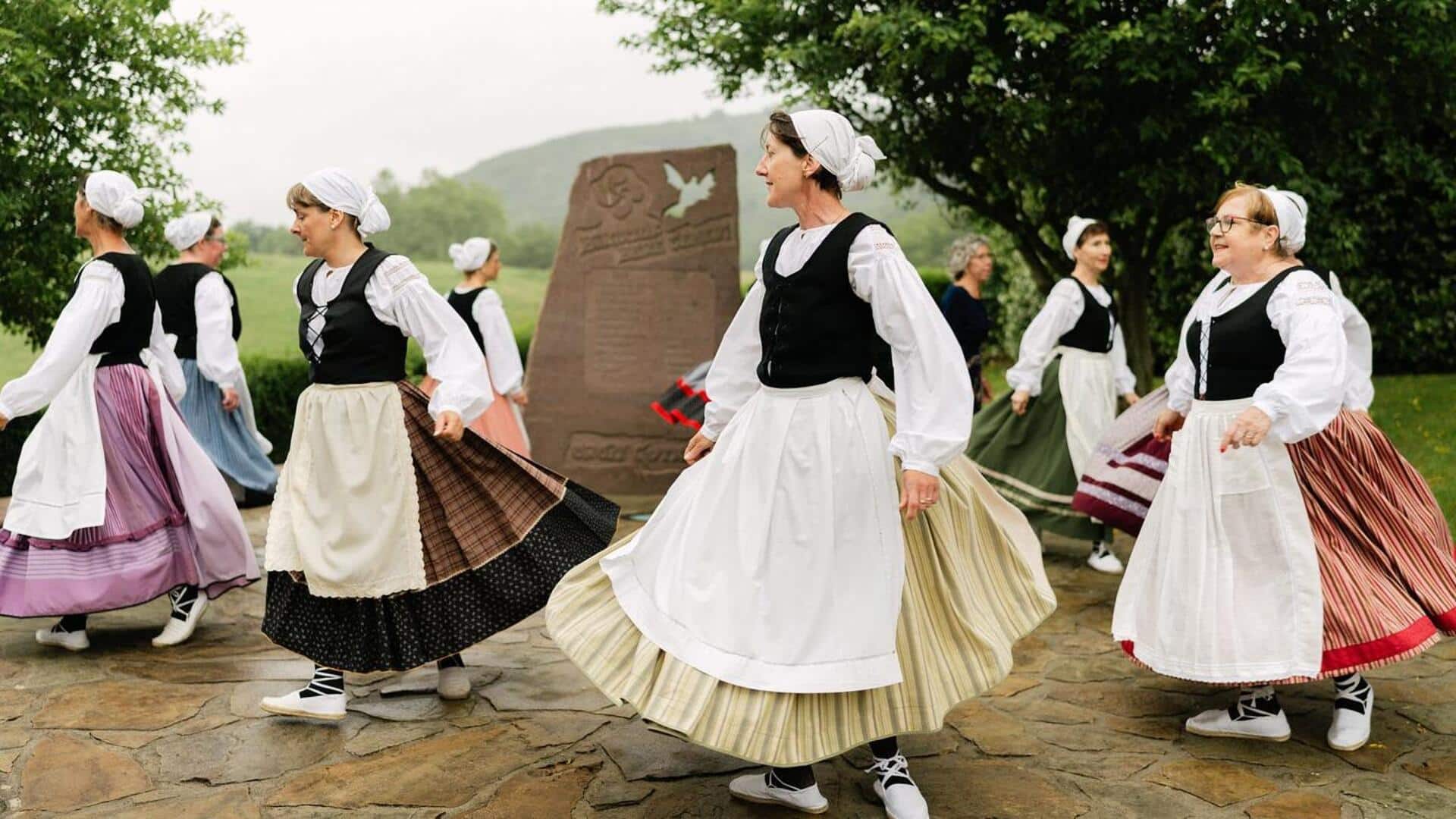
Basque wedding dance: Why it is so special
What's the story
Basque weddings are a colorful affair, with a mix of tradition and community spirit. The celebrations are not just about the couple but also about the families and friends coming together. One of the most important parts of these weddings is the dance, which brings everyone together in joy and unity. Here are five unique traditions that make Basque wedding dances so special.
#1
The Aurresku dance
The aurresku is a traditional Basque dance performed at weddings.
It is usually performed by a group of dancers who form a circle around the couple.
The dance is characterized by graceful movements and intricate footwork, symbolizing respect and honor.
The aurresku is often accompanied by traditional music played on instruments like the txistu and drum, adding to its charm.
#2
The role of music
Music plays an important role in Basque wedding dances.
Traditional instruments such as the txistu and tambourine are commonly used to create lively rhythms that get everyone on their feet.
The songs sung during these dances often tell stories or convey messages of love, unity, and celebration, enhancing the overall experience for all attendees.
#3
Community involvement
Community involvement is key to Basque weddings, particularly in dance.
Families and friends come together to practice traditional steps, reinforcing bonds and creating a sense of belonging.
This collective effort not only showcases the region's rich cultural heritage but also strengthens the ties between the two families.
It makes the celebration a true reflection of community spirit.
#4
Symbolic gestures in dance
Basque wedding dances are filled with symbolic gestures that mean good luck, prosperity, and happiness for the newlyweds.
These gestures are performed in unison by all participants, reinforcing the communal spirit of the celebration.
The focus is on unity and shared joy, rather than individual performance, making it a truly collective experience.
#5
Modern adaptations
While traditional Basque wedding dances remain popular, some modern adaptations have crept in to suit contemporary tastes.
Some couples opt for a fusion of traditional steps with modern music or even invite professional dancers to perform alongside their guests.
These adaptations ensure that while honoring cultural heritage, the celebrations also reflect personal style and preferences.