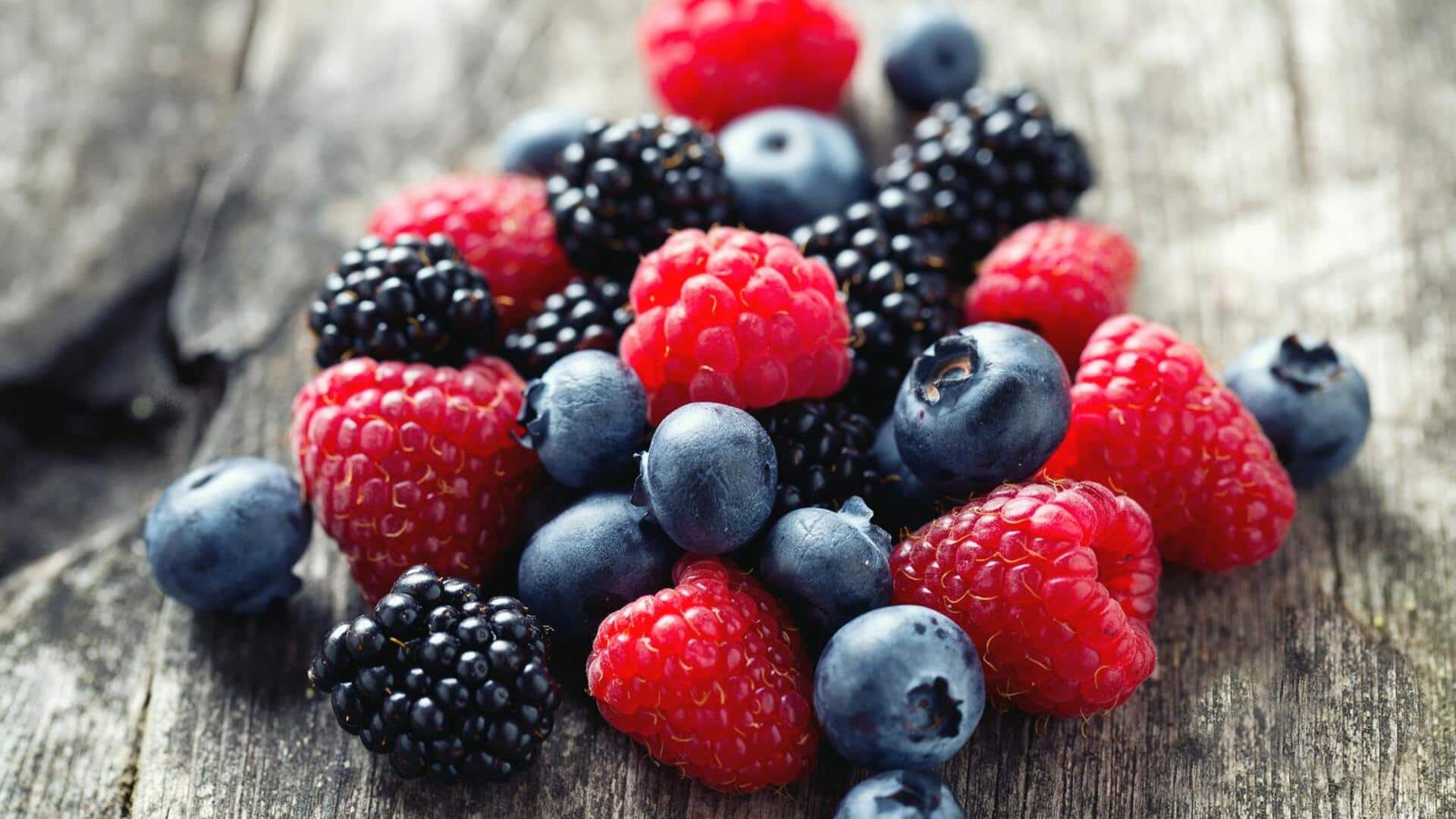
Blueberries v/s raspberries: Which has more fiber content?
What's the story
Blueberries and raspberries are two of the most popular berries, both known for their unique nutritional profiles. While both are packed with essential nutrients, they differ in a few key areas. Knowing these differences can help you make better dietary choices based on your nutritional needs. Here's a look at the nutritional profiles of blueberries and raspberries, highlighting their vitamins, minerals, fiber content, and antioxidant properties.
#1
Vitamin content comparison
Blueberries are rich in vitamin C, providing around 16% of the daily recommended intake per cup. They also have some vitamin K but not as much as raspberries.
Raspberries offer more vitamin C than blueberries, giving around 54% of the daily recommended intake per cup. They also provide more vitamin E than blueberries, which helps protect cells from damage.
#2
Mineral richness analysis
When it comes to minerals, both berries offer potassium and magnesium but in different quantities.
Blueberries have a higher potassium content with roughly 114 mg per cup compared to raspberries' 186 mg per cup.
However, raspberries have a slight edge in magnesium content with about 22 mg per cup versus blueberries' 18 mg per cup.
#3
Fiber content differences
Fiber is an important part of any healthy diet, and both blueberries and raspberries deliver it well.
However, raspberries take the cake with eight grams of fiber per cup, as compared to blueberries' four grams per cup.
The extra fiber in raspberries can help with digestion and keep you feeling full longer.
#4
Antioxidant properties explored
Antioxidants are key to keeping your body healthy by neutralizing free radicals.
Blueberries are well-known for their high antioxidant levels, especially anthocyanins, which give them their color and may help reduce inflammation.
Raspberries also have powerful antioxidants like quercetin and ellagic acid, but in slightly lesser amounts than blueberries.