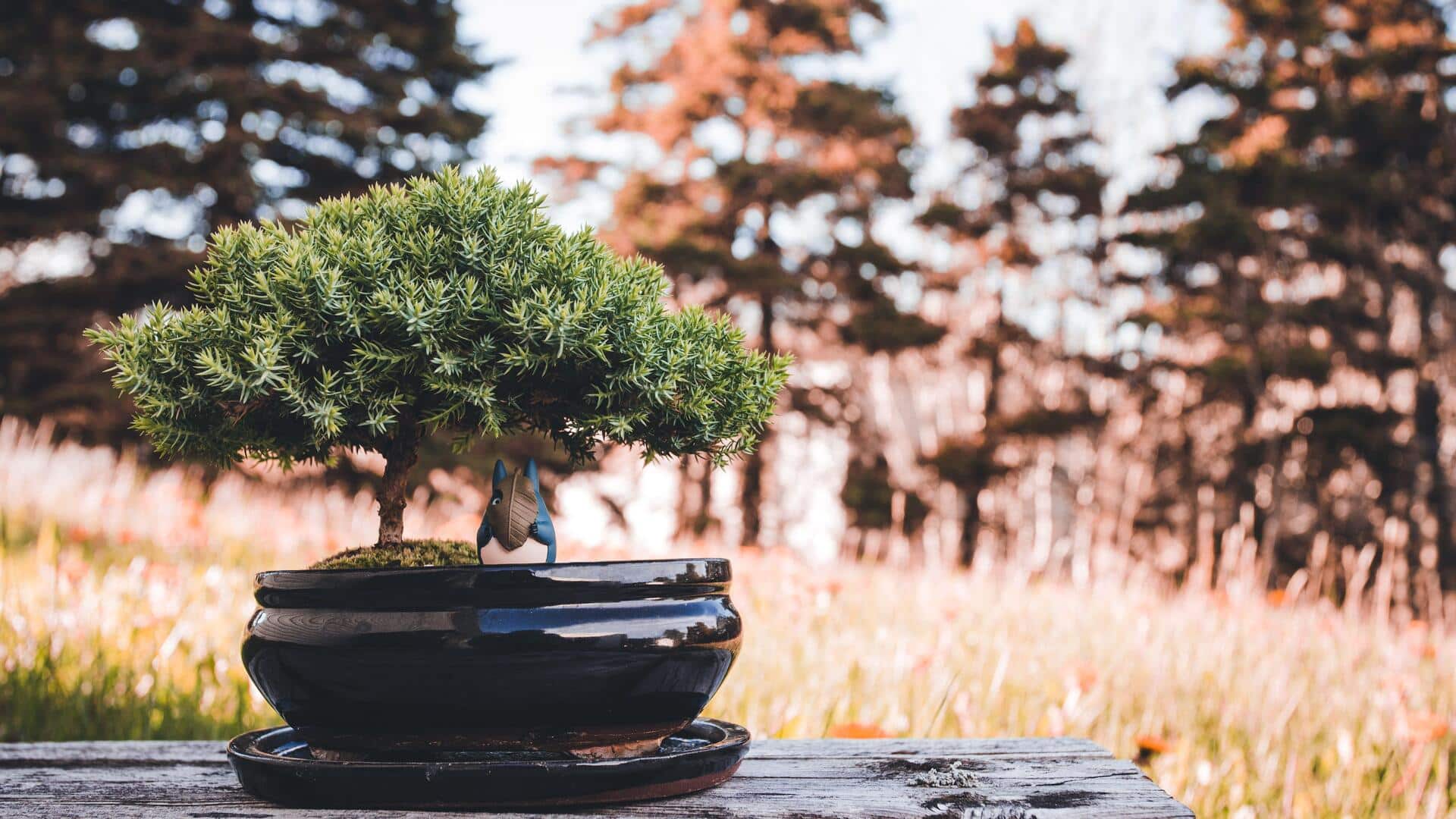
Grow a healthy bonsai with these easy tips
What's the story
Bonsai trees are a beautiful blend of art and horticulture, requiring meticulous care and attention. For beginners, understanding the basics of bonsai care can be overwhelming. However, with the right guidance, you can nurture these miniature trees into stunning specimens. Here are five expert tips to help you get started on your bonsai journey, ensuring your trees remain healthy and vibrant.
Tip 1
Choose the right tree species
Selecting an appropriate tree species is crucial for beginners.
Some species are more forgiving and easier to care for than others.
Consider starting with Ficus or Juniper, as they adapt well to indoor conditions and are resilient.
Research each species' specific needs regarding light, water, and temperature before making your choice.
Tip 2
Master watering techniques
Proper watering is key to keeping your bonsai healthy.
Overwatering or underwatering can damage roots and lead to tree death.
Always check soil moisture by sticking your finger about an inch deep into the soil; if it feels dry, it's time to water.
Use room temperature water and ensure excess drains out from the pot.
Tip 3
Prune regularly for shape
Pruning is essential in shaping your bonsai tree and encouraging new growth.
Do it regularly by trimming back new shoots with sharp scissors or shears, ideally every few weeks during the growing season.
Focus on maintaining balance in the tree's canopy while allowing light to reach inner branches.
Tip 4
Fertilize wisely
Bonsai trees need regular feeding to stay healthy, as they have limited soil nutrients.
Use a balanced liquid fertilizer every four weeks during the spring and summer months when growth is most active.
Follow package instructions carefully to avoid over-fertilizing, which can burn roots.
Tip 5
Ensure proper lighting conditions
Lighting plays a crucial role in the health of your bonsai tree.
Most species require bright, indirect sunlight for at least six hours every day.
If you're growing indoors, keep them near a south-facing window, but avoid direct afternoon sun that may scorch leaves.
Adjust lighting conditions according to seasonal changes, moving them outdoors if necessary, but gradually acclimatize them to prevent shock.