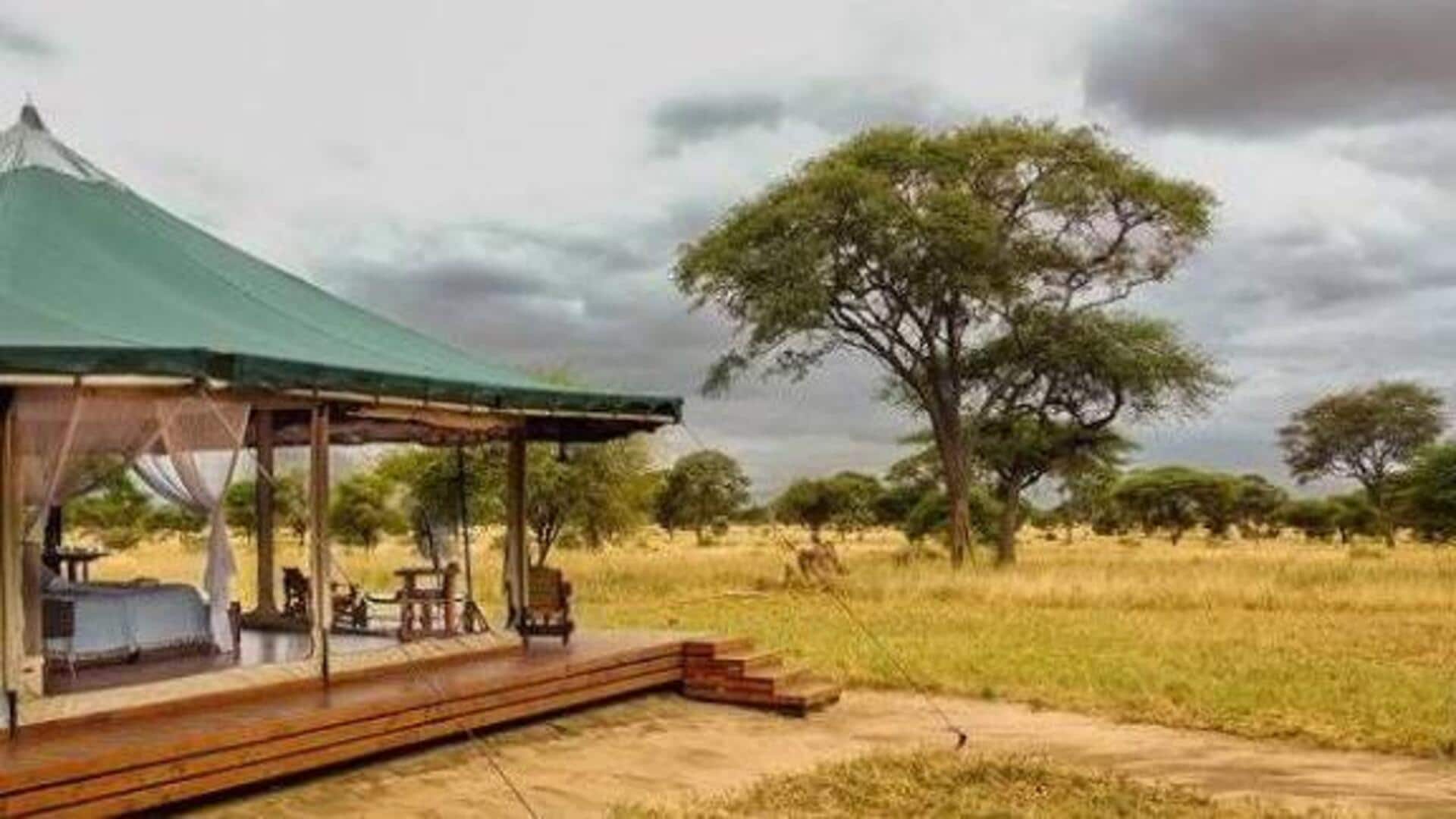
Samburu: A beautiful camping destination in Kenya
What's the story
Camping in Samburu (Northern Kenya) is an experience like no other. Famous for its unique wildlife and stunning landscapes, Samburu offers an opportunity to witness nature up close. From the rare wildlife to the breathtaking views, every aspect of this place makes it a must-visit for nature lovers. Here is what you can expect from a camping trip in this beautiful region.
#1
Witness rare wildlife
Samburu is home to some of the rarest wildlife species, including the Grevy's zebra and Somali ostrich.
These animals are not found in many other parts of the world, making this region special.
While camping, you can witness these creatures in their natural habitat, giving you a chance to learn more about them and appreciate their uniqueness.
#2
Explore stunning landscapes
The landscapes of Samburu are as diverse as they are beautiful. From arid plains to lush riverbanks, the terrain offers a variety of ecosystems to explore.
While camping, you can go on guided walks or hikes to witness the beauty of the land up close.
The changing scenery also makes for great photography opportunities.
#3
Engage with local culture
Interacting with local communities adds another dimension to your camping experience in Samburu.
The Samburu people have a rich cultural heritage that they are eager to share with visitors.
By engaging with them, you get to learn about their traditions and way of life, which adds depth to your understanding of this region.
Tip 1
Tips for a successful camping trip
To make your camping trip in Samburu successful, pack essentials like sunscreen, insect repellent, and sturdy footwear for walks or hikes.
Hydration is key, so carry enough water bottles as access may be limited outside designated areas.
These areas include campsites or lodges where tourists stay overnight during safaris or excursions into nearby reserves or conservancies managed by local authorities.