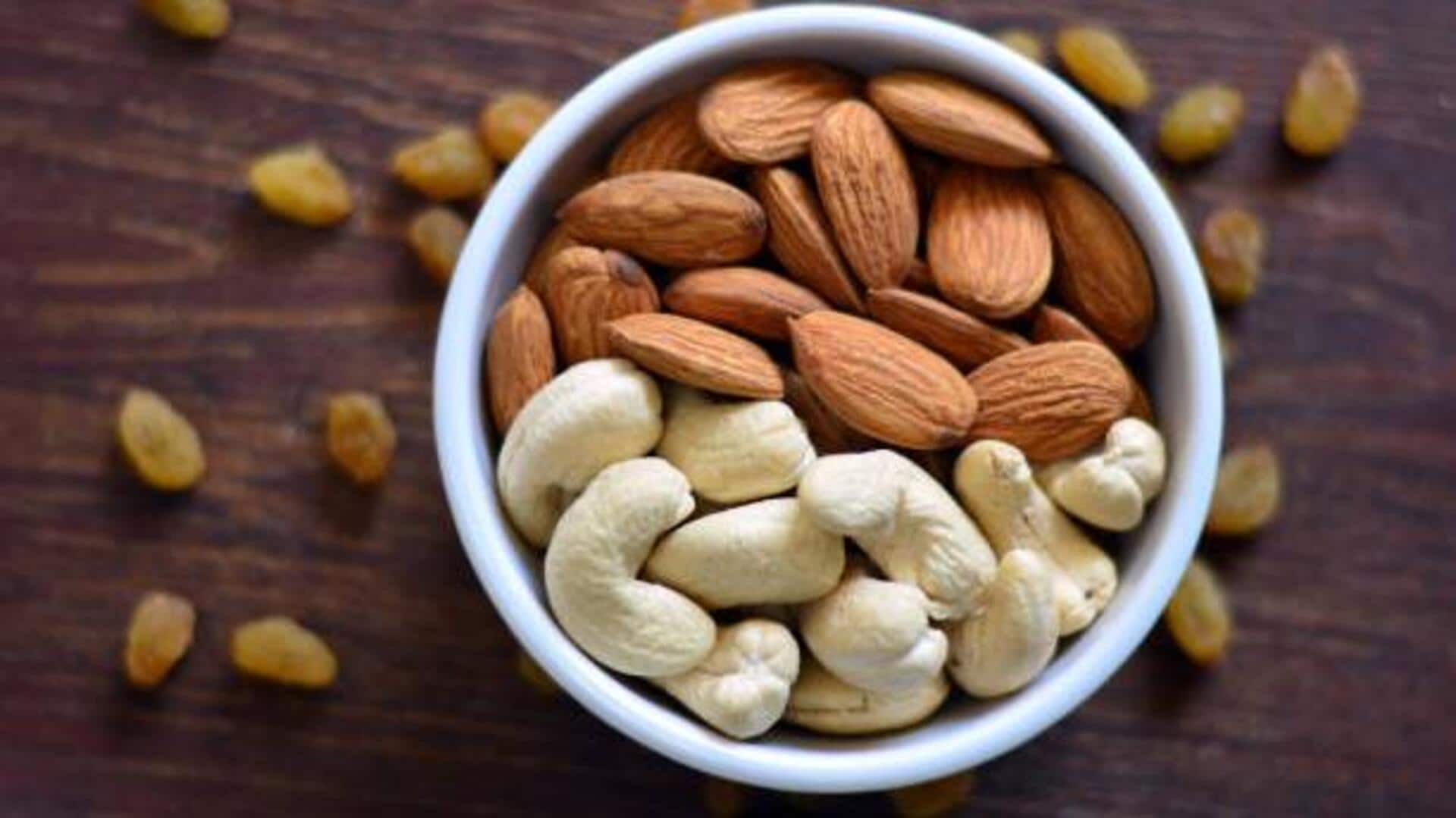
Cashew v/s almond: Which one should you choose?
What's the story
Cashews and almonds are two of the most popular nuts, both known for their nutritional benefits. While both the nuts offer a range of health benefits, they differ in terms of their nutrient composition. Knowing the differences between cashews and almonds can help you make informed dietary choices. Here's a look at the nutritional profiles of cashews and almonds, including their calorie content, fat composition, protein levels, and vitamin/mineral content.
#1
Calorie content comparison
Cashews have around 553 calories per 100 grams, while almonds have around 576 calories for the same serving size.
This difference is negligible but can be important for those keeping an eye on calorie intake.
Both nuts are energy-dense and can be consumed in moderation as part of a balanced diet.
#2
Fat composition insights
Almonds have higher fat content than cashews, with approximately 49 grams of fat per 100 grams, compared to cashews' 44 grams.
However, both nuts have healthy fats that promote heart health.
Almonds have more monounsaturated fats than cashews, which is good for lowering bad cholesterol levels.
#3
Protein levels in nuts
When it comes to protein content, almonds win with about 21 grams of protein per 100 grams, compared to the 18 grams found in cashews.
The higher protein content in almonds makes them a better option for those looking to increase their protein intake through plant-based sources.
#4
Vitamin and mineral content analysis
Both almonds and cashews are packed with essential vitamins and minerals.
Almonds are especially rich in vitamin E, which promotes skin health, while cashews provide more iron, which is important for transporting oxygen in the blood.
Both nuts also provide magnesium and zinc, but in different quantities, making them beneficial additions to a nutritious diet, depending on specific nutritional needs.