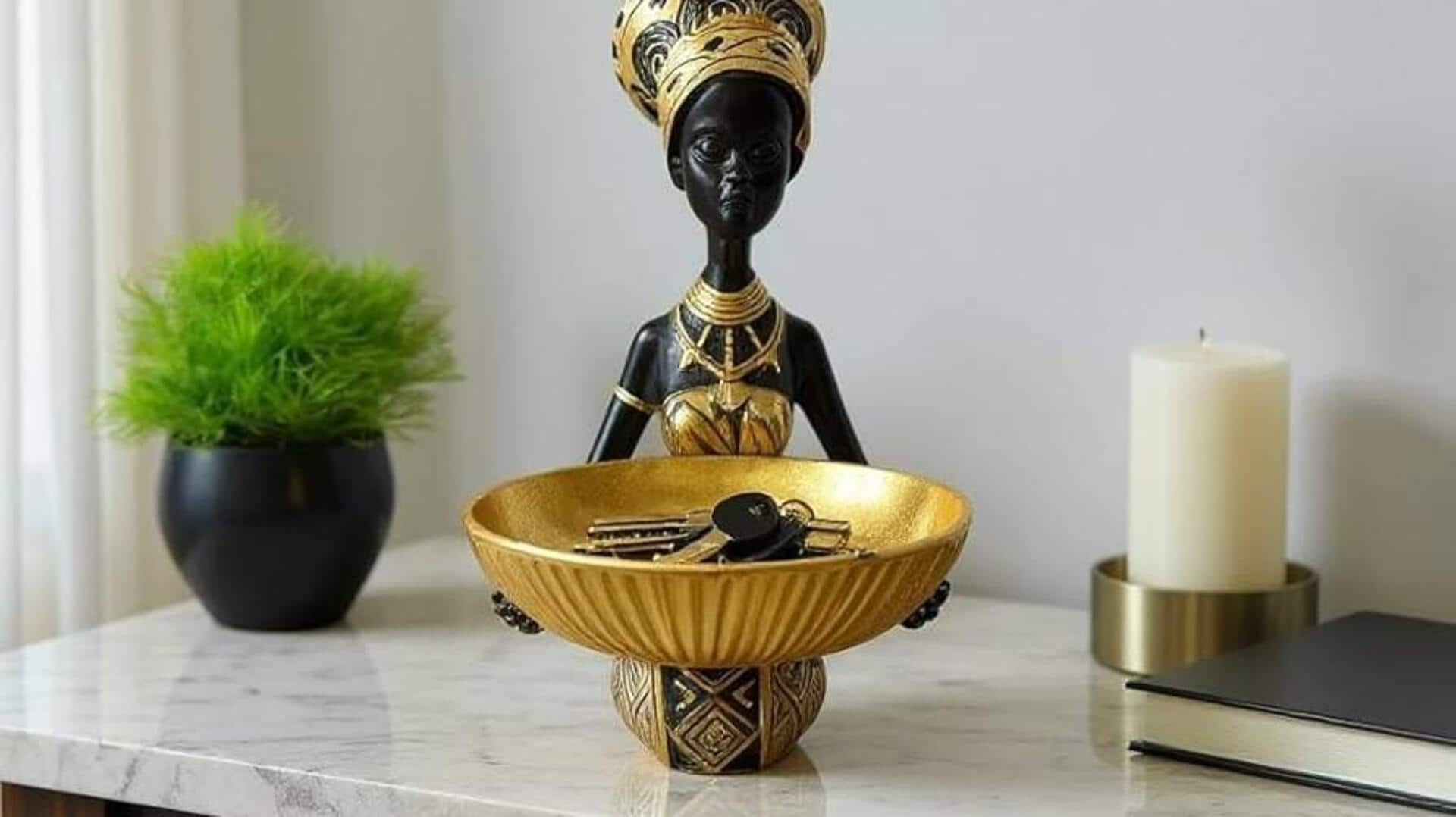
For a unique home decor, try African ceramics
What's the story
African ceramics have always been a part of home decor, adding a unique blend of tradition and modernity. These handcrafted pieces not only beautify a space but also tell stories of cultural heritage. With their vibrant colors and intricate designs, African ceramics have become a favorite among those looking for something different. Here's how these timeless crafts can be incorporated into home decor for an eye-catching, yet meaningful, touch.
#1
Embracing traditional patterns
Traditional African patterns are usually inspired by nature and everyday life.
These patterns are commonly seen on ceramic pots, vases, and plates.
By adding these pieces to your home, you can add a touch of history and culture to your decor.
The geometric shapes and earthy tones make for a perfect combination with modern interiors, making them versatile for different styles.
#2
Utilizing vibrant colors
One of the most striking features of African ceramics is their vibrant colors. Bright reds, yellows, greens, and blues are often used to create eye-catching designs.
These colors can liven up any room when used as accents or focal points in your decor scheme.
Whether it is a bold vase or a colorful plate displayed on the wall, these pieces add energy and warmth to any space.
#3
Incorporating functional art pieces
African ceramics also double up as functional art pieces that serve practical purposes in the home.
Bowls, jars, and mugs are some of the common items that can be used daily while adding aesthetic value to your surroundings.
Using these items in everyday life ensures that you appreciate their craftsmanship while enjoying their utility.
#4
Supporting local artisans
Purchasing African ceramics also supports local artisans who have been perfecting their craft for generations.
By buying these handmade items, you contribute to sustainable livelihoods within communities across Africa.
Many artisans rely on sales from their work as a primary source of income, so supporting them helps preserve traditional techniques for future generations.