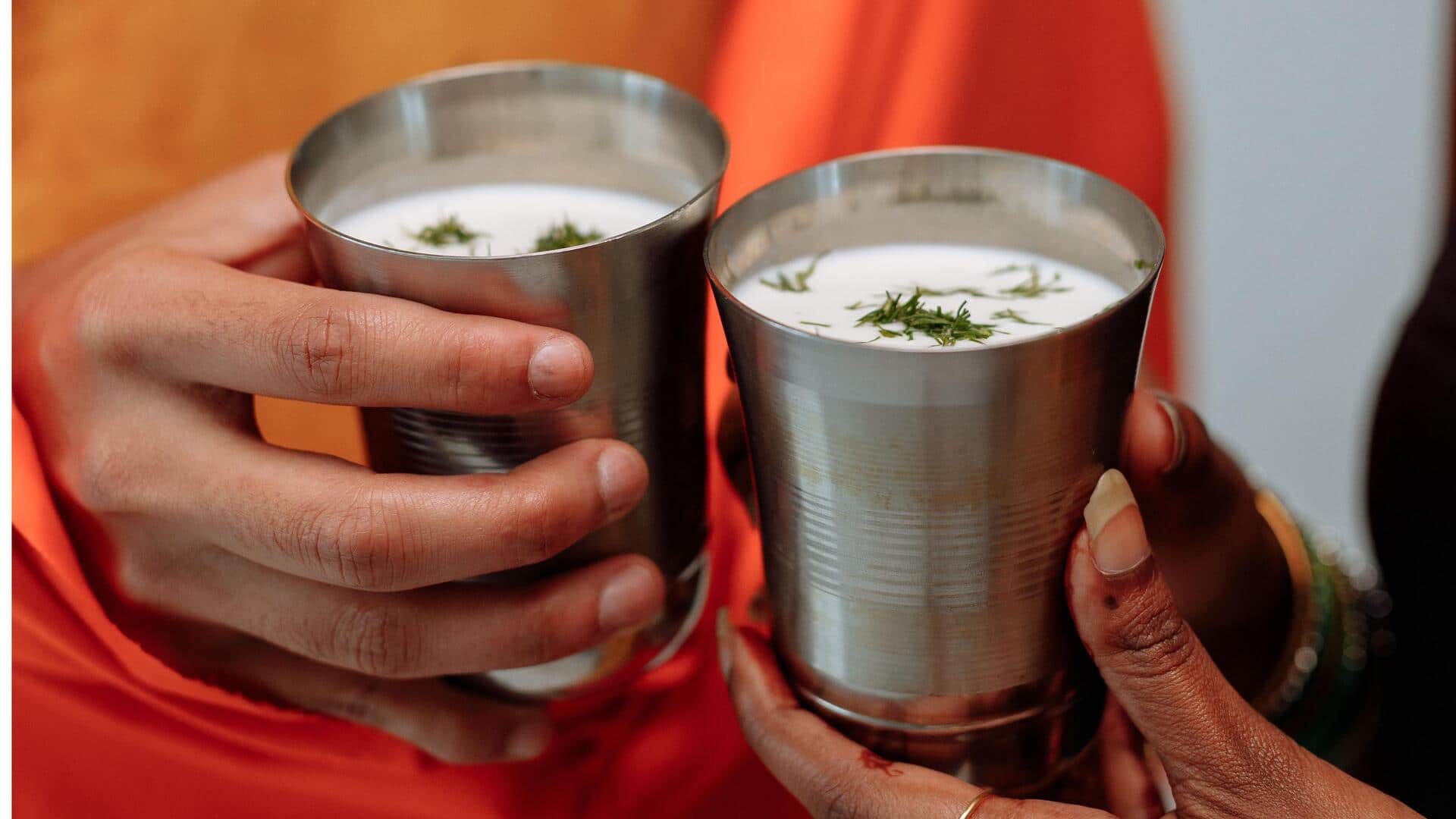
How buttermilk went from farm staple to urban favorite
What's the story
Chaach, a traditional Indian buttermilk drink, has come a long way from being a farm staple to a modern-day favorite in urban households. Once consumed primarily to beat the heat and aid digestion, chaach has evolved into a versatile beverage enjoyed by many. Its journey reflects changing lifestyles and preferences, making it an interesting case study of culinary evolution.
#1
Chaach's humble beginnings
In rural India, chaach was made from churning curd to separate butter. The leftover liquid was seasoned with salt and spices, creating a refreshing drink.
It was not just a thirst-quencher but also provided essential nutrients to farmers working in the fields.
This simple preparation method made chaach an accessible and economical source of hydration and nutrition.
#2
Urban adaptation of chaach
As people moved to cities, chaach adapted to modern tastes and lifestyles.
Today, it is available in various flavors like mint or cumin. Packaged versions have made it easy to consume on the go, appealing to busy professionals looking for healthy options.
The urban adaptation has made chaach relevant to a wider audience without losing its nutritional value.
#3
Health benefits driving popularity
The health benefits of chaach have also contributed to its rise in popularity across demographics.
Rich in probiotics, it promotes gut health and aids digestion.
Low in calories compared to other beverages, it makes for an ideal choice for health-conscious individuals looking to stay hydrated without the added sugars or fats.
#4
Innovations in chaach preparation
Innovations in chaach preparation techniques have also played a role in its evolution from farm staple to modern favorite.
Blending traditional recipes with contemporary ingredients like fruits or herbs adds unique flavors while retaining the essence of this classic drink.
Experimentation with fermentation processes further enhances its probiotic content, catering to the growing demand for functional foods among consumers today.