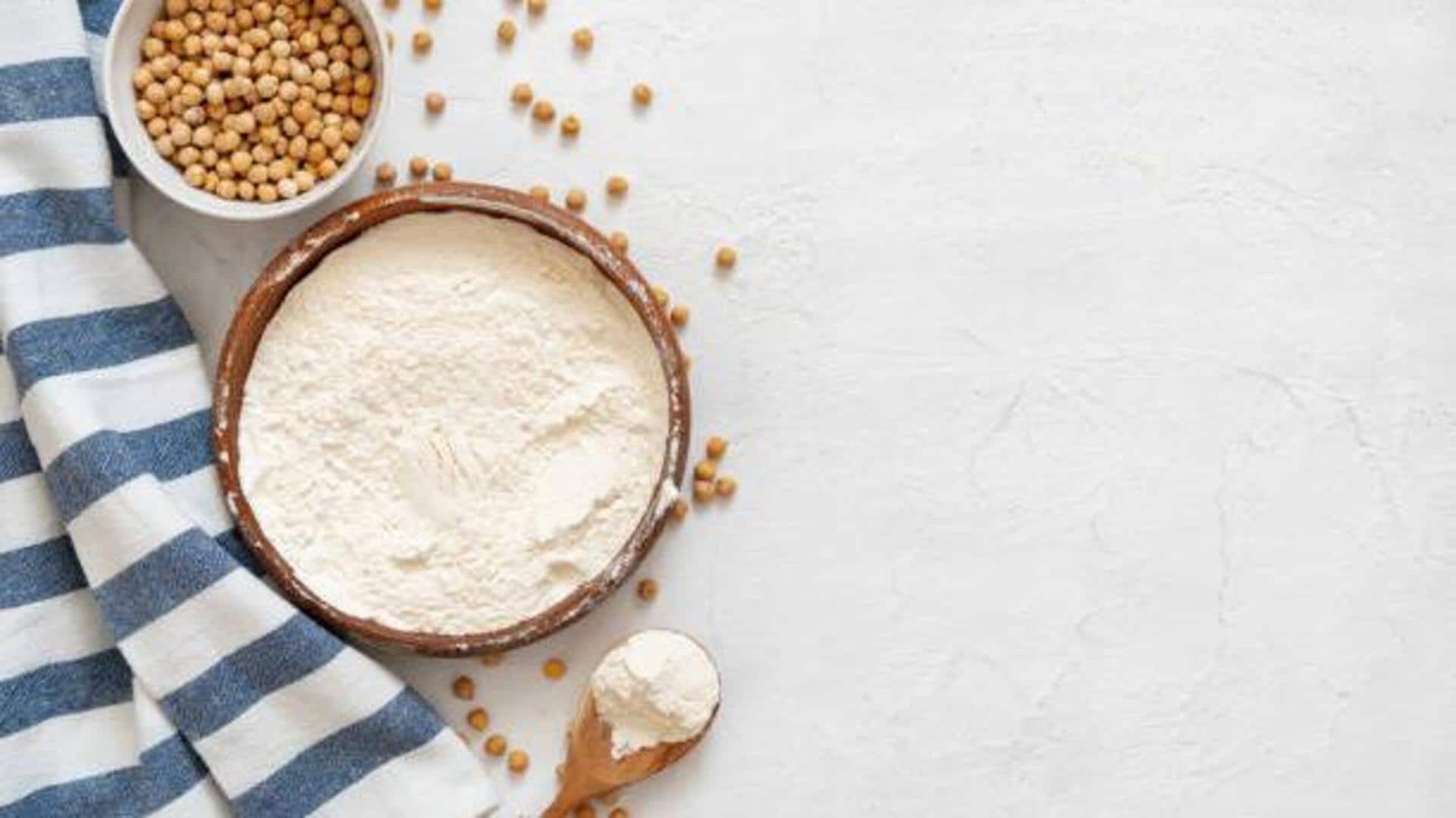
Chickpea flour v/s rice flour: Which is healthier?
What's the story
Chickpea flour and rice flour are two popular alternatives in the world of gluten-free cooking. Both have their own unique nutritional profiles, making them suitable for different culinary applications. Knowing the nutritional differences between the two can help you make better choices, depending on your dietary needs and cooking preferences. Here is a look at the nutritional aspects of chickpea flour and rice flour.
#1
Protein content comparison
Chickpea flour is known for its high protein content, which is much higher than that of rice flour.
It offers around 22% protein by weight, making it a great choice for those looking to up their protein intake through plant-based sources.
Rice flour, on the other hand, has a lower protein content of about 7% by weight.
This difference makes chickpea flour more appealing to those looking for higher protein levels in their diet.
#2
Fiber levels in each flour
Fiber is an important part of any diet, and both flours provide fiber but in different amounts.
Chickpea flour has a higher fiber content than rice flour, with about 10% fiber by weight. This makes it a great option for those looking to improve their digestive health and keep their blood sugar levels stable.
Rice flour has about 2% fiber by weight, which is still beneficial, but not as much as chickpea flour.
#3
Glycemic index considerations
The glycemic index (GI) is an important factor for people managing blood sugar levels.
Chickpea flour has a lower GI than rice flour, which means it has a lesser impact on blood sugar levels when consumed.
This makes chickpea flour a good option for diabetics or anyone looking to keep their blood sugar levels in check without compromising on taste or texture in their meals.
#4
Vitamin and mineral content analysis
Both chickpea and rice flours provide essential vitamins and minerals but differ in their specific offerings.
Chickpea flour is rich in iron, magnesium, and folate, which are important for various bodily functions, including energy production and cell division.
Rice flour provides B vitamins like niacin and thiamine, which are important for energy metabolism, but lacks some of the minerals present in chickpeas.