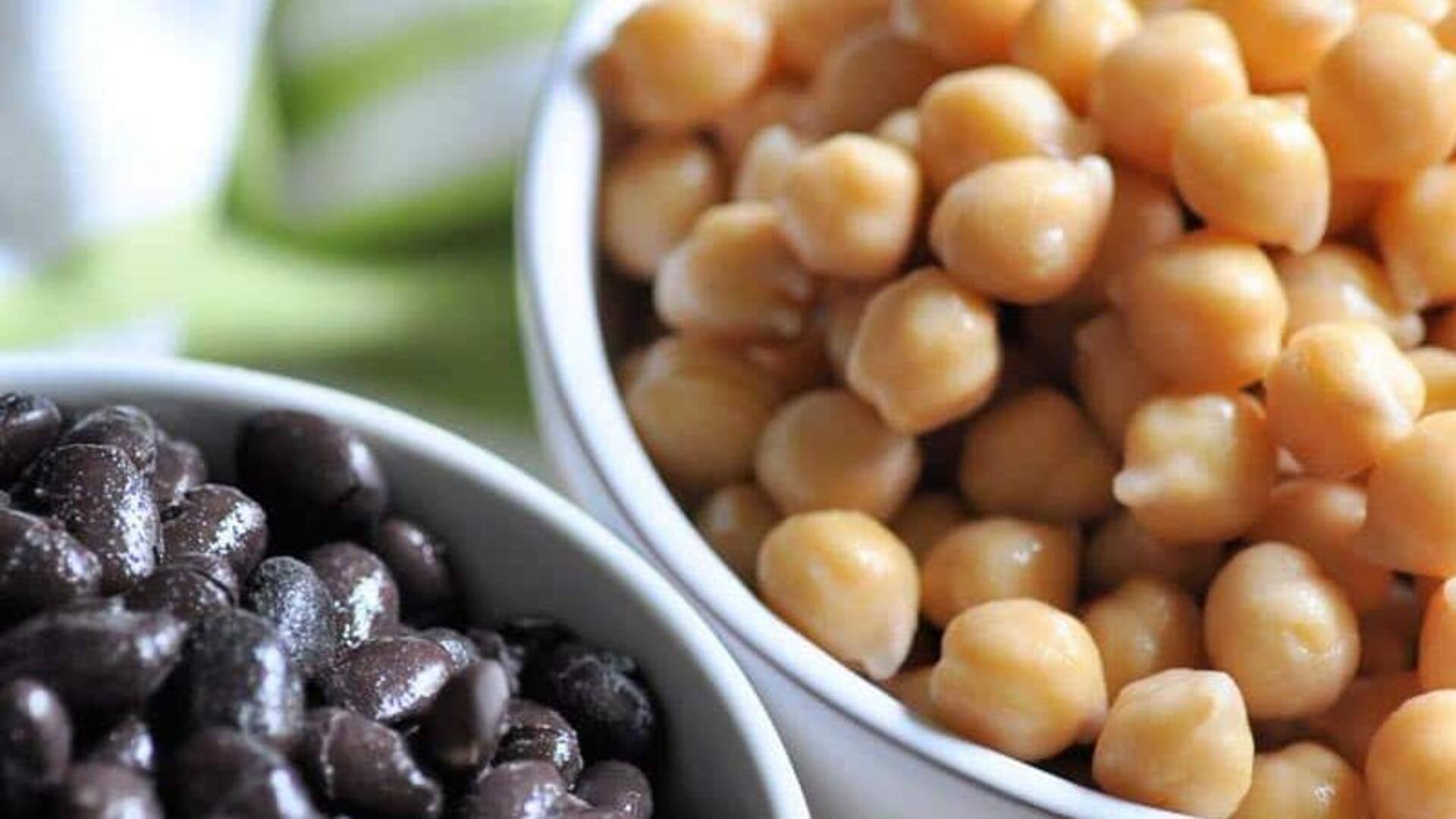
Chickpeas v/s black beans: Comparing their nutrition
What's the story
Chickpeas and black beans are two of the most popular legumes, both of which are packed with nutrients and serve as excellent plant-based protein sources. While both have their own nutritional benefits, knowing the difference can help you make informed dietary choices. Here's a look at the nutritional profiles of chickpeas and black beans, their health benefits, and how they fit into your diet.
#1
Protein content comparison
Both chickpeas and black beans are high in protein, making them perfect for vegetarian diets.
Chickpeas have about 19 grams of protein per cooked cup, while black beans provide around 15 grams per cup.
The difference in protein content makes chickpeas a slightly better option for those looking to up their protein intake.
However, both legumes contribute significantly to daily protein requirements.
#2
Fiber benefits of legumes
Fiber is an important nutrient for digestion and gut health.
Both chickpeas and black beans are high in fiber, but black beans take the lead with about 15 grams per cooked cup compared to chickpeas' 12 grams.
The higher fiber content of black beans may help with digestion and keep you full for longer.
#3
Vitamin and mineral content
Chickpeas and black beans are also loaded with vitamins and minerals.
Chickpeas are a good source of iron, magnesium, phosphorus, zinc, folate, and vitamin B6.
Black beans also provide a good amount of iron, magnesium, potassium, zinc, folate, and vitamin B6.
The differences in mineral content make both legumes beneficial for different nutritional needs.
Tip 1
Versatility in cooking
Both chickpeas and black beans are versatile ingredients that can be used in a variety of dishes.
Chickpeas can be used in salads or blended into hummus, while black beans are great for soups or tacos.
Their ability to absorb flavors makes them a great addition to any recipe.