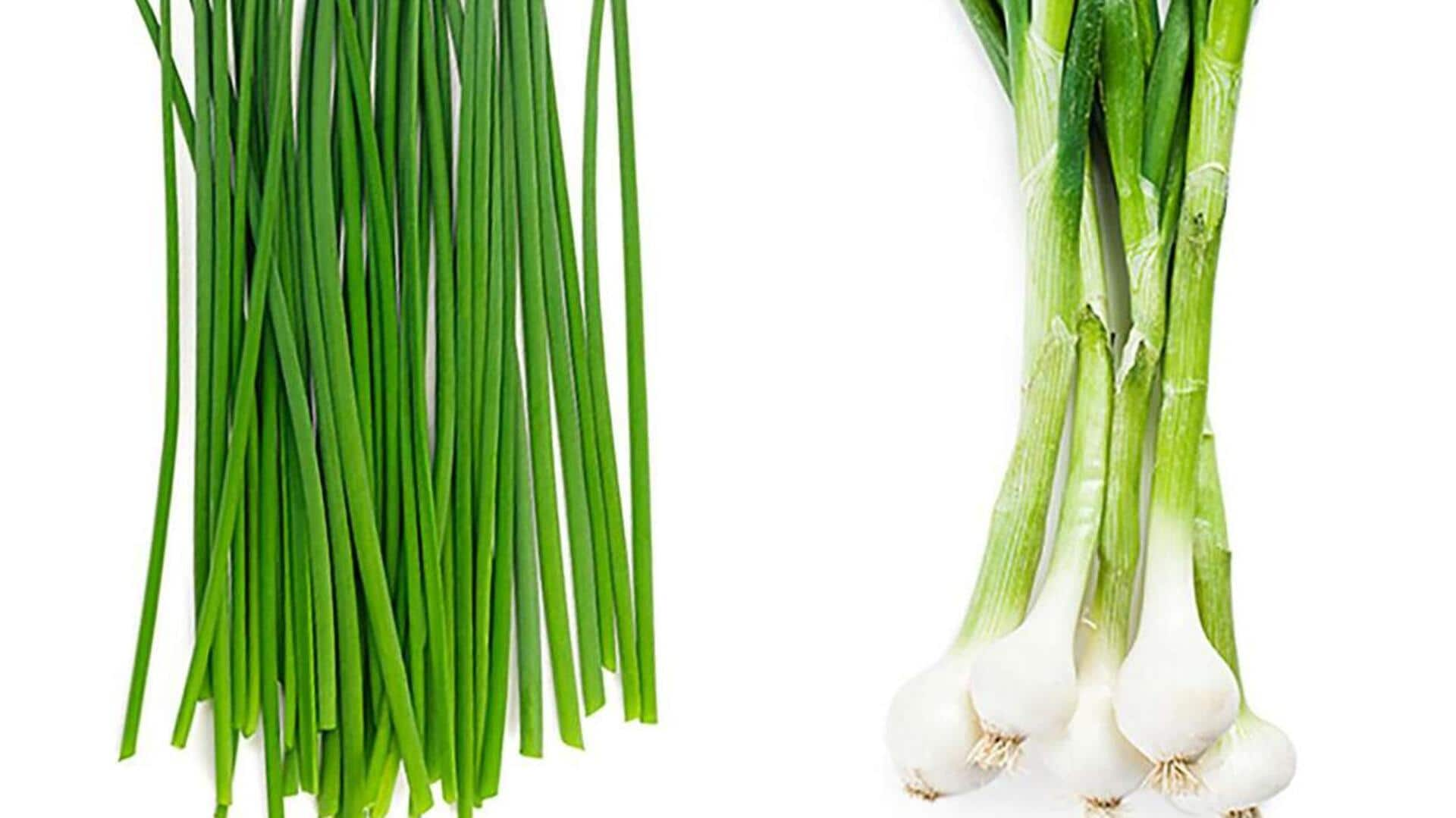
Chives v/s spring onion: Which is better for vitamin K?
What's the story
Chives and spring onions are two popular herbs that are used to add flavor to a variety of dishes. Both are known for their unique taste and nutritional benefits. One of the key nutrients they provide is vitamin K, which is important for bone health and blood clotting. In this article, we will compare the vitamin K content in chives and spring onions to find out which herb offers more of this essential nutrient.
#1
Vitamin K content in chives
Chives are a member of the onion family and have a mild flavor. They are also a great source of vitamin K. A serving of chives (about 100 grams) can give you around 311% of the daily recommended intake of vitamin K. This makes them an excellent choice for those looking to boost their dietary intake of this nutrient.
#2
Vitamin K content in spring onions
Spring onions, or scallions, have a more pronounced taste than chives. They are also rich in vitamin K but in lesser amounts than chives. A 100-gram serving of spring onions gives you about 64% of the daily recommended intake of vitamin K. While they may not be as rich as chives, they still make a valuable contribution to your diet.
#3
Culinary uses and nutritional benefits
Both chives and spring onions can be used in a variety of dishes, depending on your taste. Chives are often used raw in salads or as a garnish due to their mild taste. Spring onions can be used raw or cooked in soups, stir-fries, and more. Apart from adding flavor, both herbs also provide other nutrients like vitamin C and folate.
Tip 1
Choosing between chives and spring onions
When choosing between chives and spring onions for their vitamin K content, consider how you plan to use them in your cooking. If you want a stronger flavor with more vitamin K, go for chives. If you want versatility with moderate vitamin K levels, spring onions are a good option. Either way, both herbs can add to the nutrition of your meals.