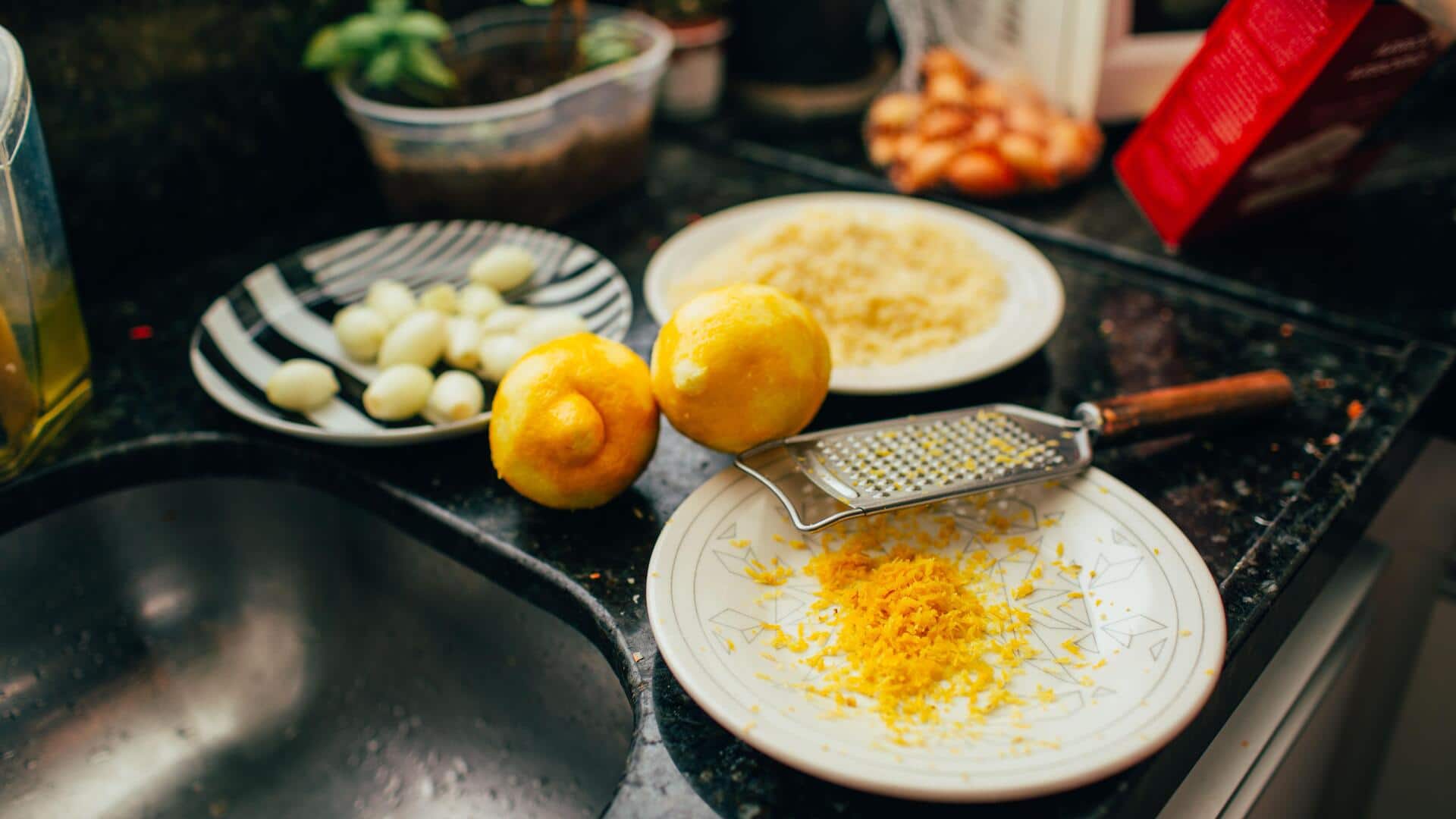
Don't throw away citrus peels: Use them in cooking
What's the story
Citrus zesting is an essential technique that can elevate the flavors of your dishes. The zest, the outer layer of citrus fruits, is packed with essential oils that lend a refreshing aroma and taste. Be it lemon, lime, or orange zest, mastering the art of zesting can add a whole new dimension to your cooking. Here are some tips and techniques to help you get the most out of citrus zesting.
Tool selection
Choosing the right tools
Choosing the right tools is key to effective citrus zesting.
A microplane grater is commonly used for its fine texture and ease of use. However, a box grater or vegetable peeler can also do the trick if you prefer larger shavings.
Make sure your tools are clean and dry before use to avoid contamination and ensure the best flavor.
Zesting methods
Techniques for perfect zesting
To get perfect zest, roll the fruit on a hard surface with some pressure before zesting. This releases the oils and makes zesting easier.
When using a microplane, run it along the surface of the fruit in long strokes, avoiding the white pith underneath as it is bitter.
Storage tips
Storing citrus zest properly
Proper storage of citrus zest is important to keep its flavor intact.
You can store fresh zest in an airtight container in the refrigerator for up to one week.
For longer storage, freeze it in small portions using ice cube trays and transfer them to a sealed bag once frozen.
Recipe ideas
Using zest in recipes
Citrus zest can be used in a number of recipes to amp up flavors without adding extra liquid or calories.
Add lemon or lime zest into baked goods such as cookies or cakes for a bright flavor.
Use orange zest in salads or marinades for an aromatic touch that complements savory dishes.