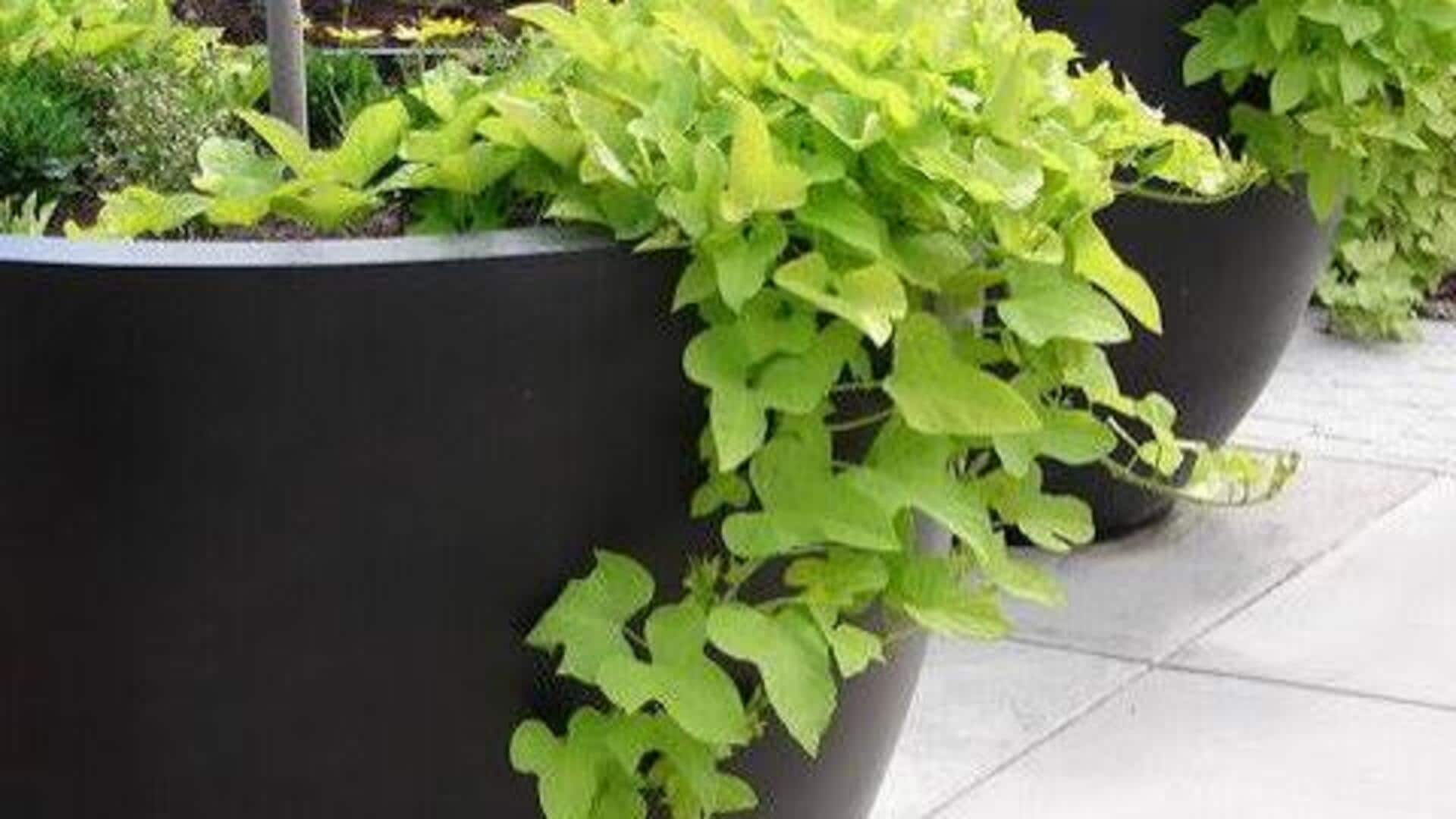
How to grow sweet potatoes in containers
What's the story
Growing sweet potatoes in containers can be a rewarding experience for gardeners with limited space. This method allows you to enjoy fresh produce while maximizing the use of available areas, be it balconies, patios, or small yards. With the right techniques and care, you can successfully cultivate sweet potatoes in various container sizes. Here are some practical tips to help you get started on your container gardening journey.
Tip 1
Choosing the right container
Selecting an appropriate container is crucial for growing sweet potatoes.
Choose containers that are at least 12 inches deep and have good drainage holes to prevent waterlogging.
Plastic, wood, or fabric pots work well, as they retain moisture without suffocating the roots.
Ensure each container has a capacity of at least five gallons to accommodate the growing tubers effectively.
Tip 2
Preparing the soil mix
A well-draining soil mix is essential for healthy sweet potato growth.
Combine equal parts of potting soil, compost, and perlite or sand to create a balanced mix that retains moisture, yet drains excess water efficiently.
Avoid using heavy garden soil as it may compact too much in a container setting.
Regularly check moisture levels and adjust watering accordingly.
Tip 3
Planting sweet potato slips
Start by planting sweet potato slips instead of whole tubers to avoid rot in damp conditions.
You can buy slips from nurseries or grow them by placing a whole sweet potato in water until sprouts form.
Plant three to four slips per container, about six inches apart, burying them lightly under the soil mix.
Tip 4
Watering and fertilizing tips
Consistent watering is key when growing sweet potatoes in containers; however, overwatering should be avoided at all costs.
Water deeply once or twice a week, depending on weather conditions, allowing the top inch of soil to dry out between waterings.
Fertilize every four weeks with a balanced liquid fertilizer, diluted to half strength, to promote healthy growth without excessive foliage at the expense of tuber development.
Tip 5
Managing pests and diseases
Container gardening minimizes pest issues but does not eliminate them altogether.
Regularly inspect plants for signs of pests like aphids or spider mites, and treat them with insecticidal soap if needed.
Rotate crops annually to avoid disease buildup in soil mixes. This practice is crucial to prevent the spread of pathogens in your garden.