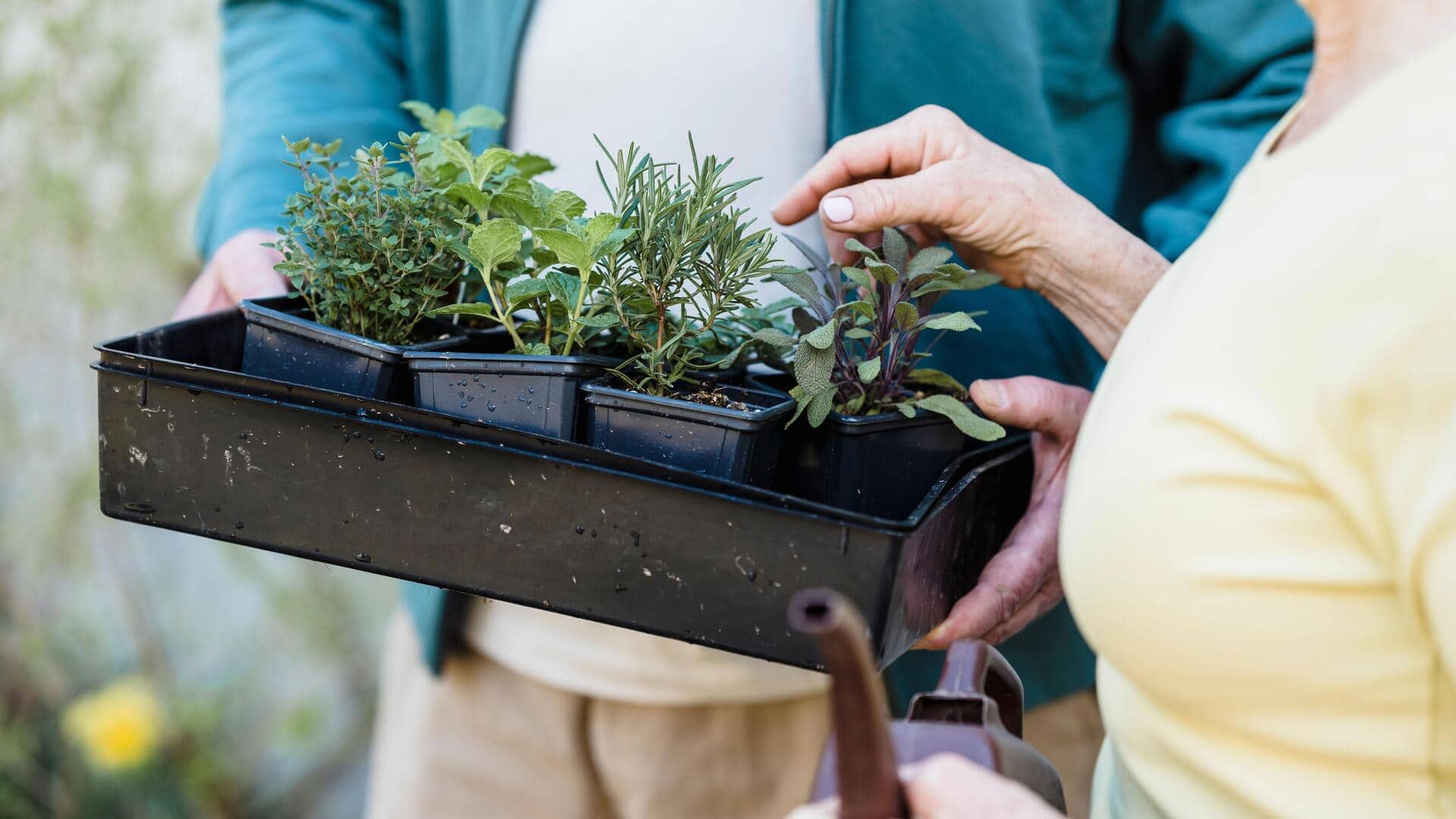
How to grow thyme in containers
What's the story
Growing thyme in a container can be a rewarding experience for both novice and seasoned gardeners. This aromatic herb, known for its culinary and medicinal uses, thrives well in small spaces. With the right conditions and care, you can enjoy fresh thyme year-round. Here are some practical tips to help you successfully grow thyme in a container, ensuring healthy growth and abundant harvests.
Tip 1
Choosing the right container
Selecting an appropriate container is crucial for growing thyme.
A pot with a diameter of at least 12 inches will give the roots enough space to grow.
Make sure the container has drainage holes to prevent waterlogging, which can damage the plant's roots.
Using a lightweight material like plastic or ceramic can make it easier to move your plant around as needed.
Tip 2
Soil and drainage essentials
Thyme prefers well-draining soil with a slightly alkaline pH level between six and eight.
A mixture of potting soil with sand or perlite will improve drainage capabilities.
Ensure that the bottom of your container has a layer of gravel or small stones before adding soil. This further enhances drainage and prevents clogging of holes.
Tip 3
Watering techniques for thyme
Overwatering is one of the most common mistakes when growing thyme.
The herb prefers dry conditions, so it's best to let the top inch of soil dry out before watering again.
Water sparingly, ensuring that excess water drains out completely from the pot's base after each watering session.
Tip 4
Providing adequate sunlight
Thyme flourishes under full sun exposure, so make sure your container is placed where it can receive at least six hours of direct sunlight every day.
If natural light is insufficient indoors, consider using grow lights as an alternative source of illumination to meet its light requirements.
Tip 5
Pruning and harvesting tips
Regular pruning encourages bushier growth and prevents thyme plants from becoming too woody over time.
Trim back stems regularly by cutting just above leaf nodes with clean scissors or pruning shears.
Harvest leaves as needed throughout the growing season without removing more than one-third at any one time to ensure continuous growth without stressing the plant too much.