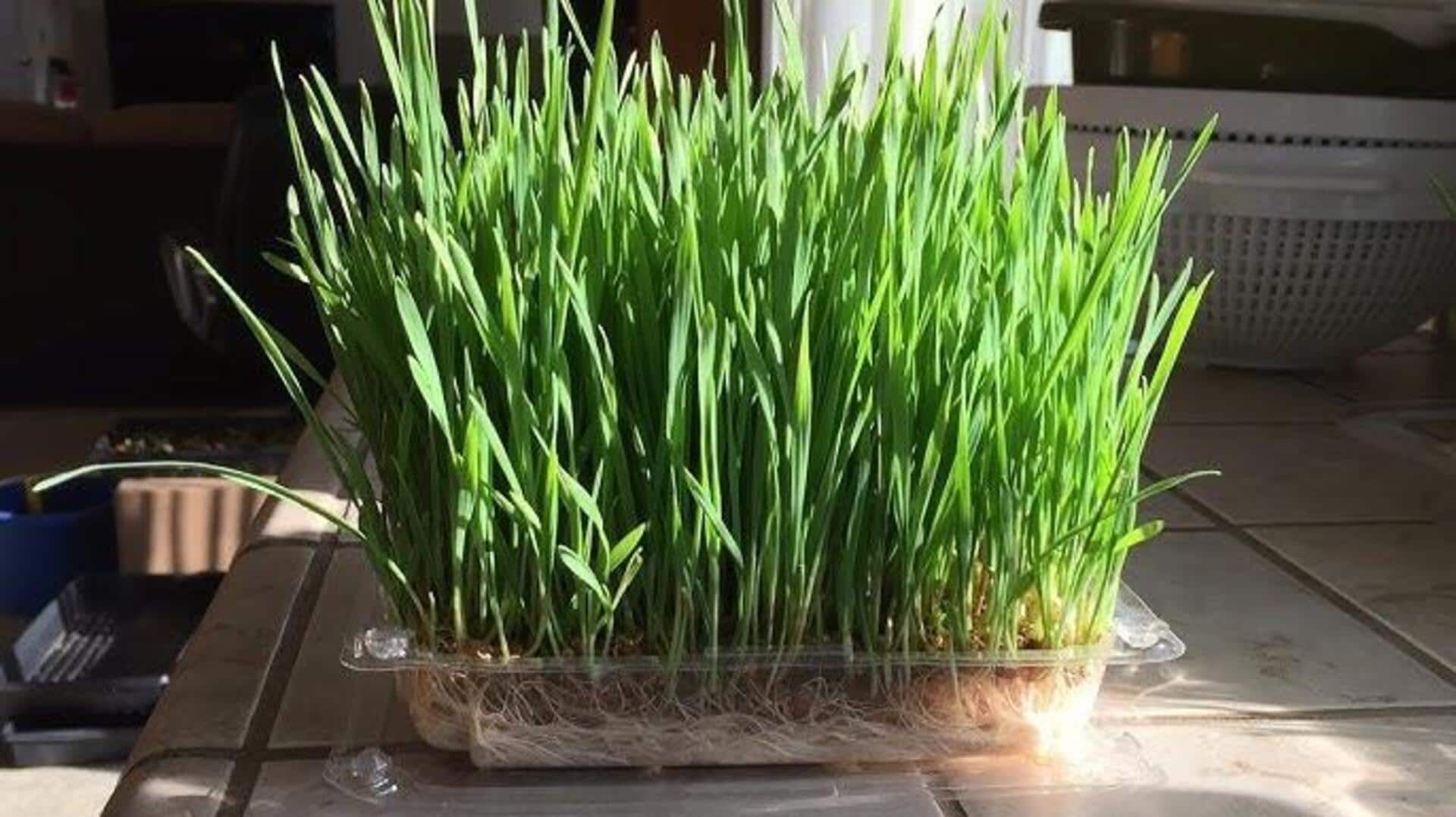
How to grow wheatgrass in containers
What's the story
Growing wheatgrass in containers can be a rewarding experience, providing you with fresh greens for juices and smoothies. This nutrient-rich grass is easy to grow and requires minimal space, making it ideal for container gardening enthusiasts. With the right conditions and care, you can enjoy a continuous supply of wheatgrass at home. Here are some practical tips to help you successfully grow wheatgrass in containers.
Tip 1
Choosing the right container
Selecting an appropriate container is crucial for growing wheatgrass.
A shallow tray or pot with a depth of at least three inches works best.
Ensure that the container has drainage holes to prevent waterlogging, which can damage the roots.
Plastic or ceramic containers are good options, as they retain moisture well.
Tip 2
Preparing the soil mix
Wheatgrass thrives in well-draining soil that is rich in organic matter.
Use a mix of potting soil, compost, or coconut coir to create an ideal growing medium.
This combination provides essential nutrients while ensuring good aeration and drainage.
Fill the container with about two inches of this mix, leaving enough space at the top for watering.
Tip 3
Sowing wheatgrass seeds
Start by soaking wheatgrass seeds overnight to enhance germination rates.
Spread them evenly over the prepared soil surface, ensuring they are not overcrowded.
Lightly press them into the soil, but do not cover them completely, as they need light to germinate.
Water gently using a spray bottle to avoid displacing the seeds.
Tip 4
Watering and light requirements
Consistent watering is key to successful wheatgrass cultivation.
Keep the soil consistently moist but not soggy by watering every day or as needed based on environmental conditions.
Place your container in a location with indirect sunlight, or use grow lights if natural light is insufficient.
Aim for six hours of light daily for optimal growth.
Tip 5
Harvesting your wheatgrass
Your wheatgrass will be ready to harvest in about seven to 10 days, when it reaches six inches tall and has vibrant green leaves.
Use scissors to cut just above soil level, ensuring you leave roots intact for potential regrowth, if desired.