Get better cooking results with a kitchen scale
What's the story
A kitchen scale is an essential tool for precise cooking and baking. It helps measure ingredients accurately, ensuring consistent results in your dishes. Unlike volume measurements, weighing ingredients can eliminate guesswork and improve the quality of your meals. Whether you're a novice cook or an experienced chef, understanding how to use a kitchen scale can enhance your culinary skills. Here are some practical tips to help you master this essential kitchen tool.
Scale types
Understanding different scales
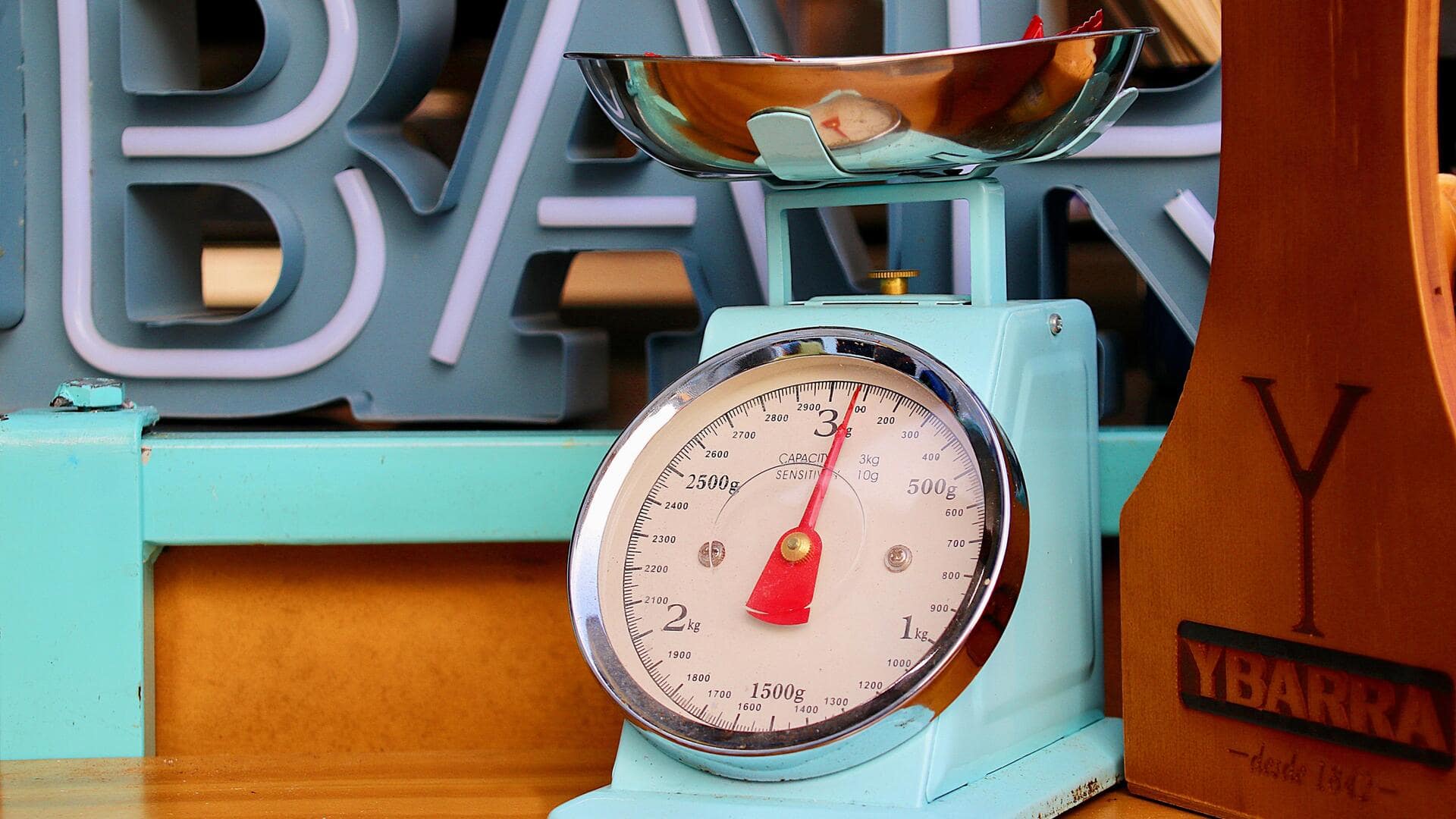
There are different types of kitchen scales: digital and mechanical.
Digital scales give precise readings and are easier to read, while mechanical ones are more affordable but may not be as accurate.
Choose a scale that suits your needs and budget.
Most digital scales also come with tare functions, which allow you to zero out the weight of containers for more accurate measurements.
Calibration tips
Calibrating your scale
Calibrating your scale is essential for accuracy.
Most digital scales come pre-calibrated, but check the manual for specific instructions.
To calibrate, place a known weight on the scale and adjust it if necessary.
Regular calibration ensures that your measurements remain reliable over time, especially if you use the scale frequently.
Tare usage
Using the tare function effectively
The tare function is a game-changer when it comes to weighing ingredients in a bowl or container.
By pressing the tare button, you set the weight of the container to zero before adding ingredients.
This way, you can measure each component separately without having to do any math later on. It simplifies the process of weighing multiple ingredients.
Maintenance tips
Maintaining your scale
Proper maintenance extends the life of your kitchen scale.
Keep it clean by wiping it with a damp cloth after every use, and avoid exposing it to extreme temperatures or moisture.
Replace batteries when needed for digital models, and store mechanical scales in a dry place to prevent rusting or damage.
Recipe integration
Incorporating scales into recipes
Integrating a kitchen scale into your recipes can help you follow instructions more accurately than using cups or spoons alone.
Many professional recipes list ingredient weights instead of volumes because they yield more consistent results.
Experiment with weighing different ingredients like flour, sugar, or spices to see how it affects flavor and texture in your dishes.