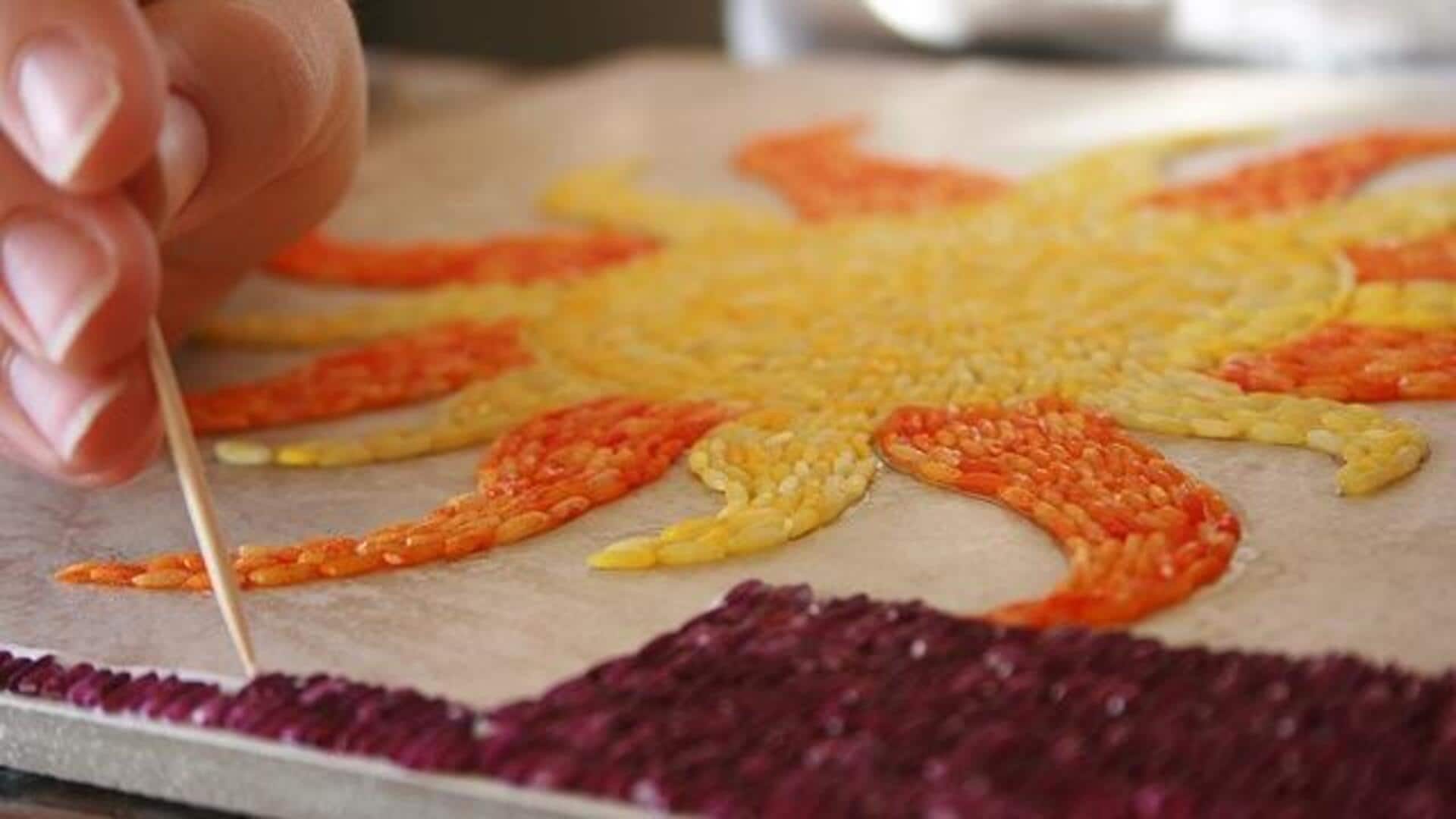
A beginner's guide to rice painting
What's the story
African rice paintings are a unique art form that uses colored rice to create vibrant images. This traditional craft, popular in many African cultures, provides a creative way to decorate your home. By learning how to make these paintings, you can bring a piece of African heritage into your living space. The process is simple and requires minimal materials, making it accessible for anyone interested in exploring this art form.
Materials needed
Gather your materials
To start with African rice paintings, you need colored rice, glue, a canvas, or sturdy paper, and paintbrushes.
Colored rice can be made at home by dyeing uncooked rice with food coloring. Ensure you have a variety of colors for different effects.
A clean workspace is also essential to keep the materials organized and prevent messes.
Design selection
Choose your design
Selecting a design is key to making an eye-catching rice painting.
Traditional African patterns, like geometric shapes or tribal motifs, are commonly used. You can also go for abstract designs that speak to you.
Sketching the design on paper before starting helps visualize the final product and makes it easier to transfer the pattern onto your canvas.
Glue application
Apply glue strategically
Applying glue strategically is key to getting the rice to stick properly onto your canvas.
Use a paintbrush or a small applicator to spread glue evenly over the areas where you want to place the rice.
It is best to work in sections so that the glue does not dry out before you get to stick the rice on it.
RICE placement
Arrange colored rice carefully
Carefully arranging colored rice is what makes these paintings visually stunning.
Take small pinches of colored rice and place them on the glued sections according to your design plan.
Tweezers can come in handy for precise placement, especially when working with intricate patterns or small details.
Drying process
Let your artwork dry completely
Once all sections are filled with colored rice, let your artwork dry completely before handling it further or displaying it prominently in your home decor setting.
Proper drying ensures that each grain stays securely attached while maintaining its vibrant appearance over time, without any damage occurring during regular use or cleaning processes later on down the line.