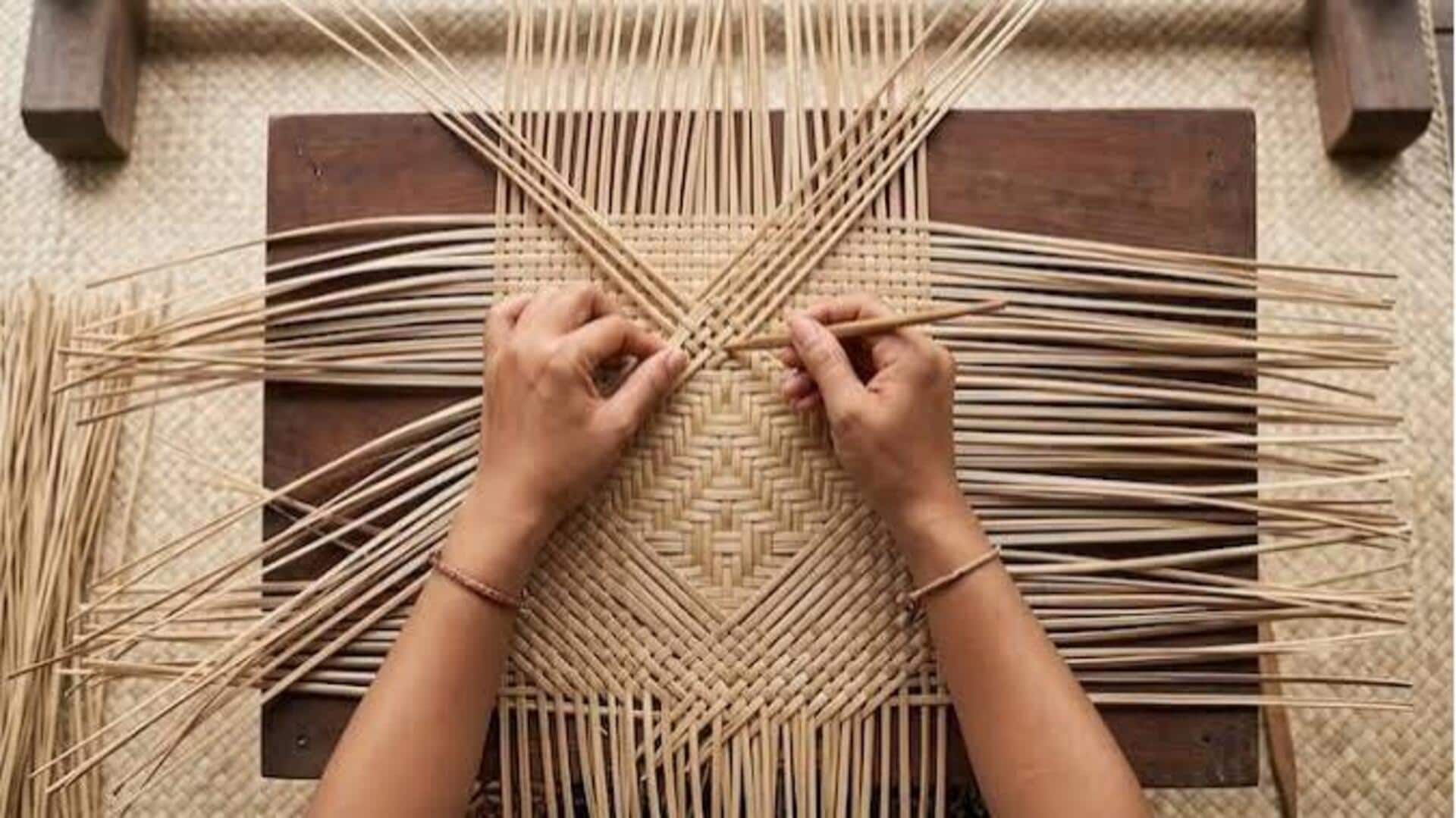
How to make grass mats at home
What's the story
Creating Zulu grass mats is a rewarding craft that connects you to African culture. These mats are made from natural grasses and dyed in bright colors, and are used for decoration and functional purposes. By learning this craft, you can appreciate the artistry, tradition, and skill behind each mat. Here is a look at the steps and techniques involved in making these beautiful pieces of art.
Materials
Gathering materials for mat making
To begin making a Zulu grass mat, you will need to gather some essential materials.
Natural grasses are the primary component, which can be sourced from local areas where they grow abundantly.
You will also need dyes to add vibrant colors to your mats. These dyes can be made from natural sources like plants or minerals.
Finally, some basic tools, such as scissors and needles, will help you shape and secure your mat during the process.
Techniques
Understanding traditional weaving techniques
Traditional weaving techniques are the backbone of crafting authentic Zulu grass mats.
The techniques involve interlacing the strands of grass in a particular pattern to create a sturdy, yet flexible, structure.
It takes practice to master these techniques, but they are essential to ensure that the mat is durable and aesthetically pleasing.
Watching experienced artisans or following detailed guides can help you learn these techniques better.
Coloring
Adding color with natural dyes
Adding color to your grass mat is an integral part of the process. Natural dyes give the mats their signature vibrant look without compromising their eco-friendliness.
The process of dyeing involves soaking the grasses in colored solutions made from plants or minerals.
It is important to experiment with different combinations to achieve the desired shades, while keeping the material's integrity.
Finishing touches
Final touches and care instructions
Once your grass mat is woven and dyed, it is time to add finishing touches, like trimming edges or adding decorative elements, if desired.
Proper care instructions ensure longevity; recommend gentle cleaning methods using mild soap, if necessary, and avoid harsh chemicals that could damage fibers over time.