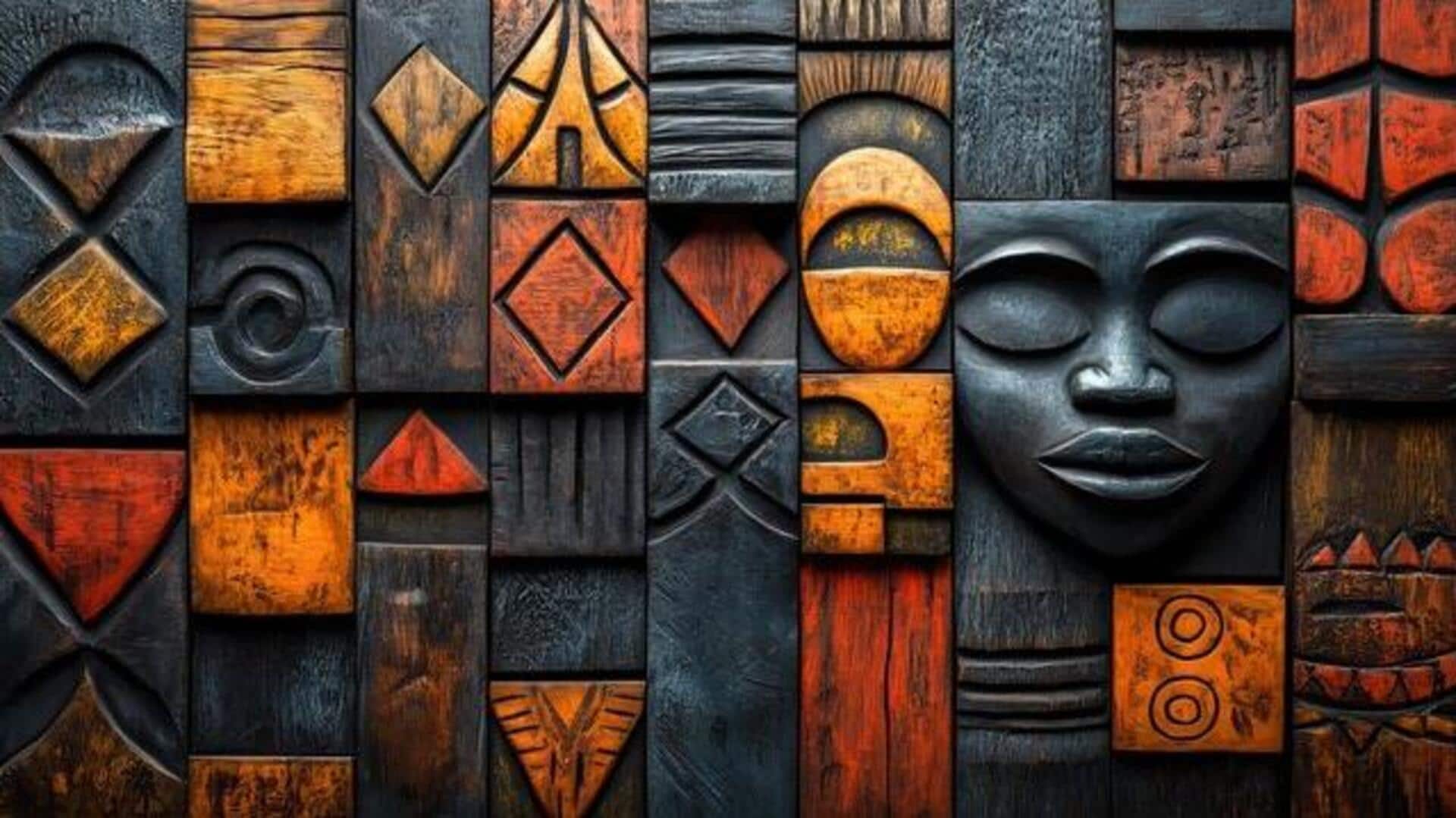
All about Luba wall art
What's the story
The Luba people of Central Africa are known for their unique artistic style, particularly in their wall art. Inspired by their traditional methods, you can create your own wall art using clay and beads. This DIY project allows you to explore the vibrant patterns and textures that characterize Luba art. By using simple materials like clay and beads, you can craft a piece that reflects this rich cultural heritage.
Materials
Gather your materials
To start, collect all the necessary materials: air-dry clay, colorful beads, a rolling pin, sculpting tools, and a flat surface to work on.
The clay should be easy to mold and dry quickly. Choose beads in various colors to mimic the vibrant hues of traditional Luba art.
Make sure your workspace is clean and organized for a smooth crafting process.
Base
Mold your clay base
Begin by rolling out the clay with a rolling pin until it's about one centimeter thick. This will be the base of your wall art piece.
Use sculpting tools to cut out shapes or patterns inspired by Luba designs.
These could include geometric shapes or symbolic motifs commonly found in their artwork.
Texture
Add texture with beads
Once you have your base ready, start adding texture by pressing beads into the surface of the clay.
Use different sizes and colors to create contrast and depth in your design.
The beads should be arranged thoughtfully to enhance the overall aesthetic without overwhelming the piece.
Drying
Allow your art to dry
After you've added all the elements to your piece, let it dry completely according to package instructions for the clay used.
This usually takes around 24 hours but may vary depending on humidity levels in your area.
Once dried, check if any areas need touch-ups or additional details before displaying it as wall art.
Display
Display your creation proudly
Once your piece is completely dry, you can display it wherever you want at home or gift it to someone who appreciates cultural artistry.
Hang it on a wall using appropriate hooks or frames so that it remains securely in place while showcasing its intricate details effectively.