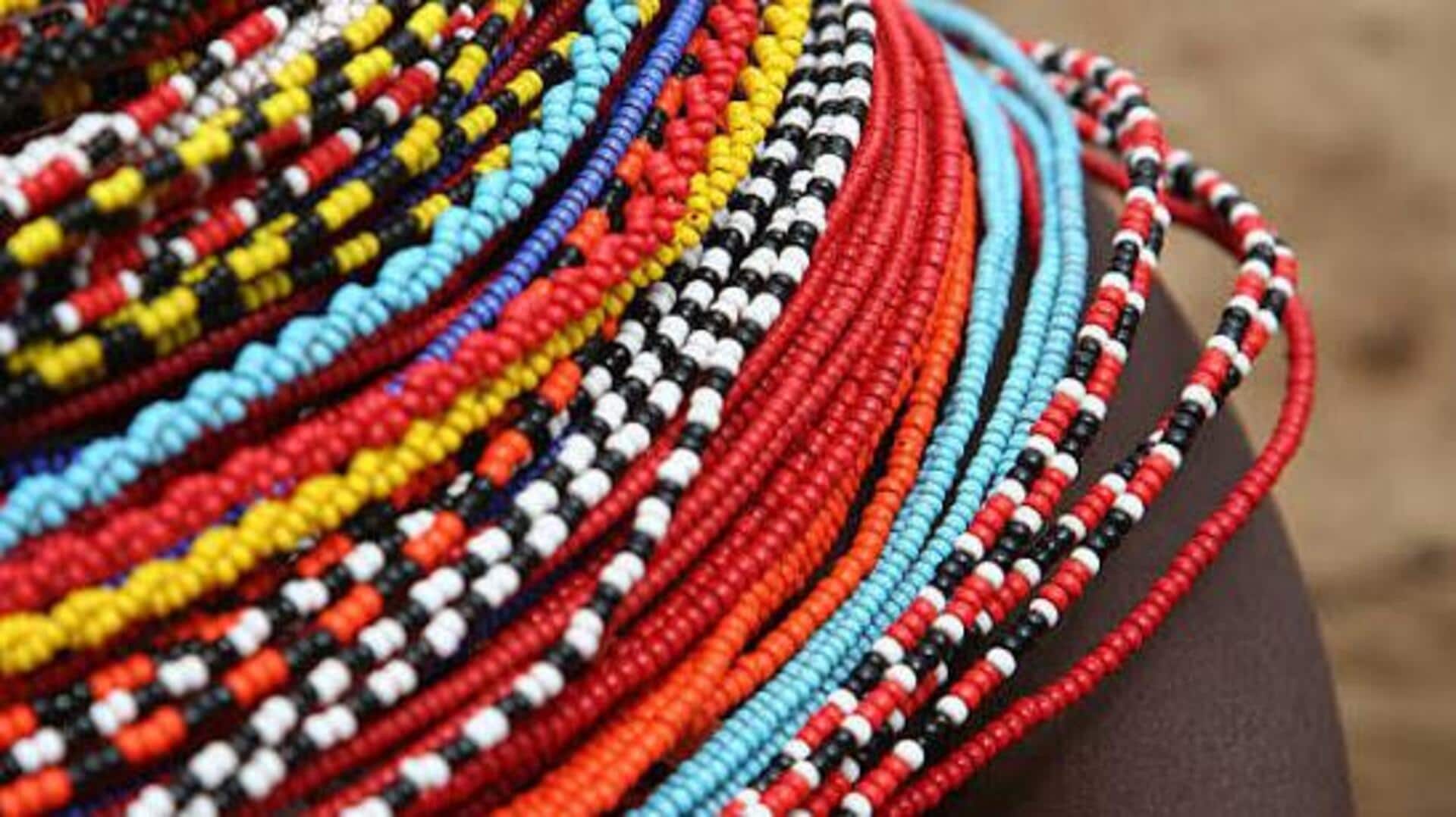
Maasai beadwork: All about this colorful craft
What's the story
African bead jewelry is a vibrant and culturally rich art form that has been practiced for centuries. The Maasai, a semi-nomadic people of East Africa, are renowned for their distinctive beadwork. Their creations are not just visually striking, but also carry deep cultural significance. By exploring traditional techniques, one can gain insight into the craftsmanship that goes into making these colorful adornments.
Techniques
Understanding Maasai beadwork techniques
Maasai beadwork involves intricate patterns and designs that are symbolic of various aspects of their culture.
The beads are often made from glass or seeds and are strung together in specific patterns to convey messages or status within the community.
Each color used in the beadwork has its own meaning, adding another layer of depth to the artistry.
Materials
Materials used in Maasai jewelry making
Traditionally, Maasai jewelry is made using locally sourced materials such as glass beads, metal wires, and natural fibers.
The glass beads are often recycled from trade items brought by Europeans centuries ago.
Metal wires are used to shape the jewelry pieces, and natural fibers provide durability and flexibility.
These materials not only make the jewelry but also reflect the resourcefulness of the Maasai people.
Color meanings
Cultural significance of colors in beads
Each color in Maasai beadwork has a specific meaning.
Red symbolizes bravery and strength; blue represents energy; green signifies fertility; yellow stands for hospitality; and white denotes purity.
These colors are carefully chosen when creating each piece to ensure it conveys the desired message or sentiment within the community.
Tips
Tips for creating authentic Maasai-style jewelry
To create authentic Maasai-style jewelry, start by selecting appropriate colors based on their meanings.
Use high-quality glass beads for durability and authenticity.
Incorporate traditional patterns that reflect cultural significance or personal stories you wish to tell through your designs.
Experiment with different materials, like leather or metal accents, for added texture without compromising authenticity.