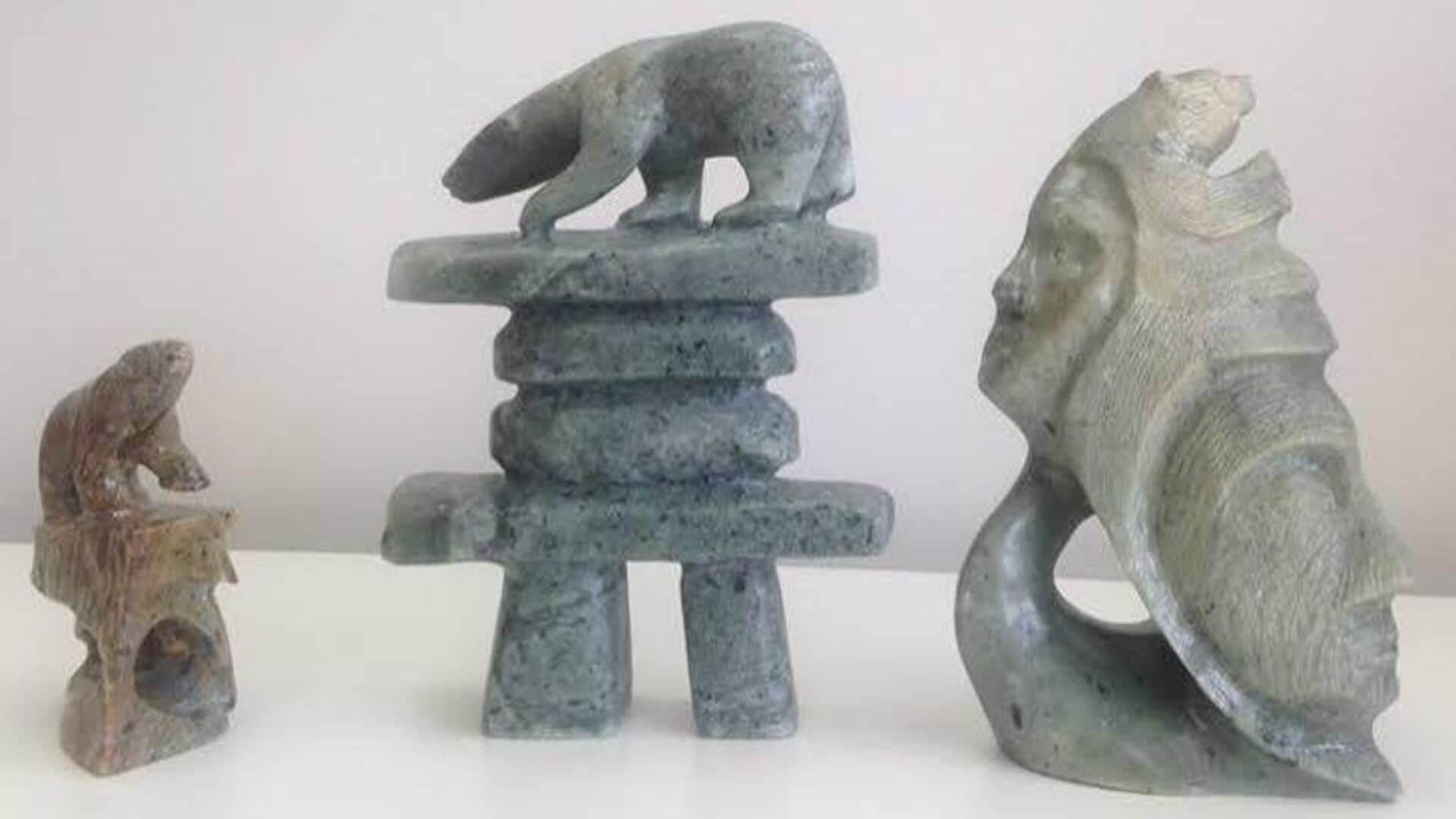
How to create stunning soapstone carvings
What's the story
African soapstone carving is an ancient art form that has been passed down generations. The soft stone is easy to carve, making it a favorite among artisans. The process requires patience, precision, and a keen eye for detail. This article delves into the techniques and tools that define this unique craft, offering insights into the traditional methods used by African artisans.
#1
Understanding soapstone's properties
Soapstone is a metamorphic rock composed mainly of talc, which makes it soft and easy to carve.
Its heat resistance and ability to retain detail make it ideal for sculptors.
The stone comes in various colors, from green to gray, giving artists a range of options for their creations.
Knowing these properties helps artisans choose the right piece for their project.
#2
Essential tools for carving
The tools used in soapstone carving are basic, yet effective. Carving knives, rasps, and files are commonly used to shape the stone.
These tools allow artisans to create intricate designs with precision.
Safety goggles and masks are also important to protect against dust particles during the carving process.
#3
Traditional techniques passed down generations
Traditional African soapstone carving techniques have been passed down through generations.
Artisans usually start with sketching designs on the stone before proceeding to carve.
The process is labor-intensive and requires a lot of skill to get the desired detail and finish.
Many artisans also incorporate cultural motifs or symbols into their work, adding layers of meaning to each piece.
Tip 1
Tips for beginners in soapstone carving
For beginners interested in soapstone carving, it is advisable to start with small projects before moving on to more complex designs.
Practicing basic shapes helps develop hand-eye coordination, and improves technique over time.
It's also important to choose quality tools that fit comfortably in hand, as this enhances control during carving sessions.