All about imigongo art
What's the story
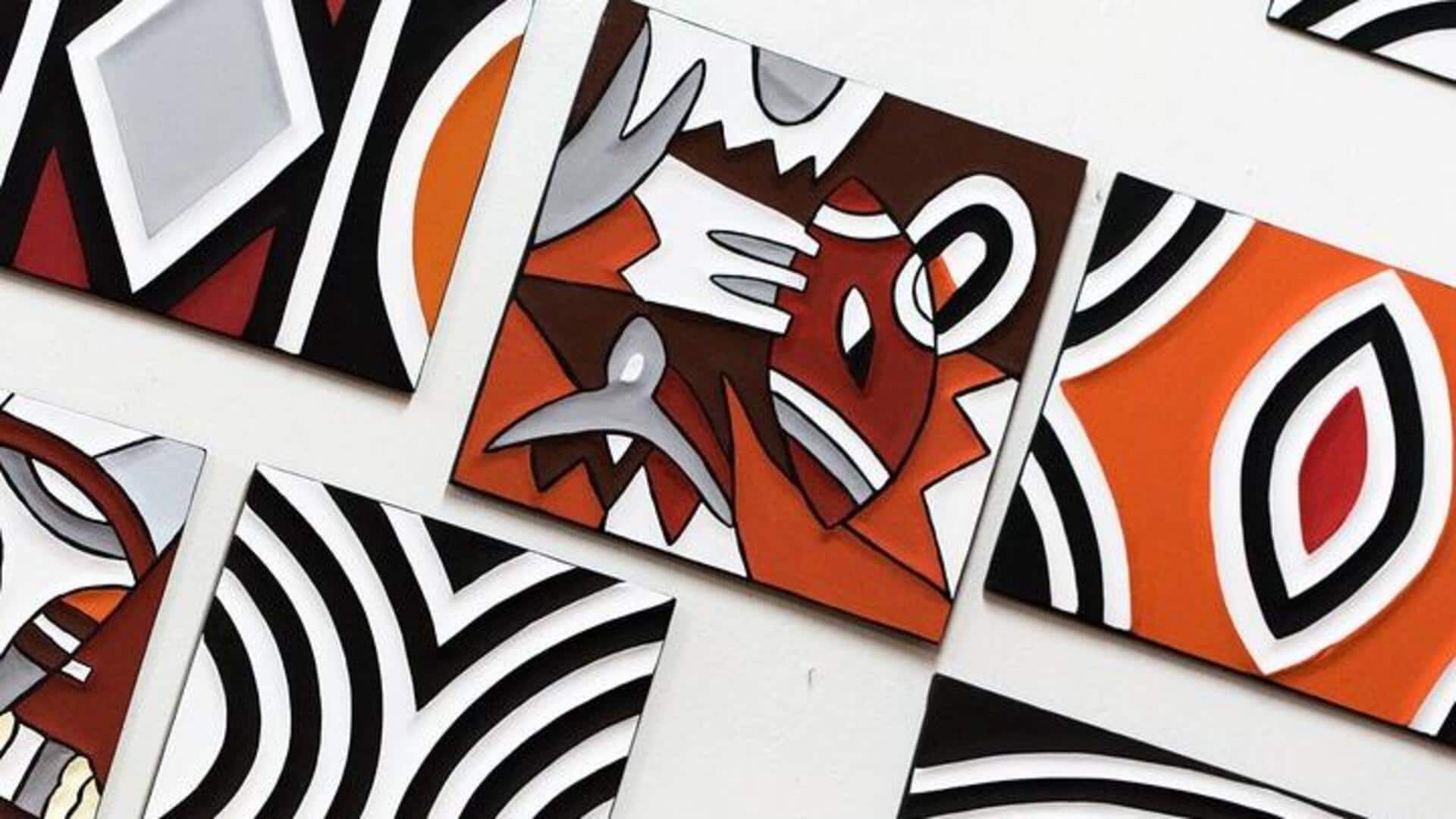
Rwandan imigongo art is a unique form of traditional painting that uses cow dung to create intricate geometric patterns. This art form, which originated in the Eastern Province of Rwanda, is not only culturally significant but also visually striking. The process of making these paintings involves mixing cow dung with natural pigments and applying it to surfaces in bold designs. Here's a look at the steps involved in creating this distinctive art.
Materials
Gathering materials for imigongo art
To begin creating imigongo art, gather essential materials such as cow dung, natural pigments (like charcoal or clay), water, and a flat surface (canvas or wooden board).
These items are crucial for the authenticity of the artwork.
The cow dung should be collected from healthy cows and allowed to dry before use.
Natural pigments can be sourced locally or prepared from easily available materials.
Preparation
Preparing cow dung paste
The preparation of cow dung paste is a crucial step in creating imigongo art.
First, collect fresh cow dung and let it dry slightly to make it easier to handle.
Once it reaches a workable consistency, mix it with water until smooth.
This paste will serve as the base for your artwork, providing texture and durability.
Pigments
Applying natural pigments
Natural pigments are used to add color to the imigongo designs. Charcoal can be used for black patterns, while clay gives earthy tones like red or brown.
Mix these pigments with water to get the desired consistency before applying them onto the prepared cow dung surface.
The use of these natural materials ensures that each piece retains its traditional essence.
Patterns
Creating geometric patterns
Creating geometric patterns is at the heart of imigongo art.
Using simple tools like sticks or brushes made from local materials, artists carve out shapes like triangles, circles, and zigzags on the cow dung paste layer.
These patterns are layered over one another, creating depth and complexity in the artwork.
Finishing
Finishing touches on your artwork
Once satisfied with the design, let the artwork dry completely. This ensures that all elements are securely attached and the colors retain their vibrancy.
After drying, you may choose to apply a protective coating, if desired.
This step, however, is optional and based on personal preference. It doesn't compromise the integrity or appearance of the finished piece.