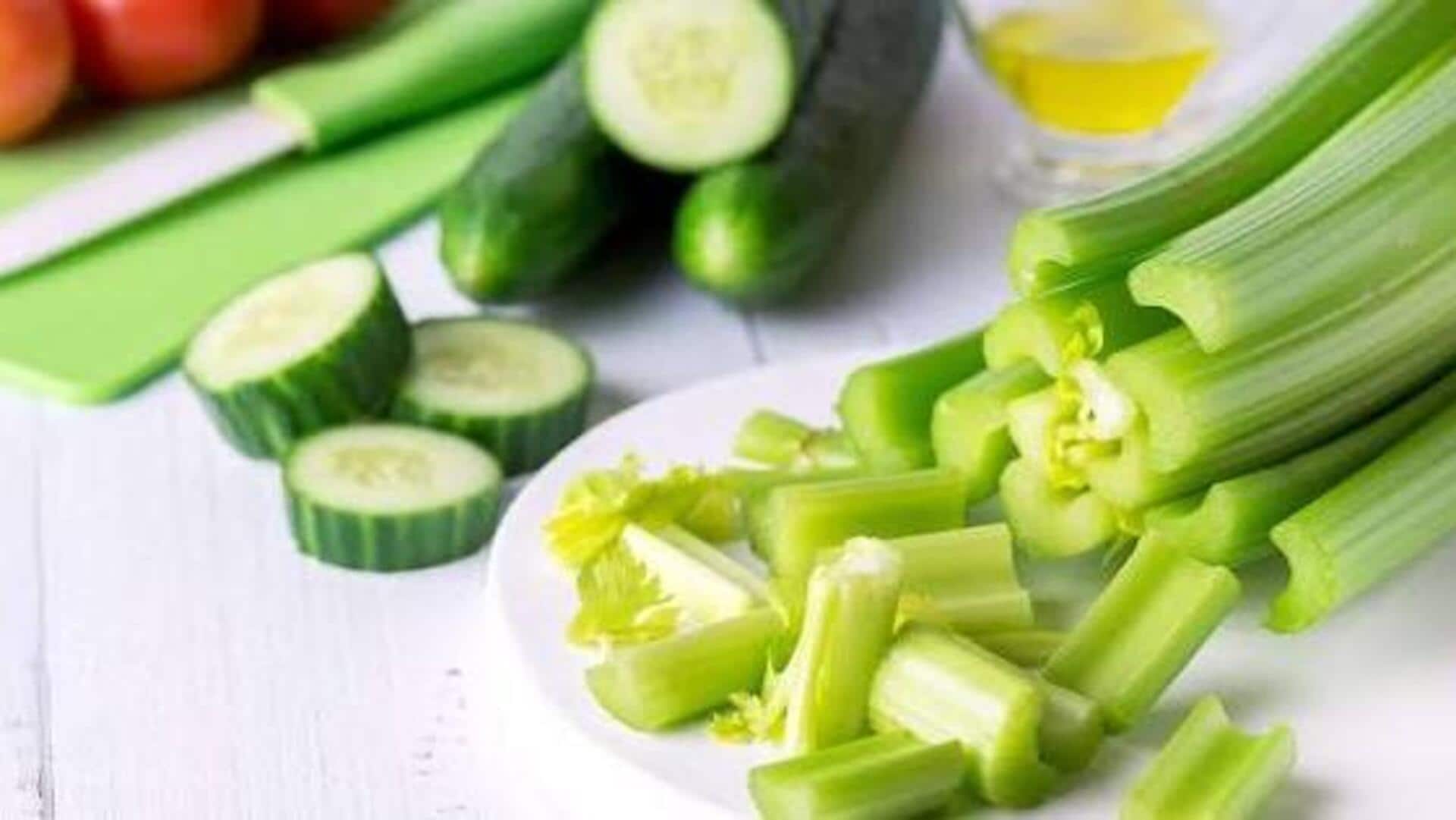
Cucumber v/s celery: Which is better for hydration?
What's the story
Cucumbers and celery are two of the most popular vegetables that are often pitted against each other when it comes to freshness. Both are low-calorie and hydrating, making them the perfect snack for those looking to stay fresh. But which one is actually better? Let's take a look at the nutritional profiles of cucumbers and celery to find out which keeps you fresher.
#1
Water content comparison
Cucumbers have a whopping 95% water content, which makes them the most hydrating vegetable.
This high water content helps keep the body hydrated and cool, especially on hot days.
Celery also has a lot of water (about 95%), but cucumbers win in terms of hydration due to their higher percentage of water.
#2
Nutritional profile analysis
Cucumbers are low in calories with only 16 calories per cup. They also offer vitamin K and potassium, which are important for bone health and heart function.
Celery has a similar low-calorie count, around 14 calories per stalk, but offers more fiber than cucumbers.
The fiber content helps with digestion and keeps you fuller for longer.
#3
Antioxidant properties explored
Both cucumbers and celery are packed with antioxidants that help fight oxidative stress in the body.
Cucumbers have beta-carotene and flavonoids, which help reduce inflammation.
Celery is rich in apigenin, an antioxidant that may promote heart health by reducing blood pressure levels.
While both vegetables offer antioxidant benefits, cucumber's flavonoids may give it an edge in reducing inflammation.
Tip 1
Versatility in culinary uses
Cucumbers are often used in salads, or as a refreshing snack on their own, thanks to their crisp texture. They can also be blended into smoothies or juices for an extra hydration boost.
Celery sticks make a great dipper for hummus or peanut butter, and can be added to soups for added crunchiness without overpowering other flavors.