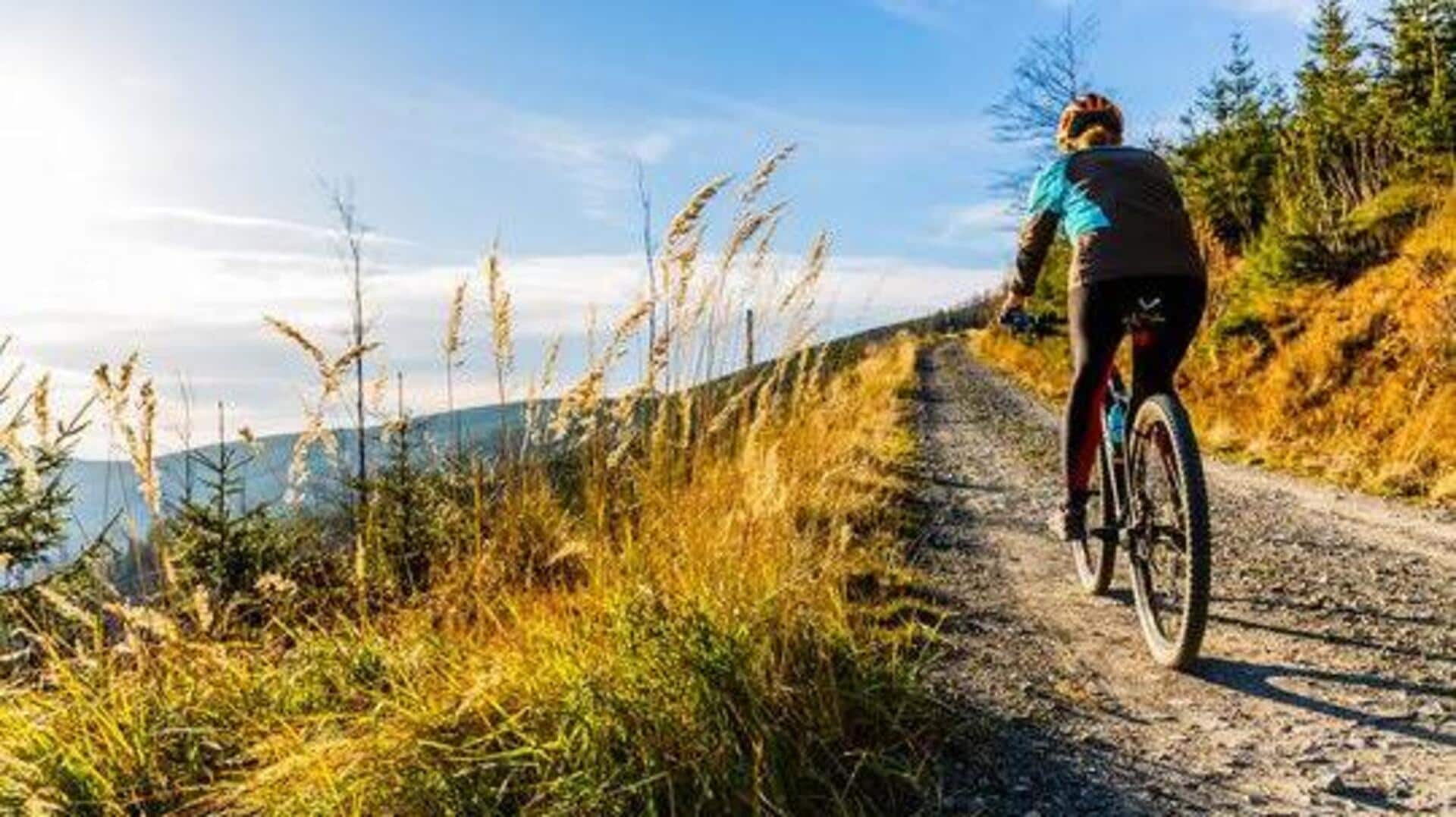
Cycling through Ethiopia's Rift Valley: A must-try
What's the story
Ethiopia's Rift Valley is a cyclist's paradise, with its diverse terrains and rich cultural experiences. Famous for its volcanic landscapes, this region offers a unique opportunity to explore on two wheels. From the rugged trails to serene lakeside paths, the Rift Valley has something for every level of cyclist. Here are some insights into navigating this fascinating area and making the most of your cycling adventure.
#1
Exploring volcanic trails
The Rift Valley is dotted with volcanic trails that are both challenging and rewarding.
Cyclists can expect to encounter varied terrain, from rocky paths to smoother roads.
These trails often lead to stunning views of the surrounding landscape, including active volcanoes and lush greenery.
It is important for cyclists to be well-prepared with appropriate gear and hydration supplies, as some areas can be remote.
#2
Discovering lakeside routes
Lakeside routes in the Rift Valley provide a different kind of cycling experience.
The paths around these lakes are generally flatter and more accessible, making them ideal for leisurely rides or family outings.
Cyclists can enjoy birdwatching opportunities or simply relax by the water's edge after a ride.
These routes offer a great contrast to the more rugged volcanic trails.
#3
Engaging with local culture
Cycling through Ethiopia's Rift Valley also means engaging with local communities along the way.
Many villages welcome visitors warmly, providing an opportunity to learn about traditional customs and daily life in this region.
Interacting with locals can enrich your journey by offering insights into cultural practices that have been preserved over generations.
Tip 1
Tips for safe cycling adventures
Safety should always be a priority when planning any cycling adventure in Ethiopia's Rift Valley.
Cyclists should ensure they have proper maps or GPS devices, since some areas may lack clear signage or directions.
It's advisable to travel during daylight hours, when visibility is better, and roads are less crowded with vehicles or livestock that might cross paths unexpectedly on rural routes.