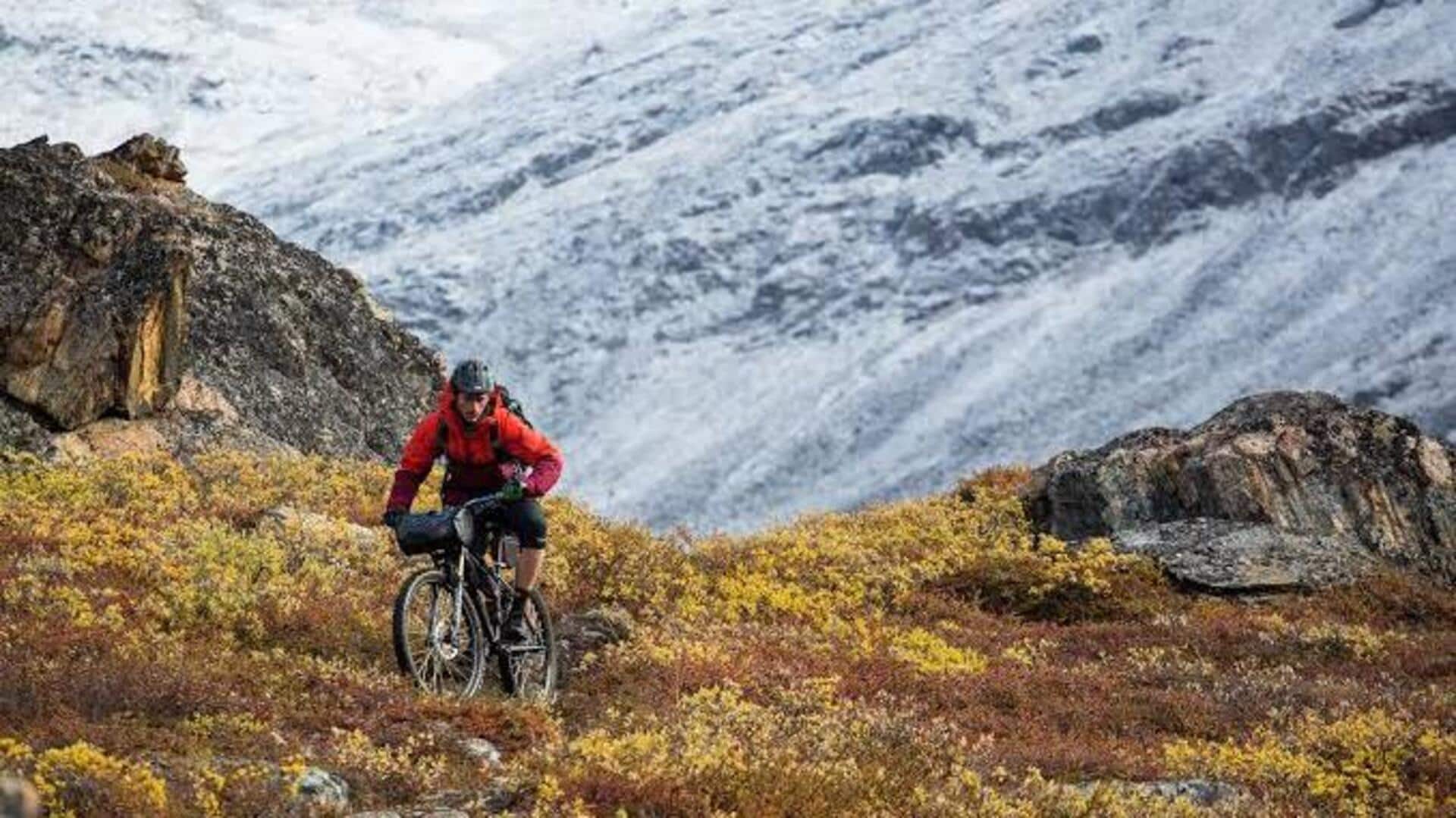
Cycling in Greenland: Trails, sights, and tips
What's the story
Exploring Greenland's remote landscapes by bicycle is a unique adventure. The vast, icy terrains, and stunning natural beauty make for an unforgettable experience. Cyclists can enjoy the solitude of the Arctic environment while witnessing breathtaking views. This journey requires preparation and awareness of the challenges posed by Greenland's climate and geography. Here are some insights into making this cycling expedition both safe and enjoyable.
Gear selection
Choosing the right gear
Selecting appropriate gear is essential for cycling in Greenland's harsh conditions.
A sturdy bicycle with wide tires is recommended to handle rough terrain.
Cyclists should also invest in high-quality clothing that provides insulation against cold temperatures, and protection from wind and rain.
Waterproof bags are useful for carrying supplies, as they keep contents dry during unexpected weather changes.
Weather awareness
Understanding weather patterns
Greenland's weather can be unpredictable, so it's important to understand its patterns before heading out.
Summer months usually offer milder temperatures, but conditions can still be extreme.
Cyclists should keep an eye on weather forecasts regularly, and be ready for sudden changes.
Knowing when to expect rain or snow helps in planning daily routes and ensuring safety throughout the journey.
Route planning
Navigating remote routes
Planning routes through Greenland's remote areas is crucial, given the lack of infrastructure.
Cyclists must study maps carefully, identifying trails that are safe and feasible.
It's also important to have reliable navigation tools, such as GPS devices or apps, as cellular service may be limited or non-existent in many regions.
Carrying physical maps as a backup is advisable.
Wildlife safety
Preparing for wildlife encounters
Greenland is home to a variety of wildlife, including polar bears, reindeer, and various bird species.
While encounters can be thrilling, they also pose risks if not handled properly.
Cyclists should educate themselves about local wildlife behavior and take precautions to avoid dangerous situations.
This includes keeping a safe distance from animals and understanding how to react if an encounter occurs unexpectedly.