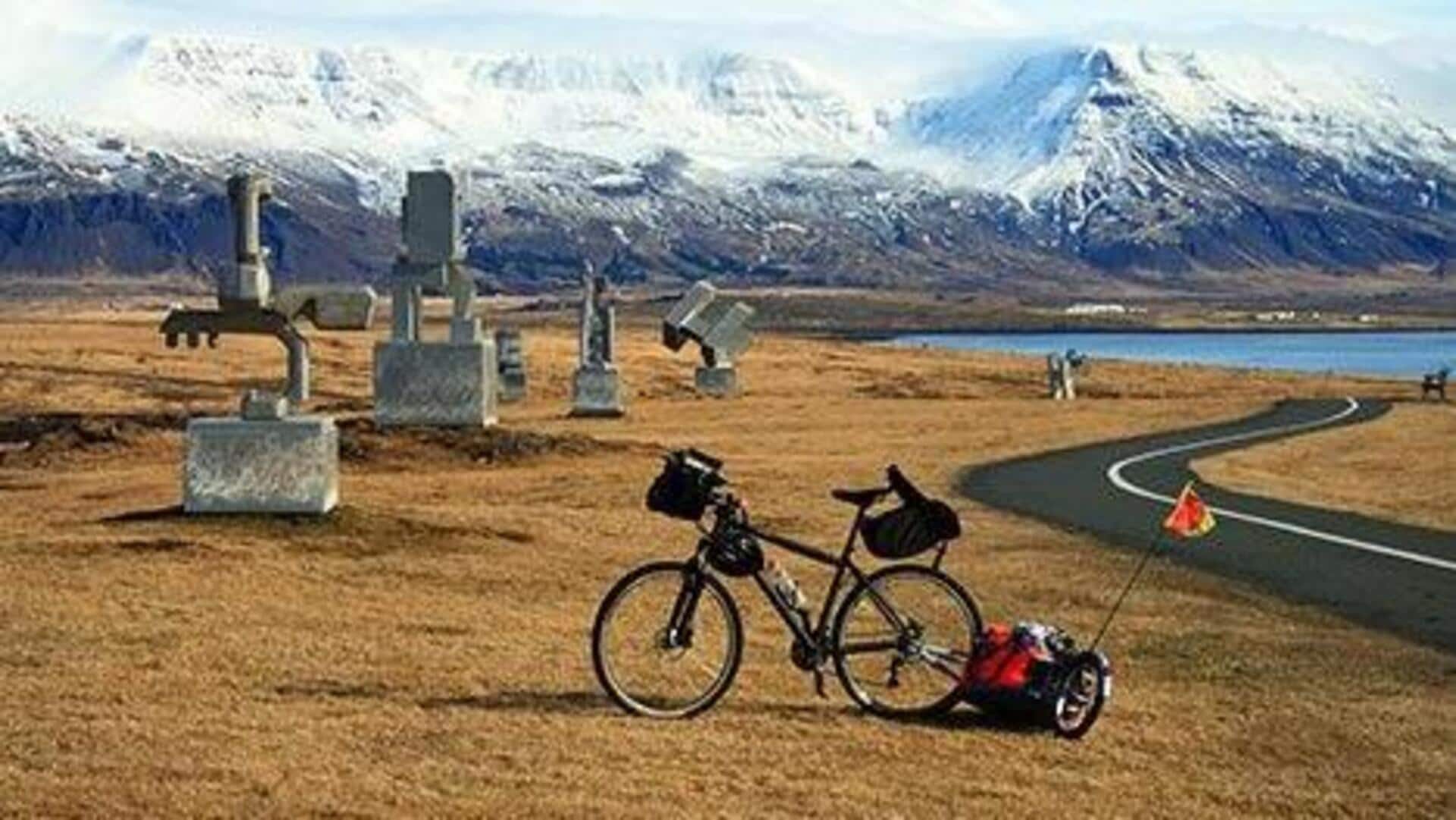
Why cyclists are drawn to Iceland's landscapes
What's the story
Iceland's remote wilderness is a cyclist's dream, offering a unique opportunity to explore the island's rugged beauty on two wheels. From volcanic landscapes to serene coastlines, these cycling routes promise an adventure like no other. Cyclists can experience the raw power of nature while traversing paths less traveled by tourists. Here are some of the best routes, and tips for those looking to pedal through Iceland's pristine wilderness.
#1
Discovering Landmannalaugar's trails
Landmannalaugar is famous for its colorful rhyolite mountains and geothermal activity. The area has a number of trails for cyclists of all levels.
The Laugavegur Trail is a popular choice, giving you a chance to see hot springs, lava fields, and glaciers.
The trail is roughly 55 kilometers long and can be done in three days, giving you enough time to soak in the breathtaking views.
#2
Exploring Snfellsnes Peninsula by bike
The Snfellsnes Peninsula has it all: dramatic cliffs, black sand beaches, and charming fishing villages.
Cyclists can enjoy the 90-kilometer-long Snaefellsnes Coastal Route, which takes you through diverse landscapes.
The route also provides opportunities to spot wildlife, such as seals and seabirds, along the way.
Cyclists should be ready for changing weather conditions as they traverse this stunning part of Iceland.
#3
Navigating Westfjords' remote paths
The Westfjords are Iceland's most remote regions, but they also provide some of the most rewarding cycling experiences.
The region is characterized by steep fjords and towering cliffs, making it a paradise for adventurous cyclists.
The Dynjandi Waterfall Loop is a popular route here, offering stunning views of one of Iceland's most iconic waterfalls, along with challenging terrain.
Tip 1
Tips for cycling in Iceland's wilderness
Cycling in Iceland's wilderness demands proper preparation due to its unpredictable weather and rough terrain.
Cyclists should always wear layered clothing to deal with sudden temperature changes, and waterproof gear is a must.
A sturdy bike with good tires is essential for gravel roads, and carrying enough water and snacks is crucial, as amenities are scarce on many routes.