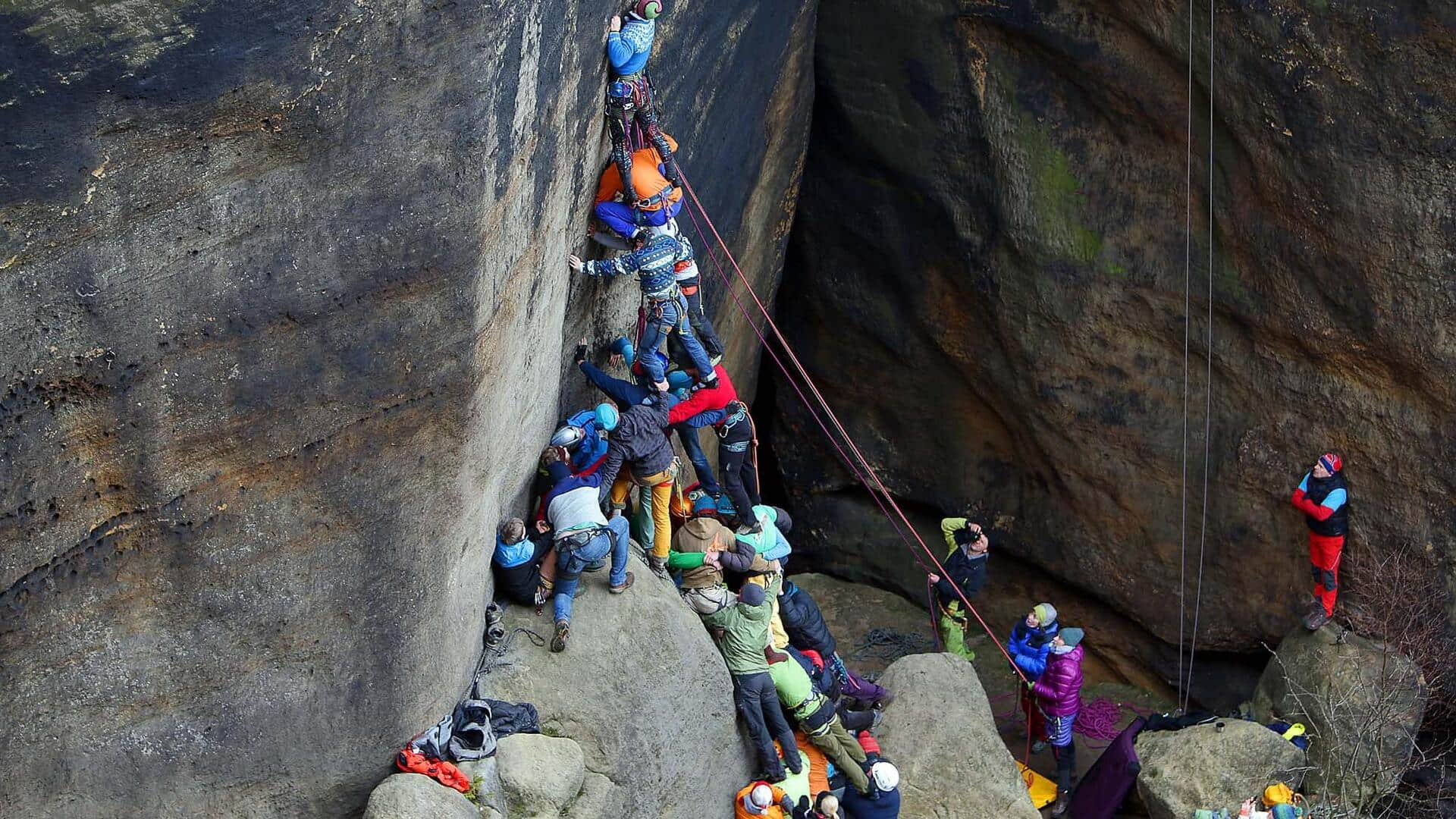
Why these rock formations in Czech Republic are a must-visit!
What's the story
The Czech Republic is home to some of the most unique rock formations in the world, making it a perfect destination for adventurers looking for a one-of-a-kind rock climbing experience. These sandstone towers, with their distinctive structures and stunning landscapes, are a must-visit for climbers from all over the world. Here's all about these natural wonders and what makes them so special for climbers.
#1
Discovering the sandstone towers
The sandstone towers of the Czech Republic are a result of millions of years of erosion. These formations dot the landscape of national parks such as Bohemian Switzerland and Cesky Raj.
The towers are characterized by their narrow spires and rugged surfaces, providing climbers with a unique challenge.
The diverse terrain makes it ideal for both novice and experienced climbers looking to test their skills in an extraordinary setting.
#2
Climbing routes and challenges
Climbing routes on these sandstone towers vary in difficulty, catering to different skill levels.
From simple climbs that are suitable for beginners to more demanding routes for seasoned climbers, there's something for everyone.
The porous nature of sandstone also provides a different grip, making each climb a unique experience.
Climbers must be prepared for sudden weather changes and varying rock conditions while tackling these natural giants.
#3
Safety measures for climbers
Safety is paramount when climbing in the Czech Republic's sandstone towers.
Climbers should always wear appropriate gear, including helmets and harnesses, to protect themselves from falls or rock debris.
It's also important to check weather forecasts before heading out, as rain can make rocks slippery and increase risks significantly.
Joining guided tours or hiring local experts can enhance safety by providing valuable insights into specific routes and potential hazards.
#4
Best time to visit these formations
The best time to visit the Czech Republic's sandstone towers is during spring or autumn, when temperatures are mild, and crowds are fewer than in summer months.
During these seasons, climbers can enjoy more pleasant conditions without extreme heat or cold affecting their performance on climbs.
Additionally, visiting during off-peak times allows for a more intimate experience with nature's wonders without the distractions of large tourist groups.