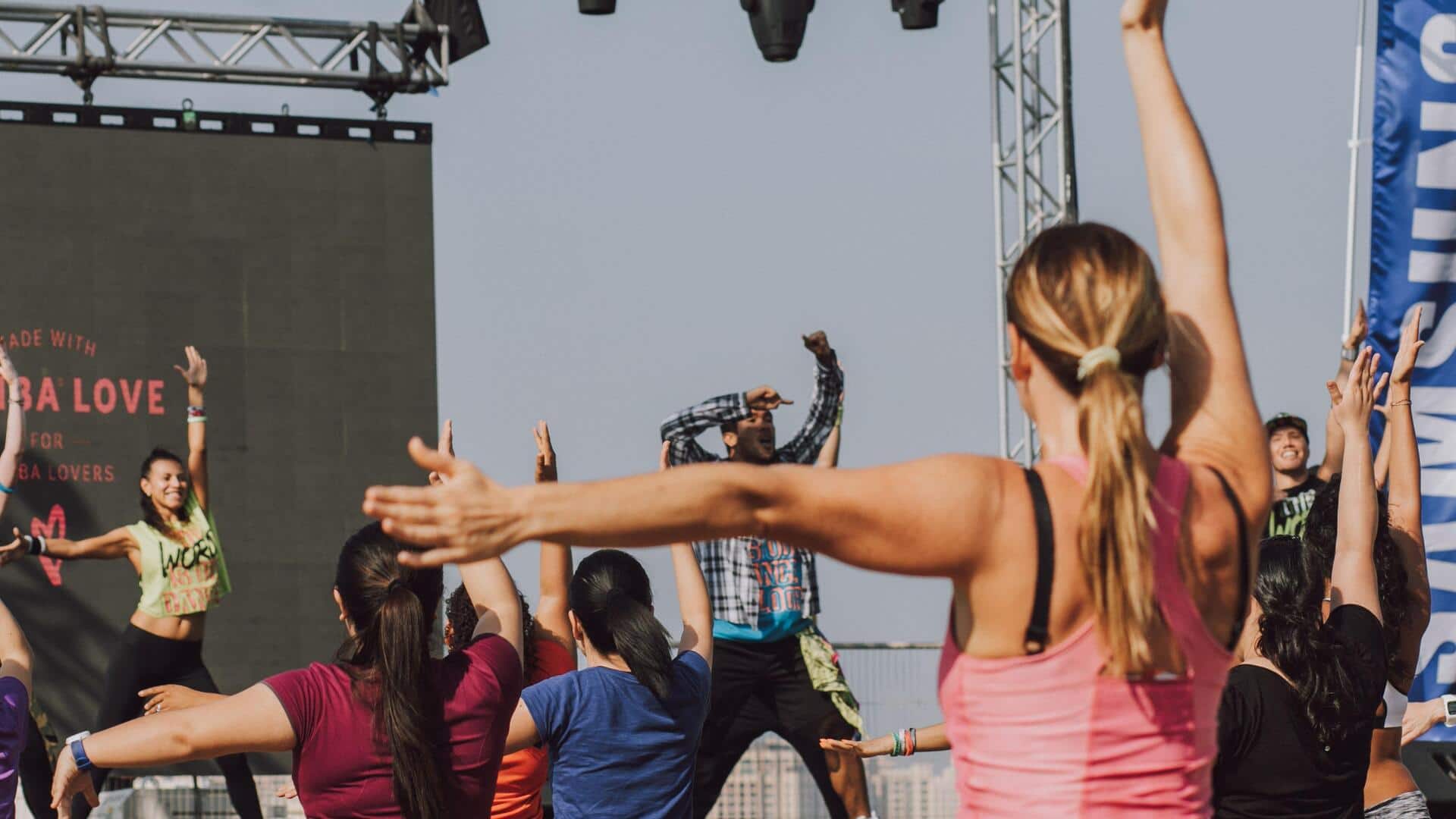
Dance cardio: 5 benefits beyond burning calories
What's the story
Dance cardio workouts are a fun and effective way to boost your fitness levels. Combining dance moves with aerobic exercise, these workouts offer more than just calorie burning. They can improve your mood, increase your energy, and even enhance your coordination. Here are five unexpected benefits of incorporating dance cardio into your routine. Each benefit highlights how this enjoyable form of exercise can positively impact various aspects of your life.
#1
Boosts mental health
Dance cardio is a great way to boost mental health.
The rhythmic movements and music can elevate mood by releasing endorphins, the body's natural mood lifters.
Regular participation in dance cardio has been linked to lower levels of stress and anxiety.
It provides a creative outlet for expression, which can be therapeutic for many people.
#2
Enhances coordination skills
Engaging in dance cardio requires a lot of coordination between different parts of the body.
As you learn and practice various dance moves, you develop better balance and agility over time.
This improved coordination translates into better performance in other physical activities and daily tasks that require precise movements.
#3
Increases energy levels
Surprisingly, dance cardio can also give you a much-needed energy boost.
The combination of aerobic exercise and rhythmic movement gets the blood pumping, which, in turn, increases oxygen flow to the brain and muscles.
This heightened circulation helps you feel more alert and energetic throughout the day.
#4
Supports weight management
Like any other form of aerobic exercise, dance cardio is effective in helping you manage your weight.
It burns calories efficiently, while also building lean muscle mass over time.
By adding regular sessions into your fitness routine, you can achieve better weight management without having to stick to monotonous workouts.
#5
Fosters social connections
Participating in group dance cardio classes allows you to connect socially with other people who share similar interests in fitness or music culture.
These social interactions help build friendships, while also motivating you to stay committed to achieving personal health goals together as part of a community effort.