The easy way to declutter your home, the KonMari way
What's the story
Marie Kondo's KonMari method has become synonymous with decluttering and organization. The Japanese tidying expert's approach focuses on keeping only those items that "spark joy." Not only does this method help you organize your space, but it also encourages mindful consumption and appreciation for the things you own. Here are five practical ways to apply the KonMari method in your life and enjoy its benefits.
Tip 1
Start with categories, not rooms
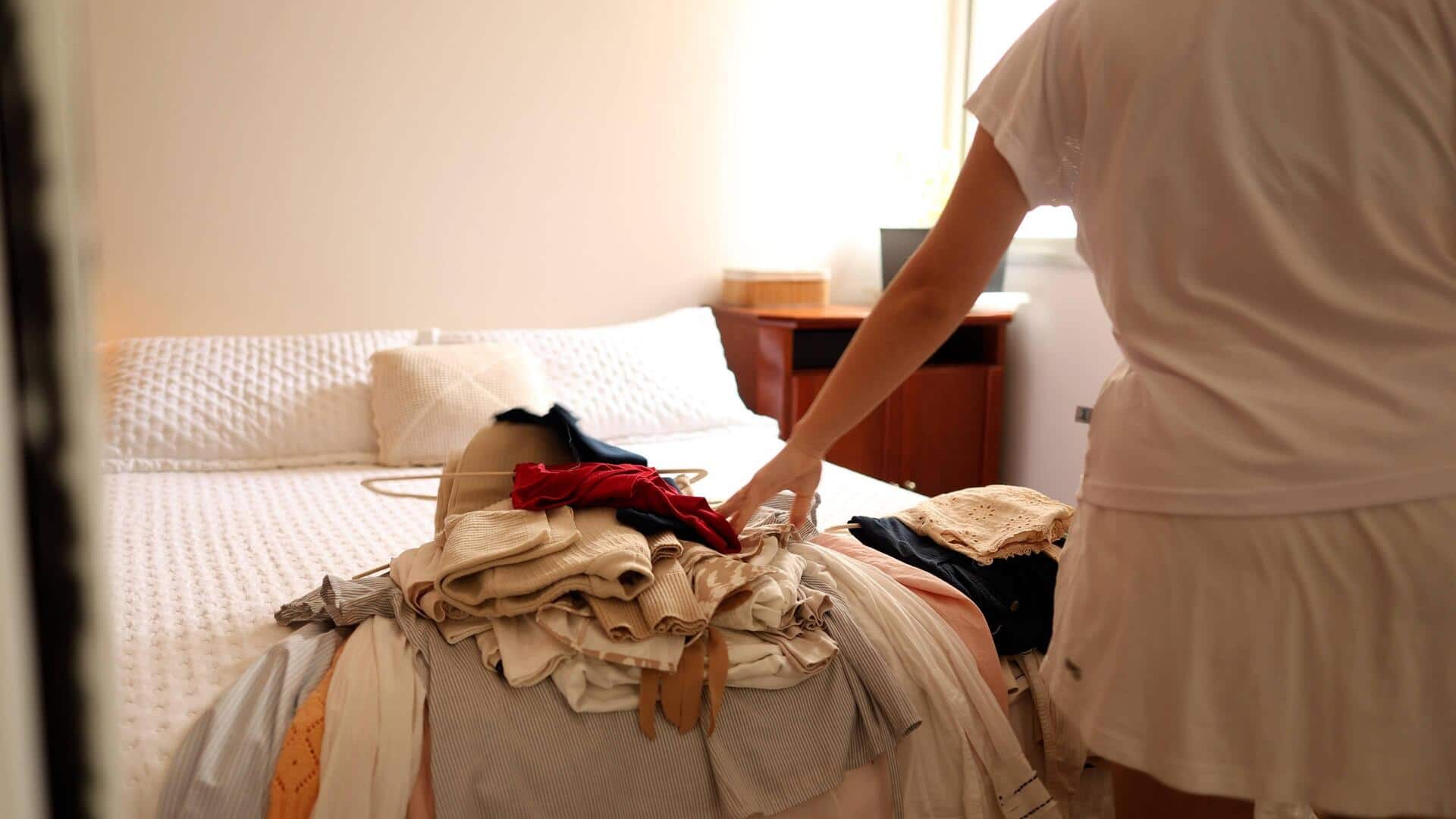
Instead of tackling one room at a time, start with categories like clothes, books, papers, komono (miscellaneous items), and sentimental items.
This way, you can see how much you have of each category and make better decisions about what to keep or discard.
By focusing on categories, you ensure a more comprehensive decluttering process.
Tip 2
Use the 'spark joy' criterion
The core of the KonMari method is the spark joy principle.
When deciding whether to keep an item or not, hold it in your hands and see if it brings you joy or not.
This emotional connection helps you make more meaningful choices about what truly matters in your life.
Tip 3
Fold clothes vertically
Marie Kondo recommends folding clothes vertically instead of stacking them horizontally in drawers or storage spaces.
This way, you can see all your clothes at a glance and avoid overstuffing drawers.
Not only does this method save space, but it also keeps your clothing items in good shape.
Tip 4
Limit storage solutions
While it may be tempting to buy more storage solutions to organize clutter, Marie Kondo advises limiting them.
Instead, focus on reducing the number of items you own first before thinking of additional storage solutions.
This encourages mindful consumption and ensures that every item has its place without cluttering your space with unnecessary containers.
Tip 5
Practice gratitude for belongings
Incorporating gratitude into your decluttering routine can make the process more meaningful.
Take a moment to appreciate each item before deciding what to do with it. Thank it for its service if you're letting it go. Express gratitude for its presence if you're keeping it.
This practice fosters a deeper connection with your belongings and enhances overall well-being by promoting mindfulness.